Executive Summary
| Aspect/Scenario | On-Grid Inverter | Off-Grid Inverter | Hybrid Inverter |
|---|---|---|---|
| Grid Connection | Always tied to the grid; does not operate during a blackout. | No grid connection needed; fully independent. | Connects to both the grid and a battery system. |
| Battery Required | No, excess power is fed to the grid. | Yes, must store all excess energy. | Optional, used for backup power during outages. |
| Operation During Outage | Shuts off immediately, providing no power. | Continues running by supplying power from batteries. | Switches to battery backup in milliseconds, like a UPS. |
| Typical Use Case | Saving money on utility bills where the grid is reliable. | Achieving true energy independence with no reliance on the grid. | The best of both worlds: saving money and protecting against outages. |
| System Cost | Lowest, as no batteries are required. | Highest, requiring solar, inverter, battery, and often a generator. | Medium-to-high, requiring solar, inverter, and battery. |
| Key Benefit | Lower electricity bills through net-metering. | Complete energy independence from the utility grid. | A balance of cost-effectiveness and resilience against outages. |
| Drawback | No backup power; the system goes down with the grid. | Expensive and complex, with ongoing battery maintenance. | Higher upfront cost than on-grid systems. |
| Recommendation | Not recommended for areas with frequent blackouts. | Only suitable if the grid is completely absent. | The top choice for environments with frequent power outages. |
Conclusion: For regions plagued by frequent outages, the Hybrid Inverter clearly stands out. It offers seamless power by blending grid-tied savings with battery backup. Even if outages are sporadic, hybrid systems ensure continuity, whereas on-grid systems cut out instantly and off-grid systems are costly and hard to scale. (See below for full justification.)
Energy Independence vs. Grid Dependence
Imagine three ways to get water: from the tap, which depends on the city supply; from a private well, which offers total independence; or from a smart tap that can mix both. Similarly, on-grid inverters rely 100% on the utility “tap” and turn off when the grid fails. They are like renters—cheap and convenient when everything works, but you have no control during a service cut. Off-grid inverters are like building a private well and pumping station: you invest upfront in solar panels, a large battery bank, and perhaps a generator, and then operate on your own. Off-grid means freedom from the utility, but also full responsibility for the system.
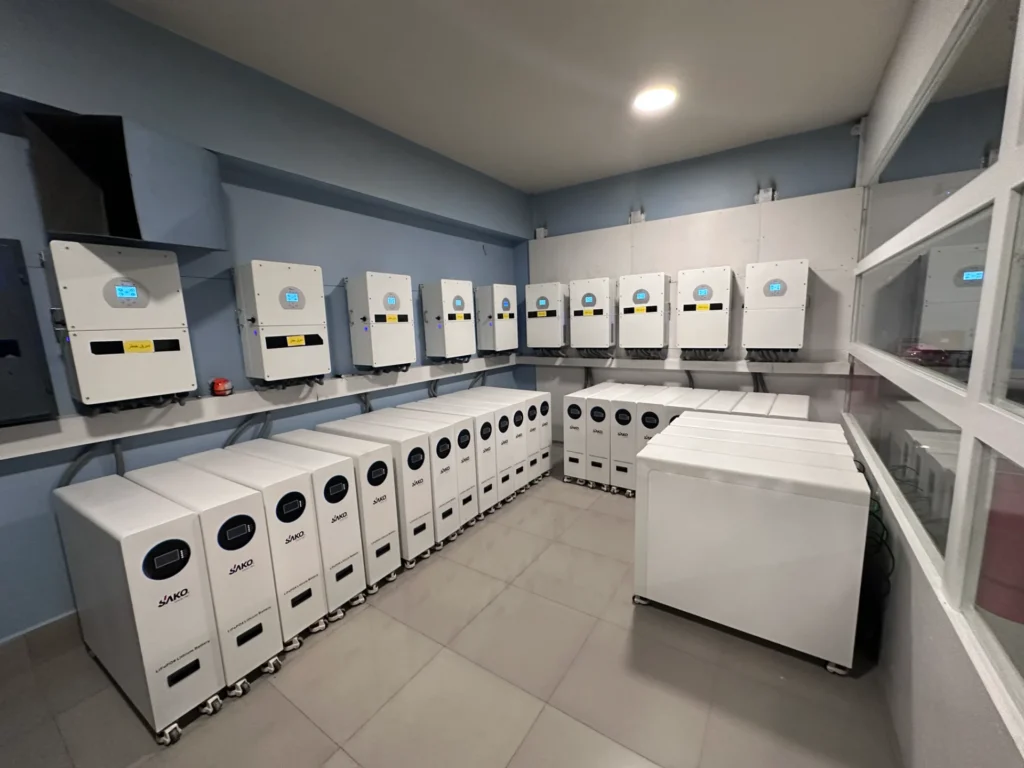
Hybrid inverters are the smart bridge, acting like a two-way faucet connected to both the tap and the well. They use grid power (or feed excess solar back) when available but instantly switch to their own battery during an outage. In effect, a hybrid inverter provides the best of both worlds—cost savings from the grid plus reliable backup power from the battery.
- On-Grid: Grid-Dependent Cost-Saver
Works only with utility power. It is great for cutting bills via net-metering but is useless in a blackout. Any power cut instantly drops everything—lights, refrigerators, pumps—until the grid returns. - Off-Grid: Grid-Independent Fortress
Always on, but expensive. It stores and uses its own power 24/7, so grid outages are irrelevant. However, this requires a significant investment in batteries and potentially a backup generator for long periods without sun, along with ongoing maintenance. - Hybrid: The Intelligent Bridge
This “best of both worlds” solution connects to the grid and has a battery on standby. Under normal conditions, it acts like an on-grid inverter, saving you money. The moment the grid fails, it automatically flips to battery mode and keeps the lights on, much like a smartphone switching to an emergency battery mode mid-call.
In summary, on-grid systems favor utility dependence for cost savings, off-grid systems favor complete owner independence at a high cost, and hybrid systems harmonize both. In regions with unreliable grids, hybrid inverters shift the balance toward independence while still interfacing with the grid when it’s available.
Inverter Performance During Power Events
| Scenario | On-Grid Inverter | Off-Grid Inverter | Hybrid Inverter |
|---|---|---|---|
| (a) Grid Stable (Normal Day) | Powers loads and can sell excess energy via net-metering. No batteries are used. | Powers loads from solar while charging batteries with surplus energy. Fully independent. | Powers loads, sells or buys from the grid as needed, and charges batteries with surplus. |
| (b) Instant Grid Failure | System stops instantly, causing a full outage. Switchover time is not applicable. | Zero interruption, as the system is already running on battery power. Switchover time is zero. | Near-seamless switch to battery backup in milliseconds (typically under 20 ms), similar to a UPS. |
| (c) Prolonged Outage (Hours–Days) | No power until the grid returns. Requires an external generator or accepts significant downtime. | Supplies loads as long as batteries hold a charge. Solar can recharge during the day. | Runs loads from battery and solar. It can recharge the battery during the day, offering resilient backup. |
Key takeaway: Off-grid and hybrid systems keep you powered during a blackout, while on-grid systems do not. Hybrid inverters perform almost identically to off-grid systems during a blackout, with only a minuscule transfer gap that hardly affects typical loads like refrigerators, lights, and routers. In practice, you might notice a slight flicker, if anything at all. For contrast, on-grid systems are defenseless: as soon as the grid fails, they instantaneously shut down.
If your business has sensitive equipment or you simply need lights and fans during outages, on-grid alone is not an option. An off-grid setup does the job but at great cost and complexity. The hybrid system delivers continuity without the massive expense: it’s designed to ramp up backup instantly while connected to the utility when it’s available. In short, during outages:
- On-Grid: Out of power (no backup).
- Off-Grid: Continues powering loads until batteries deplete.
- Hybrid: Continues powering loads and can even recharge from panels while the grid is down.
Economic Viability and ROI (Total Cost of Ownership)
How do the costs and savings compare? Below is a simplified 10-year cost and savings model for a typical small shop or clinic with a 5 kW solar system:
- Electricity Price: $0.15 per kilowatt-hour (kWh), typical for many developing regions.
- Outage Impact: Assume a 4-hour blackout causes a $50 loss from factors like lost sales or spoiled goods. For the model, we assume one such outage occurs daily, resulting in a $50 per day loss.
- Solar Output: Approximately 20 kWh per day from a 5 kW system (roughly 6,000 kWh per year). This offsets about $900 of grid electricity annually.
- System Costs (Approximate): An on-grid inverter with panels costs about $5,000. An off-grid system, including an AGM battery and generator, costs about $10,000. A hybrid system with a quality 10 kWh LiFePO₄ battery costs about $12,000. The model includes battery replacement costs for the off-grid system.

| Cost/Benefit | On-Grid | Off-Grid | Hybrid |
|---|---|---|---|
| Initial System Cost | $5,000 | $10,000 | $12,000 |
| Battery (10 kWh) | $0 | $3,000 (AGM lead-acid) | $5,000 (LiFePO₄, higher quality) |
| Battery Replacements (10 yrs) | $0 | $3,000 (one replacement at approx. 6 years) | $0 (LiFePO₄ lasts 10+ years) |
| Total 10-Year Cost (capex) | Approx. $5,000 | Approx. $13,000 | Approx. $12,000 |
| Annual Energy Bill Savings | Approx. $900/year | Approx. $900/year | Approx. $900/year |
| Annual Outage Loss Avoided | $0 (no backup) | $18,250/year (daily loss of $50) | $18,250/year (daily loss of $50) |
| Effective Net Annual Gain | -$900 (outage losses still apply) | Approx. $19,150 (savings + avoided losses) | Approx. $19,150 (savings + avoided losses) |
| Payback on Investment | >10 years | Approx. 0.7 years (with daily outages) | Approx. 0.7 years (with daily outages) |
- On-Grid (No Backup): This system costs only $5,000 and saves about $900 per year on electricity bills. However, it cannot prevent the $50 daily loss from outages because it provides no backup power. In practice, with daily losses totaling $18,250 per year, the system operates at a significant net loss, meaning its cost is never recovered. Based on energy savings alone, the payback period exceeds 10 years.
- Off-Grid (with Lead-Acid Battery): This option involves high capital expenditure, approximately $13,000 over 10 years including one battery replacement. It also saves $900 per year on bills and completely avoids the $18,250 annual outage cost. With daily outages, the investment is paid back in approximately 0.7 years. If blackouts were only weekly, the payback period would extend to about 5 years.
- Hybrid (with LiFePO₄ Battery): With a slightly higher initial cost of $12,000, this system avoids mid-term battery replacements due to the 10+ year lifespan of LiFePO₄ batteries. It prevents the $18,250 annual loss from blackouts just like an off-grid system, resulting in a similar payback period of under one year with daily outages. If outages were less frequent (e.g., weekly), the savings would decrease, and the payback period would be around 3 to 4 years—still a reasonable investment for business continuity.
Sensitivity: Even with more conservative assumptions, the hybrid system wins in the long term. For instance, if the average economic loss per outage were $25 (half the base assumption), the hybrid would recover its cost in roughly 2–3 years. If the loss were $100 per outage, the payback would be under 6 months. Similarly, even with cheaper electricity, the avoided outage loss remains the primary financial driver. As long as power outages regularly cause significant economic losses, the benefits of a hybrid system far outweigh its additional upfront cost compared to an on-grid system.
Real payback will vary with sunlight, tariffs, and outage frequency. See the Methodology section below for our assumptions.
Recommendation & Systemic Risk Warning
Authoritative Recommendation: For homeowners and small businesses facing routine power cuts, a Hybrid Inverter with battery backup is the most resilient, future-proof choice. It safeguards your continuity while still letting you benefit from the grid when it is up. In simple terms: hybrid inverters keep the lights on and the phones charging even when the utility fails. We strongly advise investing in a quality hybrid system, ideally with LiFePO₄ batteries, as an insurance policy against costly downtime.
Systemic Risk – The Inverter is Just the Brain: However, it is crucial to realize that the inverter itself is only the “brain” of the system. No matter how smart the inverter, it cannot do its job without a strong heart and skeleton.
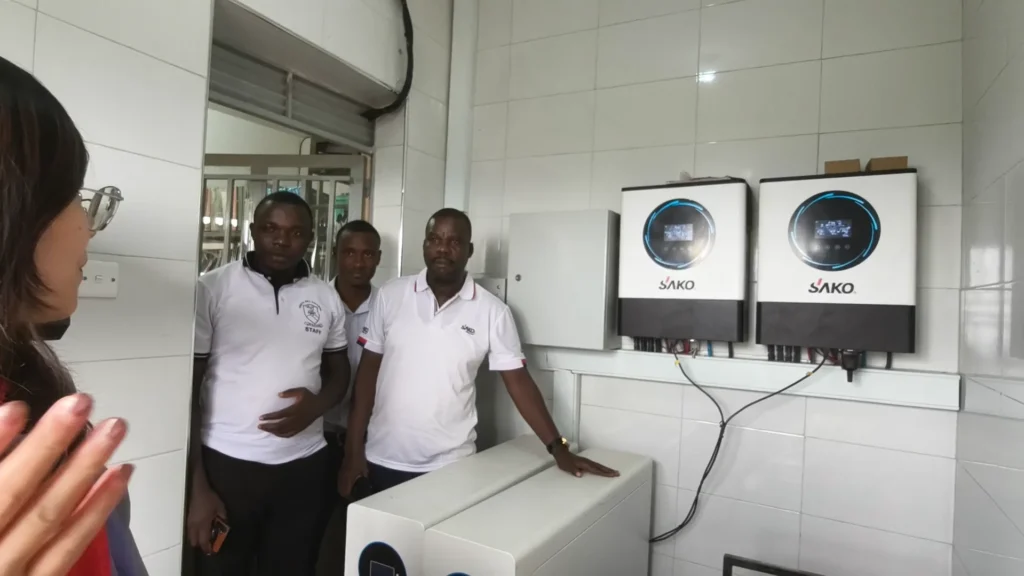
- The “heart” of a backup system is the battery. In hot climates especially, battery quality makes or breaks reliability. Cheap lead-acid batteries, such as leisure or automotive types, suffer rapid failure in heat. Remember, each 8°C increase above 25°C roughly halves a lead-acid battery’s life. At 40°C, a 10-year-rated battery might expire in just 2–3 years. We urge using high-quality, heat-tolerant batteries like LiFePO₄. They cost more upfront but last far longer, often for thousands of cycles, and keep powering your home in 50°C heat without issue.
- The “skeleton” is the installation and balance of system. Even a top-tier inverter can fail or underperform if installed by inexperienced hands. All wiring, breakers, grounding, and mounts must follow electrical and code standards. You need a certified installer who sizes the system correctly and uses proper cable sizing, insulation, and ventilation. Cutting corners here risks system failure or even fire.
Analogy: Think of the inverter as a car’s engine control unit (ECU). It is useless if there is no fuel (battery) or if the chassis and gas lines (wiring and fuses) are faulty. A weak battery or bad connections will “starve” even the smartest inverter.
In short, do not let your investment go to waste: a quality hybrid inverter, a strong LiFePO₄ battery, and professional installation together create a reliable backup. Skimp on any part, and you may face the very outages you tried to avoid.
Self-Diagnosis: Calculating Your Needs
Before buying, assess what you must power during an outage. Use this simple checklist to estimate your “critical load” in watt-hours per day (Wh/day):
- List Essential Appliances: For example, a fridge, freezer, lights, fans or an air conditioner for a few hours, a water pump, mobile chargers, a Wi-Fi router, medical equipment, cash registers, etc.
- Find Power (Wattage): Check each device for its power rating. If it is not labeled, assume typical values, such as a fridge using approximately 150 W while running, an LED light using about 10 W, a laptop using 50–100 W, or a small AC or fan using 300–1000 W.
- Estimate Usage Hours: For each device, decide how many hours per day it runs during normal or outage times. For example, a fridge runs about 24 hours, while lights might be on for 5 hours after dark.
- Calculate Energy (Wh): Multiply each device’s wattage by its daily usage hours. For example, a refrigerator using 150 Watts that runs for 24 hours will consume energy calculated as 150 multiplied by 24, which equals 3,600 Watt-hours per day.
- Add a Safety Margin: Multiply the total Watt-hours by approximately 1.2 to cover future growth or inefficiencies.
For example, a small clinic might calculate its total daily energy need by summing the consumption of essential devices: a refrigerator at 1,000 Watt-hours, lights (50 Watts for 10 hours) at 500 Watt-hours, fans (300 Watts for 6 hours) at 1,800 Watt-hours, a router and PC (100 Watts for 8 hours) at 800 Watt-hours, and phone chargers (50 Watts for 4 hours) at 200 Watt-hours. This totals approximately 4,300 Watt-hours per day, so it is wise to round up to about 5 kilowatt-hours per day when determining the required battery and inverter capacity. A 5 to 10 kilowatt-hour battery is typical for this level of daily consumption.
Buyer’s Pitfalls & FAQs
Q: Isn’t it cheaper to undersize the system, for instance, by choosing a lower capacity inverter or battery?
No, undersizing backfires. An inverter and battery system that is just large enough for occasional needs will not be sufficient to cover prolonged outages. For example, an inverter with a 500-Watt capacity cannot run a 1-kilowatt ceiling fan, and a small battery might be depleted in an hour, leaving you in the dark. Instead, you should size your system for your worst-case scenario using the checklist above. It is often wiser to purchase a slightly larger inverter and battery from the start rather than trying to upgrade later during a crisis.
Q: Why not just buy the cheapest inverter or battery I can find?
Because the cheapest option often leads to trouble. Low-cost inverters may lack essential safety monitoring features or be constructed with inferior parts. In fact, one installer’s experience suggests that “some inverter brands … have a 100% failure rate – they will pop by year 3.” Similarly, bargain batteries, especially lead-acid types, degrade very quickly in hot conditions. You will likely end up spending more on replacements or repairs, negating any initial savings. Instead, choose proven brands with positive reviews, compliance certifications, and local support. Paying slightly more upfront for quality components and a reliable installer will save you far more in the long run.
Q: Which should I pick: a lead-acid or a LiFePO₄ battery?

We strongly recommend LiFePO₄ (Lithium Iron Phosphate) batteries for hot climates. Unlike lead-acid batteries, LiFePO₄ tolerates heat much better and can last for thousands of cycles. A lead-acid battery kept at 40°C might fail in just 2–3 years, whereas a LiFePO₄ battery will likely survive for over 10 years with minimal capacity loss. The main drawback is that LiFePO₄ batteries have a higher upfront cost, but it is comparable to buying a durable vehicle that lasts versus a cheap one that breaks down. For operational continuity and a better return on investment, a long-lived battery is worth the price.
Q: Do I need to worry about certifications and installers?
Absolutely. Look for inverters and batteries that meet international safety standards, such as IEC 62109 for inverters and IEC 62619 or UL1642 for lithium batteries, and have been tested by third-party organizations like TÜV, DNV, or UL. Avoid products with no certification or those from unknown manufacturers. Additionally, hire licensed and experienced installers. They should accurately calculate your electrical load, wire the system professionally, and comply with local utility regulations, including anti-islanding protection, proper grounding, and obtaining necessary permits. In many regions, a certified installer ensures not only safety but also that your warranty remains valid. Cutting corners on installation can create fire hazards or lead to system failures, so always insist on proof of credentials and high-quality workmanship.
Q: What about generators?
A backup generator is a viable fallback option, but fuel costs, which are often between $0.20 and $0.50 per kilowatt-hour, can accumulate quickly. A hybrid solar and battery system functions as a silent, fuel-free generator throughout the day and night. We recommend using a hybrid system as your primary backup; if you already own a generator, it can be used to provide additional support during extended outages.
Trust Anchors: Standards and Certification
To ensure your system will truly work and last, rely on recognized standards and testing.
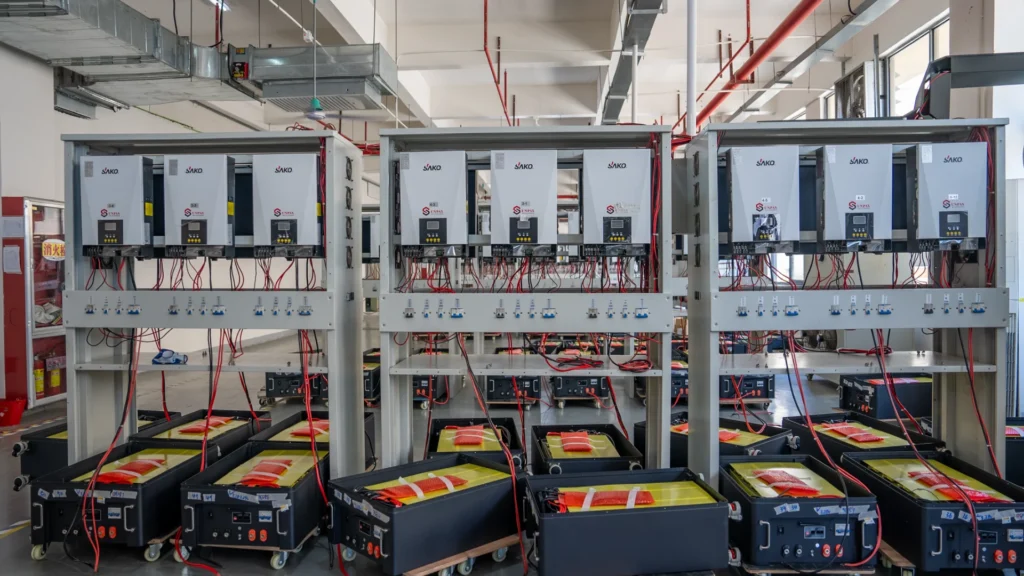
- IEC 62109 (Inverter Safety): This international standard specifies safety requirements for power converters used in photovoltaic systems. A compliant inverter is designed to prevent electrical shocks, fires, and unsafe interactions with the grid. Reputable inverter manufacturers proudly list “IEC 62109” on their specification sheets.
- Battery Standards: Lithium batteries should meet standards such as IEC 62619 or UL1642 for cell safety and UL 1973 for energy storage systems. These certifications confirm that the batteries have been rigorously tested against conditions like overheating and short-circuits.
- Third-Party Testing: Look for products tested by independent laboratories like TÜV Rheinland, SGS, or DNV. These organizations certify that equipment performs safely under stress. Products advertised as “TÜV Certified” or “UL Certified” are far more dependable than unbranded units.
- Warranty and Support: Beyond certifications, verify that the manufacturer has a strong reputation and offers reliable support. A 10-year inverter warranty is only valuable if the company is likely to be in business to honor it.
By choosing equipment that is certified in Europe or the US, or by a reputable local lab, you anchor your decision in trusted engineering. This helps avoid the pitfalls of low-cost, off-brand inverters that often fail prematurely.
Methodology & Assumptions
Economic Model Assumptions: To compare costs and savings, we assumed a small commercial setup with a 5-kilowatt solar system and an electricity rate of $0.15 per kilowatt-hour, which is typical for many developing markets. The estimated $50 loss per four-hour outage is illustrative and could represent lost sales or spoiled inventory. Our primary scenario models daily outages as a worst-case analysis. Battery sizes and costs are based on typical quotes for 2024, with a 10 kilowatt-hour AGM battery costing approximately $3,000 and a LiFePO₄ battery costing around $5,000. We assumed that LiFePO₄ batteries last ten years or more without needing replacement. System lifespans are estimated at 25 years or more for solar panels and 10 to 15 years for inverters. Maintenance costs, such as for wiring and cleaning, were not itemized but were included in the rough total cost estimates.
Scenario Variations: We tested lower outage frequencies, such as one four-hour outage per week. Even in this scenario, hybrid systems achieved payback in approximately 4–5 years, compared to over 10 years for on-grid systems. We also varied the electricity cost by plus or minus $0.05 and the outage loss by plus or minus 50%. In all variations, hybrid systems remained the most cost-effective solution for areas prone to blackouts.