Designing a reliable home power system, such as solar with battery backup, begins by prioritizing your electrical loads. In regions with weak grids, common across many parts of Africa and the Middle East, it is crucial to decide which appliances are truly necessary, which improve daily life, and which are optional. We introduce a three-tier classification of home loads:
- Essential Survival Loads (Tier 1): Life-sustaining items you cannot do without. Examples include lighting for safety, phone charging for emergency communication, refrigeration for medicines or food storage, basic cooking if no other fuel source is available, and fans or heaters if needed for health. These align with the “energy-security” level: enough power at all times to keep the family alive and well.
- Life-Improving Loads (Tier 2): Appliances that significantly improve comfort, productivity, or quality of life once basics are met. Examples include an electric stove or grill, radio, TV, or internet for education and information, a water pump for irrigation or drinking water, a larger fridge, or a washing machine. These make life easier but are not strictly life-or-death every day.
- Luxury Enjoyment Loads (Tier 3): High-power or leisure-only items that are nice-to-have but can always be cut back in a pinch. Examples include air conditioning, electric ovens, multiple air conditioners, large-screen TVs, sound systems, or electric vehicle chargers. These add convenience or luxury and are often the first to be trimmed when energy is limited.
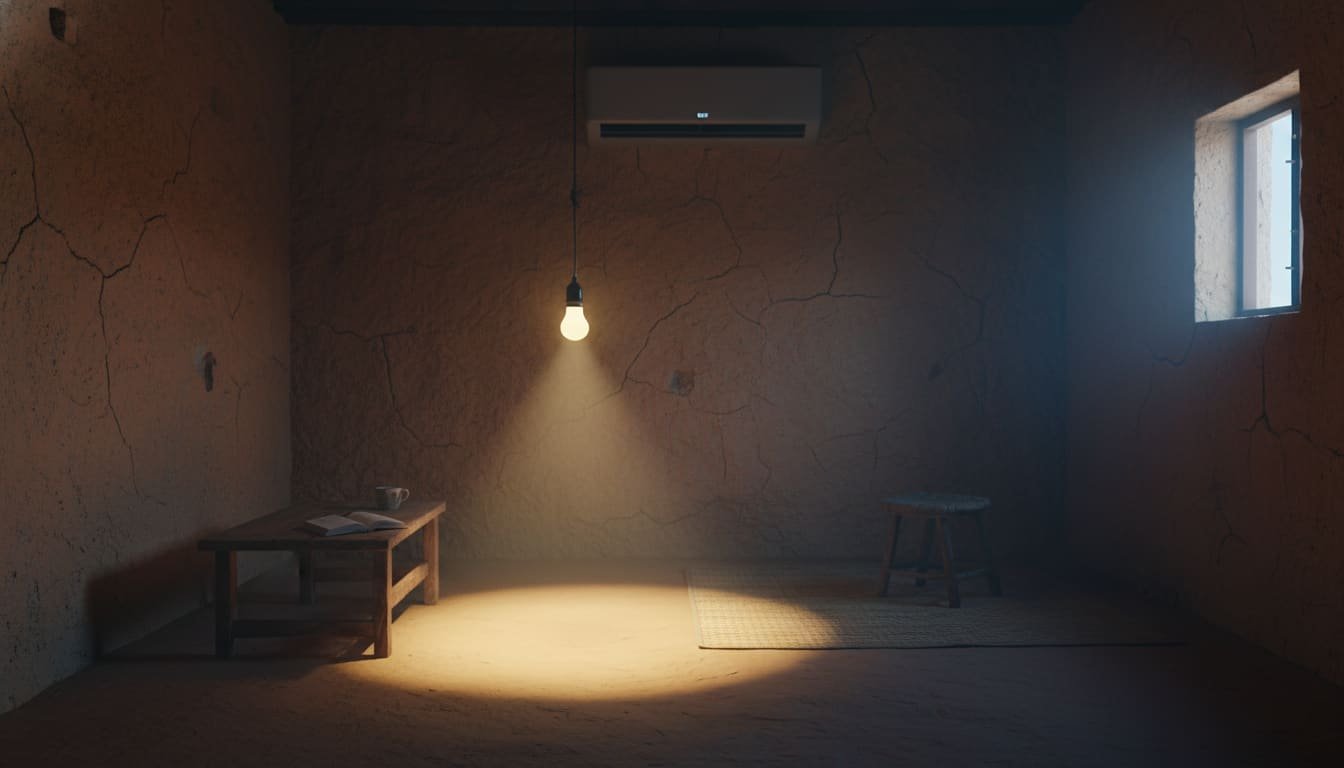
Putting loads into these tiers helps homeowners make cost-effective decisions. In practice, you list every appliance and ask: “If I had only very little power, would I really keep this running?” Only Tier 1 loads get absolute priority in a constrained energy budget. This tiered approach mirrors a “Maslow’s hierarchy” for energy needs: first secure the minimum power for survival, then add comfort, and finally luxury. As one expert puts it:
I need energy to sustain my life… at least this minimum amount of energy will always be there to keep me alive.
In the context of weak grids, this classification is the first and most important step in energy planning. Nearly half of homes in places like Nigeria must do without grid power, and only half of Kenyans with a connection enjoy reliable service. In Yemen, conflict has made most households suffer daily outages. In South Africa today, repeated “load-shedding” means rooftop solar is now considered a survival strategy, not a luxury. In short, many families only get power for parts of the day or through fuel-guzzling generators. By classifying loads first, a homeowner ensures the solar and battery system is sized for what truly matters, avoiding oversized panels for luxury items or undersized ones that can’t run necessary appliances.
The Tiered Priority Model (Logical Framework)
Our Tiered Priority Model is a simple decision framework:
- Tier 1 (Essential): Must-have daily services. Examples include LED lighting at night, phone or radio, well pumping for clean water, a small fridge for medicines or food, a fan or heater for infant or elderly health, and basic cooking appliances like a rice cooker or induction hotplate if no gas is available. These use relatively little power individually—a phone charger uses about 5 to 10 watts, LED bulbs use 5 to 15 watts each, and a small DC mini-fridge uses 50 to 100 watts—but they run long enough to keep people safe. When planning, assume you want these always-on.
- Tier 2 (Life-Improving): Items that save time or bring comfort but aren’t life-or-death. Examples include a bigger fridge, washing machine, computer, TV for news or education, more fans, an electric stove or microwave for home cooking, or a mid-sized water pump for irrigation. These may use 100 to 500 watts or more. You include as many Tier 2 loads as your system budget allows once Tier 1 is covered.
- Tier 3 (Luxury): High-demand comforts. Examples include watt-hogging appliances like an air-conditioner, which can use 500 to over 1000 watts for even a small unit. Other examples are an electric freezer, a big oven, power tools, a hot-water heater, a spa pump, or very large lighting setups. These become a luxury because they either use huge amounts of energy or are purely optional pleasures.
Key point: For off-grid design, every additional Tier 1 or 2 load increases system size (panels, battery) and cost. As one guide warns, “powering more items means more expense.” Therefore, carefully limit system design to Tier 1 and only some Tier 2 loads unless you can afford a much bigger setup.
This model is essentially a quick triage for energy planning. It’s similar to how you’d budget time or money: pay for essentials first. For example, if you have 50 kilowatt-hours of battery storage, powering a 1000-watt air conditioner (Tier 3) for many hours would consume most of it. But using that same energy for 20 LED bulbs (Tier 1) and a fridge might provide power for weeks. In practice, many solar installers advise making a list, or a load table, of all appliances and then tallying their daily kilowatt-hour usage. This grounded calculation is the technical counterpart to our tiered reasoning: first list your Tier 1 loads with how long each runs daily, then add Tier 2 if the kilowatt-hour budget allows.
Any system design starts with such a load list. Once you have the daily kilowatt-hour requirement, you size the battery to cover nights and cloudy days and the solar panel array to meet that demand. But before doing that math, ask yourself: Which of these appliances would I still run if my power supply was very limited? That question prunes the list down to your Tier 1.
In summary, the Tiered Priority Model is your decision backbone:
- Identify the tier of each appliance. Life-and-health items go in Tier 1, comfort items in Tier 2, and purely extra items in Tier 3.
- Adjust expectations to local conditions. What counts as Tier 1 may change by context. For example, a fan might be Tier 1 in a hot climate but Tier 2 in a mild one.
- Proceed step-by-step. Design first for Tier 1, then see if the budget allows for Tier 2, with Tier 3 only if there’s plenty of capacity.
Scenario-Based Personas (Relatable Examples)
To make this concrete, consider these real-world scenarios, each illustrating different off-grid or weak-grid conditions.
In each case, we run our prioritization:
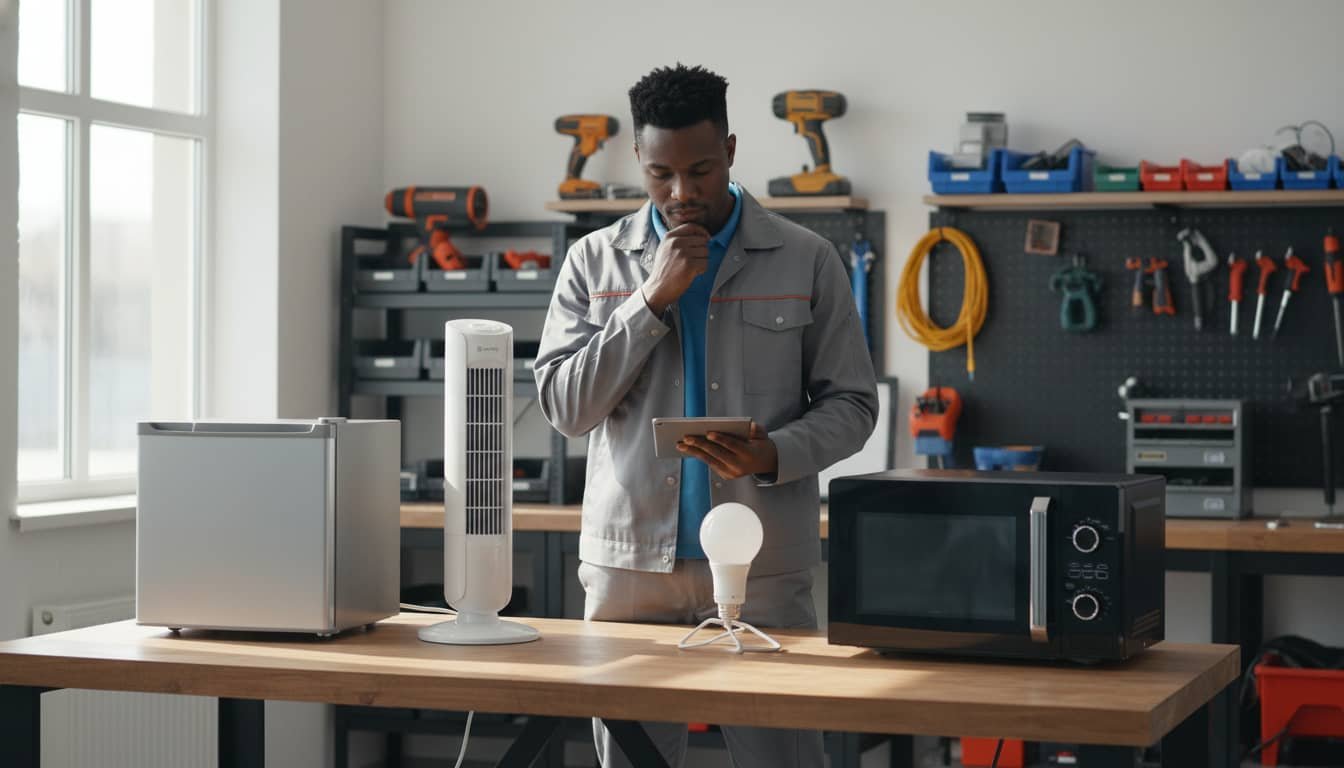
- Persona A – Off-Grid Rural Kenya: Mama Ayo lives with her family on a remote farm. There is a grid in the region, but it’s unreliable and her home isn’t even connected. Instead, Ayo has a small rooftop solar panel and a battery of approximately 1 to 2 kWh. They rely on that for essentials. Tier 1 for them includes LED or CFL lighting for evening chores, phone and radio charging to get news and handle emergencies, and a small fridge for food and children’s milk, which is essential in the heat. A foot-operated water pump or manual bucket handles drinking and cooking water, but if water pumping became electric, it would join Tier 1. Tier 2 for them might be a small TV for education or news and a fan at night. Tier 3, considered a luxury, would be an air-conditioner or freezer, which are out of reach for their tiny system.
- Persona B – Urban Partial-Grid Nigeria: Mr. Okonkwo lives in Lagos. Roughly half of Nigerians have no grid at all, and those who do face frequent outages. Okonkwo has a grid connection but endures nightly blackouts, so he installed a 3 kW generator and a modest 3 kW solar-battery backup. Here, Tier 1 loads include a few LED lights, phone chargers, and a fridge, as they must preserve some food, especially given unreliable local markets. A fan in each bedroom may also be Tier 1 due to heat and health, as fans use approximately 10 times less power than AC, making them practical essentials. Tier 2 includes the TV, a Bluetooth radio or small sound system, and maybe a rice cooker or blender for cooking. His washing machine might become Tier 2 if it can run on solar during the day. Tier 3 is the air conditioner, a common luxury in hot Lagos, and any heavy tools. With this list, Okonkwo is careful with generator fuel but tries to run most needs during peak sun to save diesel. His solar design prioritized the fridge and a fan above all else, reflecting the tiering.
- Persona C – South African Suburbs (Load-Shedding): The Naidoo family in Johannesburg experiences regular scheduled blackouts that last for hours, dozens of times a year. They decided to go solar. As recent reports note, rooftop solar in South Africa has shifted from “a luxury for the eco-conscious” into a “survival strategy” against rolling outages. The Naidoos list Tier 1 loads as lights for indoor and outdoor safety, phone and laptop charging for kids’ homework during outages, and perhaps their small chest freezer or fridge to save food or store insulin. A fan or heater, depending on the season, is Tier 1 because health can suffer during high heat or cold. A drinking water pump or well would be Tier 1 if they relied on power for water, as many water systems fail during load-shedding. Tier 2 loads are their TV and streaming devices for information and online learning, and kitchen appliances like a microwave or a secondary fridge. Tier 3 items include their big electric oven and other luxury devices. By ranking this way, their solar contractor sized a 5 to 6 kWh battery system to cover one to two days of Tier 1 usage and a suitably large inverter to handle worst-case Tier 2 loads during the day.
- Persona D – Rural Yemen (Conflict Zone): Fatima’s family in rural Yemen had grid power pre-war, but now the whole region is off-grid with severe shortages. Fuel is also scarce and expensive. They rely on small solar kits and car batteries for essential power. Tier 1 for them includes LED lights for studying by a solar desk lamp at night, phone charging as communication is critical in a conflict zone, and all the equipment of their modest medical clinic: a vaccine fridge for medicines, an oxygen machine for a sick family member, or a CPAP for an elder. Disrupted commerce makes phones and radios absolutely necessary for basic news on aid. Tier 2 might include a radio or TV for education and news. Luxury Tier 3 items like AC or a large freezer are off the table. In such an extreme scenario, the bar for Tier 1 is higher: any device tied to saving one’s life or health moves up. This case underscores why our framework must be flexible to personal and climate needs. Fatima’s single small fridge is Tier 1 due to medicine needs, whereas in a different family it might be Tier 2. The solar system is sized around those survival-critical Tier 1 loads first.
Each persona shows how context changes what is “essential.” For example, fans are Tier 1 in hot climates like Kenya and Nigeria but might be Tier 2 in milder areas. Children’s education devices, such as tablets and lights for evening study, might become Tier 1 if online schooling is their only option. Health needs, like insulin storage or oxygen supply, can instantly elevate an appliance to Tier 1.
By keeping these personas in mind, we see why a one-size-fits-all list doesn’t work. Instead, you examine your own situation through these lenses. In the next section, we build a step-by-step toolkit that each homeowner can use in the same way that Mama Ayo (Kenya), Mr. Okonkwo (Nigeria), the Naidoo family (SA), or Fatima (Yemen) would.
User Toolkit: How to Classify Your Loads
Below is a practical toolkit to apply the tiering to your home. We integrate four methods: a self-checklist, a rule-based guide, a weighted scoring system, and context-specific insights—all tied together with example walkthroughs.
1. Contextual Self-Assessment
Start by describing your home context in broad strokes. Important factors include:
- Grid Reliability: Note how often the grid is available. Is it 24/7, or do you have daily or local outages? For example, “only 8 hours per day on average.” If your grid is poor or nonexistent, Tier 1 loads must be fully off-grid capable. If your grid is fairly reliable, you might afford more Tier 2 loads knowing the grid will carry the overflow.
- Climate: Is it hot and arid, humid tropics, or cold winters and hot summers? Climate dictates priority. In very hot areas, cooling appliances like fans or AC shift in importance. Note that a 50-watt fan is far more power-efficient than a 500 to 1000-watt air conditioner. In Sierra Leone or Egypt, one fan run for 10 hours uses approximately 0.5 kWh, whereas an AC for the same time uses 10 times that. If you face extreme heat but must save energy, ceiling or breeze fans often become Tier 1 and AC becomes Tier 3. In cold climates, heating, such as an electric heater, can become a necessity on winter nights if no other fuel is available.
- Family Health & Needs: Note any health conditions or special needs in the household. Does someone need refrigeration for medicine? A medical device like a CPAP for breathing, a nebulizer, or an incubator? These needs override normal priority. For instance, an oxygen concentrator would be Tier 1, even if it consumes 200 watts.
- Activities/Work: Do you work from home on a computer or need an always-on internet connection?
A home office might raise technical loads to Tier 2. Do you run a home business, such as with a sewing machine, power tools, or a small CNC? That could affect priorities differently.
- Daily Schedule: Are you out all day and home at night, or are you home during the day? For example, if everyone is away at work or school until 6 pm, you might focus on storing solar energy for evening lighting and cooking. If you are home in the afternoons, you can run some Tier 2 loads like a washing machine or oven on solar power midday without significantly extending your battery needs. Write down the typical hours of activity for each critical appliance.
Case Study – Self-Assessment (Kenya): Mama Ayo notes: “Grid: none; Climate: hot year-round; Illness: none; Work: farming/children at home; Schedule: evenings indoors, mornings outside.” She realizes Tier 1 must include good lighting in the evening for her kids to read and reliable phone charging every night for emergency information. The fan is Tier 2—nice but tolerable without at night with open windows—and her small radio/LED lantern covers night safety.
Case Study – Self-Assessment (South Africa): Mr. Naidoo notes: “Grid: unpredictable, 12 hours/day average; Climate: mild winter but can freeze on some nights; Health: senior parent; Work: adults at home offices; Schedule: 6 pm–10 pm main use.” He emphasizes that Tier 1 items must run during the average 12 undependable hours: lights, internet router, laptop chargers, and a portable heater at night for his relative’s health. The TV becomes Tier 2 and is turned off during blackouts.
2. Rule-Based Checklist
Next, use a straightforward checklist to slot each appliance:
- Is it absolutely necessary for life, health, or basic safety today? If yes, mark it as Tier 1. Examples include lights in bedrooms, a medical fridge, or a phone.
- If I had minimal power, such as from a small solar generator, would I run this first? If yes, it is Tier 1. If it can wait for a cloudy day, it is likely Tier 2 or 3.
- Does it allow me to be independent of the grid or fuel, for instance, by replacing cooking fuel? If so, it may be classified as Tier 1 or 2 instead of Tier 3. For example, an electric pressure cooker might save on fuel bills, so it could be classified as Tier 2.
- Is it used daily and for long hours? High-hour uses tend to be Tier 1 or 2. For example, a fridge runs for about 24 hours daily and is normally Tier 1 if storing essentials. A fan that runs 8 to 10 hours when it is hot is also Tier 1.
- Is its power draw large enough to threaten the whole system? If yes, it is a candidate for Tier 3 if non-critical. For example, a 1000-watt space heater or AC should be Tier 3 unless mandated by health. A small 10-watt LED lamp is Tier 1 if needed.
- Does it directly save money or increase productivity? If so, consider it for Tier 2. Washing clothes by machine saves time compared to doing it by hand, so it is Tier 2. A luxury fish tank pump is not critical and is therefore Tier 3.
This rule-based method, using if-then logic, quickly narrows down many items. You can literally go down your appliance list with these questions.
- If an appliance receives “yes” answers to none of the above questions, it is Tier 3 (pure luxury). For example, a popcorn popper or holiday lights.
- If it answers “yes” to some health or productivity questions but is not life-critical, it is Tier 2.
- If it answers “yes” to most or all questions, it is Tier 1.
Case Study – Rule-Check (Nigeria): Okonkwo lists his appliances: internet router, fridge, lights, fan, TV, cooker, washing machine, radios, cellphones, iron, blender, and a couple of power tools. He applies the rules:
- Fridge: Runs all day, keeping food safe. This is Tier 1.
- Lights: Used every night. This is Tier 1.
- Phone chargers/radio: Provide daily information. This is Tier 1.
- Fan: Runs at night during the winter and cools during life-threatening summer heat. Due to the climate factor, this is Tier 1.
- TV & computers: Used in the evenings but can be skipped if needed. This is Tier 2.
- Stove (electric): Used daily for cooking, replacing gas or wood. This is Tier 2.
- Washing machine: Runs weekly, not daily. He debates between Tier 3 or 2 and decides on Tier 3 due to its heavy power draw, opting to use a laundromat instead.
- Hair dryer/iron: Rarely used. This is Tier 3.
Thus, he plans two system scenarios: one with just Tier 1 appliances plus the TV (a lean build), and a bigger one to include the frying pan (Tier 2).
3. Weighted Scoring System
For a more nuanced approach, assign scores to each appliance across several factors, then sum them. A sample scoring table might use factors like these:
| Factor | Description | Score (0–3 points) |
|---|---|---|
| Health/Critical | 3 = life-or-health critical | |
| 2 = important | ||
| 1 = useful | ||
| 0 = none | ||
| Daily Usage | 3 = used >6 hours/day | |
| 2 = ~2–6 hours/day | ||
| 1 = <2 hours/day | ||
| 0 = seldom | ||
| Climate Impact | 3 = crucial for comfort in local climate (e.g., fan in tropics) | |
| 2 = moderately important (e.g., lights after sunset) | ||
| 1 = little effect | ||
| 0 = none | ||
| Energy Intensity | 3 = very high drain (1000+ W) | |
| 2 = moderate (200–1000 W) | ||
| 1 = low (<200 W) | ||
| 0 = negligible | Low scores favored | |
| Frequency of Need | 3 = every day | |
| 2 = weekly | ||
| 1 = monthly or rarely |

You can customize factors like “Economic Benefit” or “Cultural Importance” if they are relevant.
For each appliance, give 0–3 points per factor and create a small table for yourself. Then, sum each appliance’s score. A higher total means a higher priority. You can set cutoff ranges, for example: a total of 7–12 points equals Tier 1, 4–6 equals Tier 2, and 0–3 equals Tier 3.
Example Scoring Table:
| Appliance | Health (0–3) | Hours (0–3) | Climate (0–3) | Demand (0–3) | Total | Tier |
|---|---|---|---|---|---|---|
| Phone Charger | 2 (communication) | 3 (3h/day) | 0 (none) | 0 (5W) | 5 | 1/2 |
| LED Lighting (x5) | 2 (safety) | 3 (6h/day) | 1 (some, night) | 1 (30W total) | 7 | 1 |
| Refrigerator | 3 (food storage) | 3 (24h) | 1 (some) | 3 (150W) | 10 | 1 |
| Fan (3 units) | 1 (comfort) | 2 (8h) | 3 (very hot) | 2 (150W total) | 8 | 1 |
| Small TV | 0 (no health) | 2 (4h) | 0 | 2 (80W) | 4 | 2 |
| Washing Mach. | 0 | 1 (1h 3x/week) | 0 | 3 (500W) | 4 | 2/3 |
| Air Conditioner | 0 | 1 (2h) | 3 (critical in desert) | 3 (1000W) | 7 | 1/2 |
(Illustrative: The points and tier cutoffs are for example only.)
Using the scores, you might bump an appliance like an AC into Tier 1 if the climate or usage hours are extreme, even though its power demand is high. In our example, the AC scored a 7, which is borderline. If the owner’s health would be at risk during a heat wave, it could be kept in Tier 1 by necessity; otherwise, it would be dropped if the cost is prohibitive.
Case Study – Scoring (Yemen): Fatima’s family lists their refrigerator, LED lamp, phone charger, fan, and small freezer. They score high on health and daily use for the fridge and lamps, driving them to Tier 1. The freezer scores similarly due to food safety. The fan also scores high on climate, making it Tier 1 as well. Their small radio/TV scores lower, so it is Tier 2. This systematic score confirms the intuitive checklist method: the life-critical loads rise to the top.
After scoring all items, review borderline cases. If an appliance’s score is just below Tier 1, ask yourself, “Can I drop a Tier 2 load to allow this to be Tier 1?” For example, if adding one more TV would spike the system size abruptly, it might be better to keep it in Tier 2.
4. Context-First Modular Analysis
Finally, apply context-specific reasoning to tweak the list:
- Hot Climates: If you live in a desert or the tropics, such as the Gulf countries or East/Central Africa, cooling needs dominate. Fans, whether ceiling or pedestal models, often become Tier 1 because thermal stress can be dangerous. In contrast, air conditioning typically remains Tier 3 unless it is absolutely affordable. For example, installing a 50-watt fan for each bedroom can be a Tier 1 priority, but a 1000-watt air conditioner might only be connected to the grid or omitted entirely from a solar design. In hot areas, you might also prioritize shading, natural ventilation, or evaporative cooling over electrical loads.
- Cold Climates: In colder highlands or during winter months, such as in parts of the Middle East or the East African highlands, space heating becomes essential for health. An electric heater or a heat pump could become Tier 1 if no cheaper fuel-based heating is available. However, be aware of its heavy power draw—sometimes it is better to plan for structural insulation. Otherwise, small electric blankets or room heaters might be scheduled for use when necessary as Tier 2 items.
- Rural Farmhouse: If you pump water or run an irrigation system, the pump may be a Tier 1 priority for livestock or basic crops. A small DC pump might be encouraged if tying wells to a pedal-powered pump is not practical. Similarly, grain mills, a sewing machine for a livelihood, or a small fridge for stored produce can move up in priority. Consider biogas or LPG alternatives as well; if cooking is ordinarily wood-fired, an electric cooker might be Tier 2 for convenience rather than an essential item.
- Urban Apartment: Noise-sensitive loads are a significant factor. Heavy generators might not be an option, so even moderate appliances like a window AC unit might fall to Tier 2 because using a diesel backup would be unpopular with neighbors. Meanwhile, lighting and communications remain non-negotiable Tier 1 priorities.
- Health-Dependent Home: If someone in the household uses an electric medical device—such as a ventilator, oxygen concentrator, CPAP machine, or dialysis pump—that device skyrockets to Tier 1, even if it is power-hungry. The rest of the home’s energy plan must be designed around it.
In short, adjust your tiers by situation. For each influencing factor—climate, health, lifestyle—revisit your Tier 1 list and upgrade any item as needed. This modular, context-aware step ensures no critical need slips through the cracks.
Case Study – Context (Hot Climate): In the summer, the Kenyan farm gets sweltering. Mama Ayo decides the single bedroom fan must be Tier 1 at night because her toddler cannot sleep and might suffer from heat stress. They also add a small evaporative cooler as a Tier 2 item if the budget allows. In contrast, she classifies her electric pressure cooker, which is used occasionally, as Tier 2 because it is useful for saving wood but not urgent. The rule-based checklist and scoring system had both flagged it as a lower priority, and given the dry climate, it remains in Tier 2.
Case Study – Context (Cold Season): Mrs. Naidoo finds that winter nights in Johannesburg can drop below freezing during load-shedding evenings. She adds a portable electric heater to Tier 1 for her grandparent’s bed, whereas the air conditioner, a summer necessity, is designated as an off-grid Tier 3 item. This contextual flip shows how one family’s Tier 3 luxury (AC) can be another’s essential (heater).
Actionable Outcomes – From Plan to Purchase
Once you have classified all loads into Tiers 1–3, you can translate that list into a concrete power system plan. This means specifying battery size, solar panels, and inverter capacity, and then shopping wisely.
Modular System Configuration
Use your Tier 1 list to define a base system. Then, add capacity for Tier 2 if your budget allows. We call these configurations modular kits or “packages.”
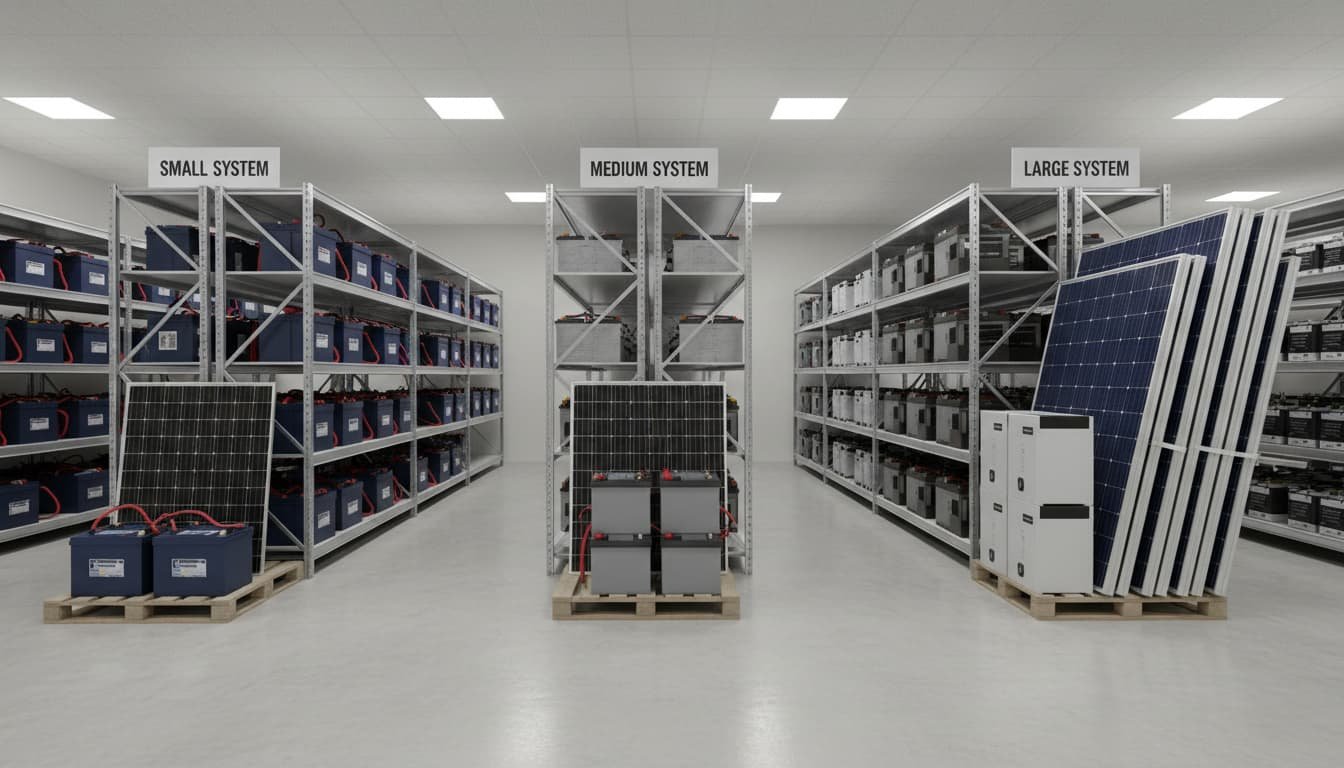
- System A – “Essential Survival” Kit: Designed solely around Tier 1 loads. For example, this might be a battery bank of approximately 2–3 kWh and an inverter of about 1–2 kW, with a solar array sized to refill daily use. Such a system could power lights, phone charging, one or two fans, and a small fridge for one to two days.
- An example configuration could be: A battery bank of two 12-volt, 100-amp-hour lead-acid batteries (providing 2.4 kWh) or a 2–3 kWh lithium battery; a 1.5 kVA inverter; and a 1–1.5 kW solar panel array. This covers survival needs on cloudy days with moderate storage.
- System B – “Life-Comfort” Package: Builds on System A by adding Tier 2 loads. The battery might be 4–6 kWh and the inverter around 3 kW, with a panel size of 3–4 kW. This can run the items above plus a TV, rice cooker, stronger fans, or even a modest air compressor for many hours per day.
- System C – “Full Lifestyle” Setup: A large system covering almost everything (Tier 1, Tier 2, and some Tier 3 loads). This would require a battery of 10+ kWh, an inverter of 5+ kW, and a PV array of 5+ kW. It is capable of running heavy loads like a freezer, air conditioning, and multiple appliances while still meeting essential needs, but the cost rises steeply.
Below is a comparison table illustrating these package levels:
| Package | Battery Bank | Inverter | PV Array | Main Loads Covered |
|---|---|---|---|---|
| Survival Kit | ~2–3 kWh (small) | ~1–1.5 kVA | ~1–1.5 kW | Lights, phone/radio, small fridge, 1–2 fans |
| Comfort Pack | ~4–6 kWh | ~2–3 kVA | ~3–4 kW | All Essentials + TV, water pump, cooker, washer |
| All-in-One | 10 kWh+ | 5 kVA+ | 5–6 kW+ | Everything (Essentials + AC, large freezer, etc.) |
These examples are based on regional kits; for instance, a 2 kWh kit in South Africa might cost under R20,000 (approximately $1200), whereas a 6 kWh kit could be around R40,000. The jump from a 2–3 kWh system to a 6 kWh system more than doubles the cost, reflecting the tier jump.
After deciding on your target package, ensure you have some margin. Batteries age, and you do not want to fully deplete them every night. It is common to double your Tier 1 daily kWh usage so the battery can cover two days without sun, a concept known as “days of autonomy.” For example, if your Tier 1 loads use 2 kWh daily, a 4–5 kWh usable battery (approximately a 5–6 kWh nominal lead-acid battery or a 3–4 kWh lithium battery) is prudent.
Solution Package Comparison Matrix
To help compare different options, you can build a package matrix. For example:
| Package Name | Battery (kWh) | Inverter (kW) | Panel (kW) | Key Tier 1 Loads | Key Tier 2 Loads |
|---|---|---|---|---|---|
| “Survival Kit” | 2–3 | 1–1.5 | 1–1.5 | Lights, phone, small fridge | Small fan, radio |
| “Comfort Pack” | 5 | 3 | 3 | All above | TV, cooker, water pump |
| “Luxury Bundle” | 10+ | 5+ | 6+ | All above | AC, large freezer, tools |
This table is a sample. Use your own numbers based on vendors’ quotes.
Using such a matrix, you can see the trade-offs; for example, the Survival Kit handles a certain number of hours for Tier 1 loads, but adding Tier 2 doubles the battery capacity needed. When approaching vendors, ask them to fill in this matrix with their recommended systems. This makes comparing quotes easier.
Vendor Engagement & Procurement Toolkit
Once you decide on target capacities, you are ready to engage suppliers and installers. Use a checklist and template to do this smartly.
- Prepare a System Requirements Sheet: This is a one-page summary for vendors. Include your location, climate, your Tier 1 and Tier 2 appliance list with power and hours (the load table you gathered), required autonomy (for example, two days), and a note on Tier priorities. Specify any preferences, such as a preference for Li-ion batteries, grid-charging ability, or off-grid mode. Here is roughly what to include:
- Household Profile: Number of people, roof orientation, and budget range.
- Load Table: Each appliance with its wattage, daily hours of use, and its assigned Tier.
- Special Needs: For example, “must run the fridge 24/7” or “generator backup if needed.”
- Goals: For example, “keep lights and communications on 24/7 with two days of autonomy.”
- Question Checklist for Installers: During vendor interviews, ask the following questions:
- Credentials & Experience: Do you have certified installers or recognized accreditation? Locally, look for their training or any official license.
- Track Record: Ask for examples of recent installations similar to yours and request references. Good installers will show you photos, specifications, or provide customers to contact. Reading online reviews is also wise.
- Warranties & Service: Confirm the warranties on panels, inverters, and batteries (10 to 25-year panel warranties are common) as well as on the installation labor. Understand who will service your system in the future.
- Financial & Installation Details: Get a detailed quote that breaks down all components and labor costs. Watch for unusually low prices, as they might indicate skimping on quality or missing costs. Check if financing or payment plans are offered.
- Technical Details: Do they size the system based on your actual load table, not just the square meterage of your roof? Can they explain how many kilowatt-hours their design will yield daily? A credible installer will first calculate your kWh need and then size the components accordingly.
- After-Sales Support: Do they offer monitoring tools? What is their response time if something fails? Are they a local company with an office you can visit?
- Compare Quotes: Use a spreadsheet or table to compare each vendor on key specifications, price, warranty, and other notes. Do not just pick the cheapest option; weigh reliability and support. A poor-quality inverter or battery can ruin the system’s performance.
- Procurement Tips: Once you choose a provider, ensure the contract clearly lists all parts (panel count, battery amp-hours, inverter model, mounting hardware, cables) and their warranties. Keep copies of all specifications. Plan for additional costs like shipping, if components are imported, and any applicable VAT or taxes.
In summary, vet your vendor as carefully as you did your loads. Verify their credentials and ask for proof of past work. Obtain at least three quotes and ensure each is based on your load requirements. Your preparation ensures the final system exactly matches your Tier 1 needs and planned Tier 2 comfort, without hidden shortcuts.
Conclusion
By following this structured approach—classifying loads into tiers, using the hybrid logical/model context framework, and applying the toolkit—you, the homeowner, take charge of designing an energy system that truly fits your life. This empowers you to make cost-effective decisions: you will know which appliances are non-negotiable, which can wait, and exactly how large a solar and battery system they require.
Finally, when you shop for a system, remember that our three-tier perspective should guide all investments. For example, do not pay extra for solar panels that will only ever run a luxury load; instead, ensure your essential lights and phone stay on. With your classified load list in hand, you can directly ask, “What battery and inverter can keep these items running?” The resulting quotes will be clear, fair, and tailored to your survival and comfort priorities.
This guide aimed to be practical and empathetic. The research behind it shows that in the Middle East & Africa, many communities are innovating—from Kenyan villages charging phones with pico-solar kits to Nigerian families swapping diesel for solar-friendly freezers—all by focusing on what they truly need and ditching the rest. By classifying your loads and following these steps, you join that movement of wise planners, securing energy for your and your family’s well-being, not just your wants.
Stay empowered—plan carefully, ask questions, and build the right system for your needs. You will save money and get the lights on exactly where and when you need them.