How to Choose the Right Size Solar Inverter: A Guide for the Middle East & Africa
Selecting the right size for a solar inverter starts with identifying one of three key drivers: your PV array size, your electricity loads, or your battery bank capacity. In other words, sizing an inverter depends on your system type and primary goal. For high-sun regions like the Middle East and Africa, this guide provides a clear framework to pick the right inverter by starting from your PV array, your load profile, or your battery bank—whichever matters most.
Throughout this process, remember two fundamental rules: the inverter’s continuous power rating must exceed your continuous load, and its peak (surge) capacity must be sufficient to cover motor startups. This guide walks you step-by-step through that decision process.
Chapter 1: Identify Your System Type (The Foundation)
Your choice of inverter size depends directly on your system type. Grid-tied systems focus on bill savings, hybrid systems add backup for unstable grids, and off-grid systems aim for full energy independence. Each system type has a different goal and therefore requires a different sizing methodology.
Before performing any calculations, decide which of these three categories applies to you:
- Grid-Tied System: Connected to a reliable grid to offset electricity bills. No battery is needed, though one can be included as an option. The primary goal is maximizing solar energy yield and utilizing net-metering. Sizing is driven by the PV array, using the DC/AC ratio.
- Hybrid System: Connected to a grid that may be unreliable or expensive, with a battery for backup. The goal is backup power and efficiency. Sizing must cover key loads and meet battery charging needs.
- Off-Grid System: Not connected to a utility grid. The goal is full energy independence. The inverter must handle all loads continuously. Sizing is based on a rigorous, load-by-load analysis and battery support.
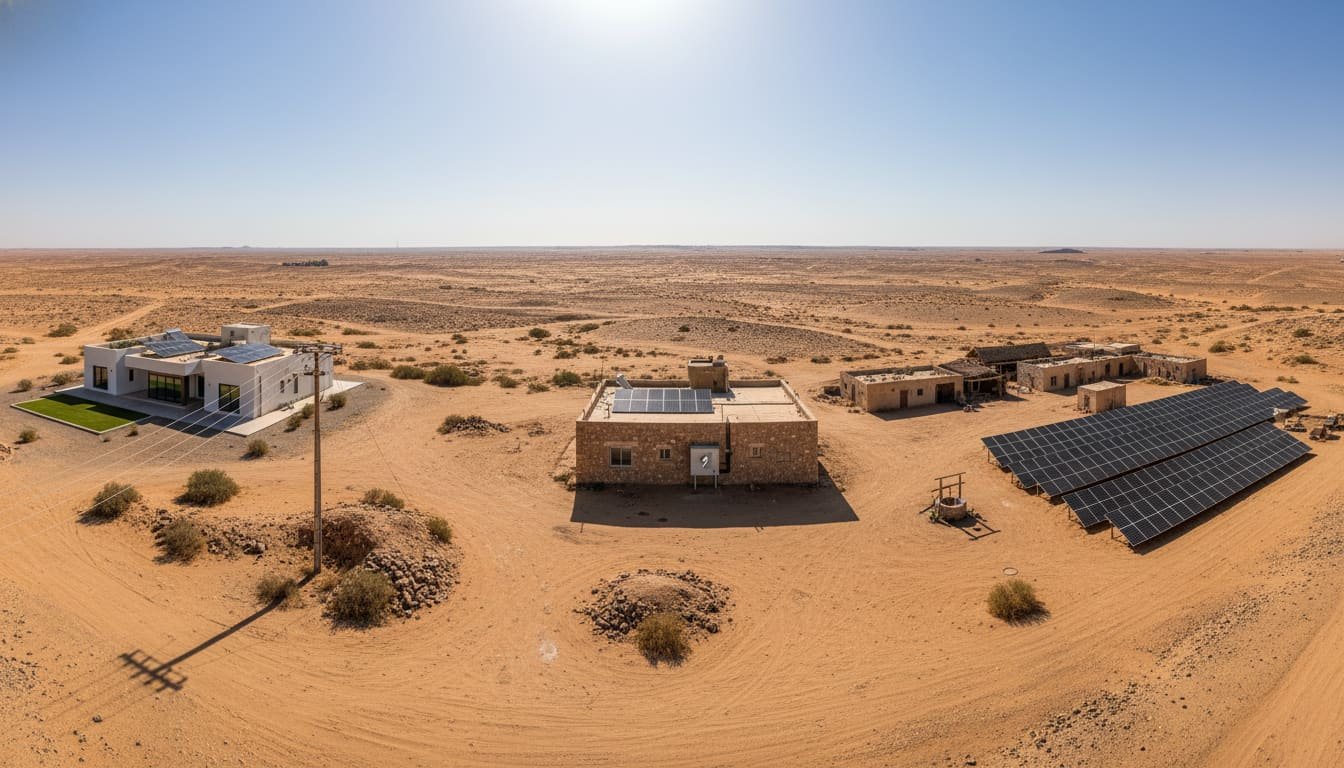
| System Type | Primary Goal | Inverter Sizing Approach |
|---|---|---|
| Grid-Tied | Reduce bills (net energy) | PV array-driven (set DC/AC ratio) |
| Hybrid | Backup and reliable power | Load-driven (then check storage) |
| Off-Grid | Full independence | Load-driven (meet all demand) |
In practice, this means if you’re grid-tied, the grid can absorb any surplus energy, so you size the inverter based on your solar panels. If you need backup power or have no grid connection, you must list your electrical loads and size the inverter to cover them. The hybrid case is a blend: you still ensure load coverage first, then adjust for any battery integration.
Your system type determines which sizing methodology to use. Off-grid systems require load-profile sizing because there is no grid to balance excess demand, while grid-tied systems can use PV-driven sizing for maximum yield. In every case, the inverter’s continuous rating must cover the continuous load, and its peak rating must handle all startup surges.
Chapter 2: The Three Sizing Methodologies (The Calculation Core)
2.1 PV-Driven Sizing (For Grid-Tied Systems)
In a grid-tied system, you generally size the inverter based on the PV array’s capacity—specifically, the DC/AC ratio of panel watts to inverter watts. In hot, sunny climates, it is common to oversize the PV array by approximately 10% to 25% relative to the inverter, resulting in a DC/AC ratio of 1.1 to 1.25. This strategy helps maximize yearly energy production, as solar panels often produce less power at high temperatures.
The DC/AC ratio is the ratio of the solar array’s DC capacity (in watts) to the inverter’s AC output rating. For example, if you have 12 kW of panels connected to a 10 kW inverter, the DC/AC ratio is 1.2, which is calculated by dividing 12 by 10. A slightly higher ratio, up to about 1.3 in many designs, means the inverter runs at its maximum capacity more often, boosting energy yield in the early morning and late afternoon with only minor energy loss (clipping) at midday. In cooler climates, this ratio might be lower, whereas in hot deserts it is often higher to compensate for temperature-related performance losses.
For grid-tied systems, the inverter’s AC rating can be equal to or slightly below the array’s DC rating. The key relationship is that the PV array sizing influences the DC/AC ratio, which in turn affects the system’s total energy yield.
Oversizing the panels (using a larger DC array) generally increases output, but only if the inverter can convert the additional power. In practice, an inverter is often sized to be about 20% smaller than the panel array to capture more sunlight over the course of the day.
| PV Array (DC) | Inverter (AC) | DC/AC Ratio | Comments |
|---|---|---|---|
| 5.0 kW | 5.0 kW | 1.0 | Balanced – no oversizing, some midday clipping likely |
| 6.0 kW | 5.0 kW | 1.20 | 20% oversize, higher yield in mornings/evenings (common in MEA) |
| 6.5 kW | 5.0 kW | 1.30 | 30% oversize, boosts output in non-peak sun, more midday clipping |
For instance, a 6.0 kW solar array paired with a 5.0 kW inverter yields a 1.2 ratio. In the Middle East’s abundant sun, that 20% oversizing often produces more energy overall. By contrast, using a 1.0 ratio (5.0 kW of panels on a 5.0 kW inverter) might waste some potential energy during peak midday sun. Finding the optimal DC/AC ratio involves balancing panel cost against lost energy.
- PV Array → DC/AC Ratio: The size of your PV array directly sets the DC/AC ratio of the system.
- DC/AC Ratio → Yield: A higher DC/AC ratio (oversizing panels) typically increases the energy harvest up to a certain point.
- Inverter Rating vs. Array: The inverter’s AC rating effectively caps the power delivered; any extra solar capacity beyond its input limit will be clipped and not converted.
In summary, for grid-tied systems with a stable utility connection, start by sizing the inverter so its AC rating matches your panel array at the chosen DC/AC ratio (typically around 1.1 to 1.3). This ensures the inverter runs near its capacity during peak sun without being undersized. Then, double-check that your electrical loads do not greatly exceed this capacity.
2.2 Load-Driven Sizing (For Hybrid & Off-Grid Systems)
For hybrid and off-grid systems, the inverter’s size is determined primarily by the total continuous load of all appliances you need to run simultaneously, with special attention to the high startup surges from motors and compressors. In practice, you must sum all running wattages and then ensure the inverter can handle that total plus any surge demands.
- List Continuous Loads: Make an itemized list of every appliance (or load) you plan to operate at the same time. Note each device’s running watts, including items like lights, fans, TVs, pumps, air conditioners, and refrigerators. Sum these power values to get the total continuous load. As a rule of thumb, add a margin of 10% to 20% to ensure the inverter isn’t constantly running at 100% capacity.
- Account for Surge Loads: Many appliances with motors—such as fans, pumps, air conditioners, compressors, and drills—require multiple times their running power at startup. Induction motors and compressors typically draw four to eight times their normal current for a fraction of a second. For example, a small pump or fan might have a 3x to 5x surge, while a deep-well water pump or a scroll AC compressor might hit a 5x to 8x surge. You must ensure the inverter’s peak (or surge) rating can supply these bursts without tripping.
- Select Inverter: The inverter’s continuous output rating must exceed the total continuous load. Its surge rating must handle the highest startup draw. In practice, you often pick an inverter whose continuous wattage is slightly above your summed loads and whose surge rating covers the sum of the largest motor startups. For example, if your loads total 3.3 kW continuous but you have a 4 kW pump that surges to 12 kW, you would choose an inverter that can handle approximately 3.3 kW continuous and a surge of at least 12 kW.
The table below shows some typical appliances with their approximate running and surge power requirements.
| Appliance | Running Power (W) | Surge Factor (×) | Surge Power (W) |
|---|---|---|---|
| Split AC, ~1.5–2 ton (6–7 kBTU) | ~1,800–2,500 | ×3–4 (1–2 min) | ~5,400–10,000 |
| Water Pump (1–2 HP) | ~1,100–1,500 | ×3–4 | ~3,300–6,000 |
| Refrigerator/Freezer | ~150–200 | ×4–7 (short time) | ~600–1,400 |
| Washing Machine (motor only) | ~500 | ×3 | ~1,500 |
| Fans/Lights (induction/LED) | ~50–100 | ~1 (no surge) | ~50–100 |
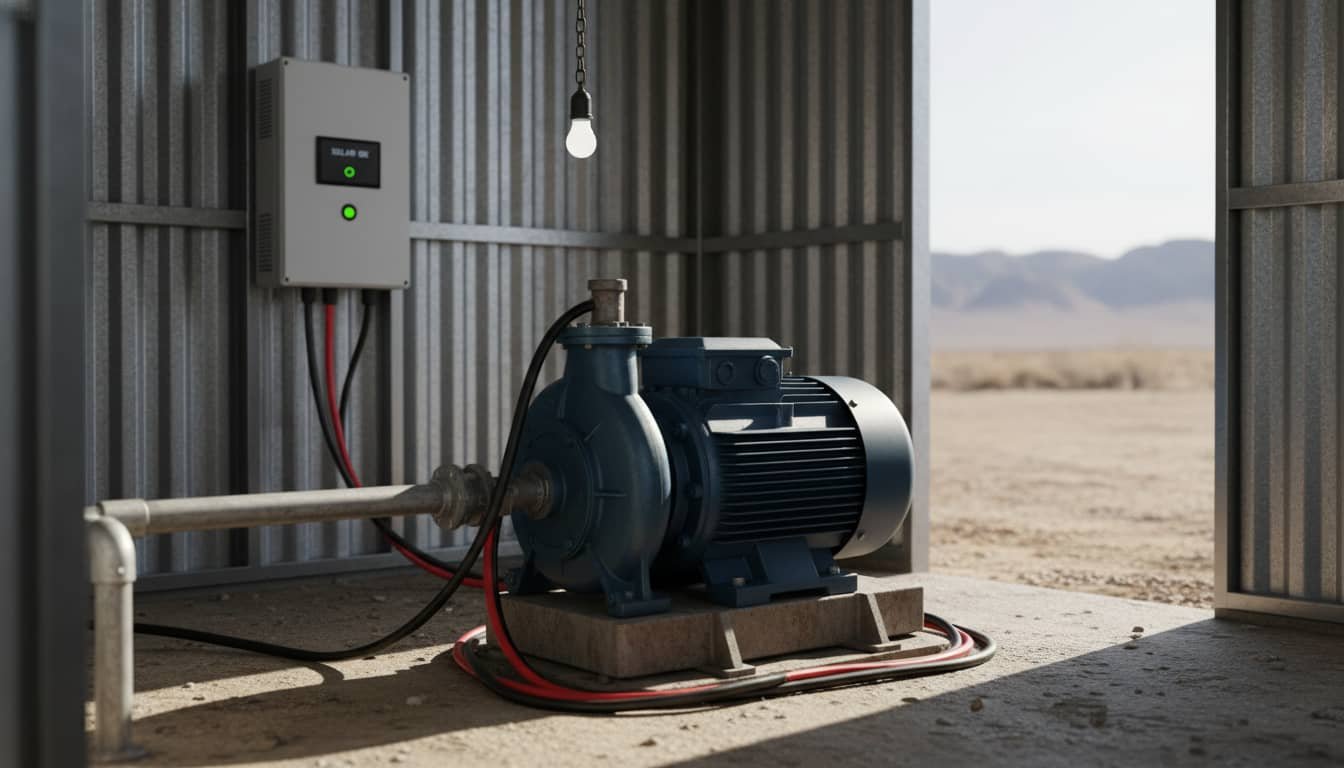
For example, a 1.5 HP water pump (1,125 W) may surge to approximately 2,250 W on startup. In practice, installers might choose a 3.0–3.5 kW inverter for such a pump. Likewise, a 2 kW air conditioner might surge toward 6–8 kW briefly.
Handling these surges is crucial. Often the peak array of surges (the worst-case scenario of simultaneous startups) determines the inverter’s size. In other words, the final inverter must reliably deliver the largest burst of power you could need. If two motors start together, their surge requirements must be added. In an extreme case, the inverter may need to be several times larger in kVA than the nominal continuous load.
- Continuous Load → Inverter Rating: The inverter’s continuous AC rating must exceed the sum of simultaneous running loads, plus a safety margin, to prevent it from overheating or tripping.
- Startup Surge → Inverter Peak: The inverter must handle the highest startup surge, which is the sum of motor inrush currents. Motors often draw four to eight times their running current, so this must be included in sizing.
- Example – Pump Sizing: A 1.5 HP pump (1,125 W) might need a 3.0–3.5 kW inverter to handle a 2,250 W startup surge. This shows that even modest-sounding loads can demand much larger inverter peak ratings.
In practice, perform these calculations step-by-step:
- Sum all running watts of loads you need to operate at the same time.
- Identify surge loads (such as motors and compressors), multiply each by its surge factor, and determine the total peak draw.
- Choose an inverter where:
- The continuous rating is greater than or equal to the total running watts, plus a safety margin and accounting for de-rating in hot climates.
- The peak (surge) rating is greater than or equal to the total surge watts.
- Many inverters list both a continuous kW and a peak/surge kW rating (valid for a few seconds); use these specifications for your selection.
This load-driven method is the most critical for off-grid and backup systems. It ensures your inverter can run everything you expect and survive startup transients.
2.3 Storage-Driven Sizing (For Hybrid & Off-Grid Systems)
Direct Answer: When a battery bank is present, its capacity and charge/discharge requirements can also dictate inverter sizing. If you plan to use the inverter’s built-in charger to quickly replenish batteries, the inverter must be sized for that charging power. For example, to charge a 10 kWh battery in 4 hours requires about a 2.5 kW charge rate, which is calculated by dividing 10 kWh by 4 hours. Therefore, the inverter’s integrated charger must support a rate greater than or equal to 2.5 kW.
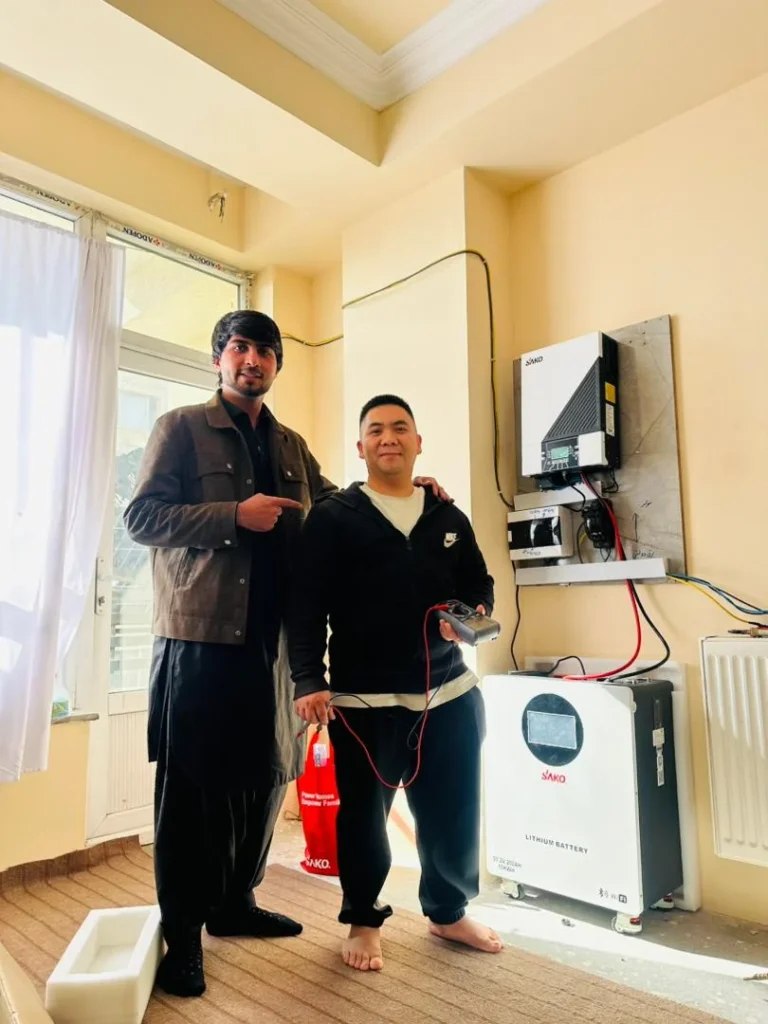
In hybrid and off-grid setups, the inverter often includes an inverter/charger function. The battery’s charging needs must be considered in addition to the loads. If the battery is large, you may want a higher charging current to recharge it quickly after an outage or overnight. Conversely, inverters have a maximum battery charge current specified in amps. You can calculate the maximum charging power in kW by multiplying that current by the battery voltage (e.g., 48V). Ensure that this rating meets your goals.
For example:
- If you have a 10 kWh lithium battery and want it replenished in approximately 4 hours of good sun, you need 2.5 kW of charging power. The inverter/charger must therefore support a rate greater than or equal to 2.5 kW at the battery’s voltage, which corresponds to a current of at least 52 A for a 48 V system.
- If you expect to run loads and charge batteries simultaneously, the inverter rating must be large enough to cover both demands.
For example, with a 2 kW load and a 2 kW charge rate, you should pick at least a 4 kW inverter/charger.
In summary, after doing load-based sizing, Storage-Driven Sizing means:
- Battery Charge Rate: Check the inverter’s maximum battery charge output. It must handle your desired recharge power (e.g., charge in X hours).
- Battery Discharge (Backup): If you intend to run all your loads from the battery during an outage, ensure the battery’s capacity and the inverter’s output can support that duration. This often requires a calculation similar to load-driven sizing for off-grid scenarios.
- Inverter Charger Limits: The inverter’s specification sheet will list a maximum charge current in amps. Use this to compute the power in kW at your battery voltage. That is the battery-driven power the inverter can add.
The key relationship is that battery integration imposes additional power requirements. The inverter must supply enough output to run loads and to charge the battery at your chosen rate. In hybrid systems, after sizing for loads, always verify that the inverter’s battery-charge rating matches your storage plan.
Chapter 3: The Unified Decision Framework
Direct Answer: Start by clarifying your goal and system context, then follow the corresponding sizing path:
- If your priority is bill reduction on a stable grid (Grid-Tied): Begin with PV-driven sizing. Select an inverter based on your panel array and preferred DC/AC ratio, which is typically around 1.1 to 1.3. After that, briefly check that the chosen inverter also meets your load demands.
- If your priority is backup power or living off-grid (Hybrid/Off-Grid): Begin with Load-driven sizing. Tally all your simultaneous loads and pick an inverter to cover their continuous and surge needs. Once that is done, verify storage-driven sizing to ensure your battery charging and discharging requirements are satisfied.
- Then always cross-check:
- In a hybrid case, make sure your solar array is large enough to recharge the battery and supply loads. If not, you may need to revise the PV size or accept more grid use.
- In any system, double-check that no single factor—array size, loads, or battery needs—is being exceeded by the inverter rating.
Put simply: Are you grid-stabilized and aiming to offset costs? Use the PV/array method first. Are you seeking backup or off-grid operation? Use the load method first, then check your battery. This flow ensures you address the most critical constraint first.
For clarity, here’s a simplified decision guide:

- Define Your Goal: Is it a stable grid with a focus on bill offsets, or is it for backup/off-grid purposes?
- If Grid-Tied (stable grid): Go to PV-Driven Sizing.
- If Hybrid/Off-Grid: Go to Load-Driven Sizing.
- After Step 2 or 3: Perform a Storage-Driven check if batteries are used.
- Finalize: Ensure the inverter can meet the largest of the following: array-driven output, load-driven demand, or storage-driven charge rate.
By following this framework, you can avoid under-sizing. For example, an off-grid user must not choose an inverter based only on PV array size, as loads dominate in off-grid systems. Conversely, a grid-tied user does not risk an outage by focusing on PV sizing, since the grid fills any gaps.
Chapter 4: Critical Local Factors for the Middle East & Africa
Direct Answers: In MEA markets, local support and grid requirements are just as important as technical specifications.
- Local Service & Brand Availability: In practice, a reputable brand with in-country support is often more reliable than a technical leader with no local backup. Before buying, ask your supplier: Who provides service? Is there a local warranty service center? Are spare parts stocked locally? What is the warranty duration? For example, Brand X might offer a 10-year warranty, but if parts must come from overseas and take four to six months to arrive, downtime is likely. Prepare questions such as:
> * “Is this inverter model sold and serviced in my country?”
> * “Where are spare parts stocked? Who handles warranty claims?”
> * “Are technicians locally trained for this brand?”
These ensure you’re not left stranded if the inverter fails. High ambient dust and heat in MEA also mean you should pick robust, well-tested models.
- Inverter Certification & Grid Compliance: For grid-tied or hybrid systems, ensure the inverter meets local utility standards. Many countries require anti-islanding, specific voltage/frequency ranges, and approved inverter lists. If your utility (e.g., DEWA, Eskom, Nigeria’s NEPA, etc.) has a certified equipment list, your inverter must be on it. Otherwise, you may face connection delays or refusal. Ask: “Is this inverter compliant with [IEC 62116, IEEE 1547, or the local grid code name] for anti-islanding and ride-through?” In short: an inverter must be not only the right size but also legally allowed on the grid. Using random, cheaper inverters without approval can lead to fines or shutdowns.
- Ambient Conditions: The Middle East’s scorching temperatures can derate inverter output. Inverters often lose capacity in heat. For example, a 6 kW inverter rated at 25°C may only supply approximately 4.8 kW at 40°C ambient. Always check the inverter’s high-temperature derating curve and consider oversizing to compensate for heat.
Putting this together, your local checklist for suppliers might include:
- Warranty length and process (onsite support or return shipping?)
- Local service network and part availability
- Certified compatibility with national grid codes
- Ability to handle local ambient conditions
- Experience of the brand in the MEA region (are they widely used here?)
Addressing these local items ensures your technically sound sizing decision actually performs in the field.
Conclusion & 5-Step Action Plan
Summary: The “what size inverter do I need” question has no single answer—it depends entirely on your system type and goals. Follow these steps:

- Define Your System Type and Goal: Is your system grid-tied (bill-savings), hybrid (backup-plus), or off-grid (independence)? This sets your approach.
- Perform the Main Sizing Method:
- If grid-tied, use PV-Driven Sizing (apply a DC/AC ratio of approximately 1.1–1.3).
- If hybrid/off-grid, use Load-Driven Sizing (add up continuous loads and account for surge).
- Check Battery Needs (if any): Make sure the inverter’s charger can handle your battery’s required charge rate. For example, charging a 10 kWh battery in 4 hours requires a 2.5 kW charging capability. Adjust the inverter or charger rating as needed.
- Review the Largest Requirement: Whichever factor—PV, loads, or storage—resulted in the largest required size determines your inverter’s minimum rating. Always choose an inverter whose continuous kW rating exceeds that value and whose surge (kVA) rating covers the peak starts.
- Confirm Local Factors: Ensure the chosen inverter model has strong local support (warranty, parts) and is approved for your grid. Don’t forget heat and dust—oversize if necessary.
By methodically following this framework, you’ll end up with the inverter size tailored to your situation. In each case, remember the core relationships: the system type determines the sizing method, the inverter’s continuous rating must exceed the continuous load, its peak rating must handle motor starts, the PV array size sets the DC/AC ratio, and battery integration imposes additional power requirements. With those in balance and local considerations checked, you’ll have the right inverter size for reliable solar power in the Middle East & Africa.