A 15kWh battery can last anywhere from about 3 hours under a heavy continuous 4 kW load to 24 hours or more when powering only essential appliances at around 0.5 kW. In practical terms, a home backup system or off-grid setup using a 15kWh battery system may provide a few hours of full-power use or a full day of low-power backup. This article provides a clear framework and calculation table so prosumers and system integrators can determine exactly how long a 15kWh battery will last in their specific scenario. We use a key formula and sample loads to give actionable, data-driven answers for any application.
Calculating 15kWh Battery Runtime: Usable Capacity and Formula
The runtime of a battery depends on its usable capacity in kilowatt-hours (kWh) and the load power in kilowatts (kW) being drawn. The core relationship is that the runtime, measured in hours, is calculated by dividing the usable capacity by the load power.
Importantly, usable capacity is less than the nominal 15 kWh because of system efficiency factors. In practice, a 15kWh battery system with lithium iron phosphate (LFP) chemistry can safely use about 90% of its capacity (a metric known as Depth of Discharge, or DoD) without harming battery life. Additionally, inverter and system losses, which typically result in 90–95% efficiency, further reduce the output.
For example, a conservative calculation using 92% round-trip efficiency results in the following:
- Nominal Capacity: 15.0 kWh
- Depth of Discharge (DoD): Multiplied by 90% (a factor of 0.90)
- System Efficiency: Multiplied by 92% (a factor of 0.92)
- Resulting Usable Capacity: 12.42 kWh
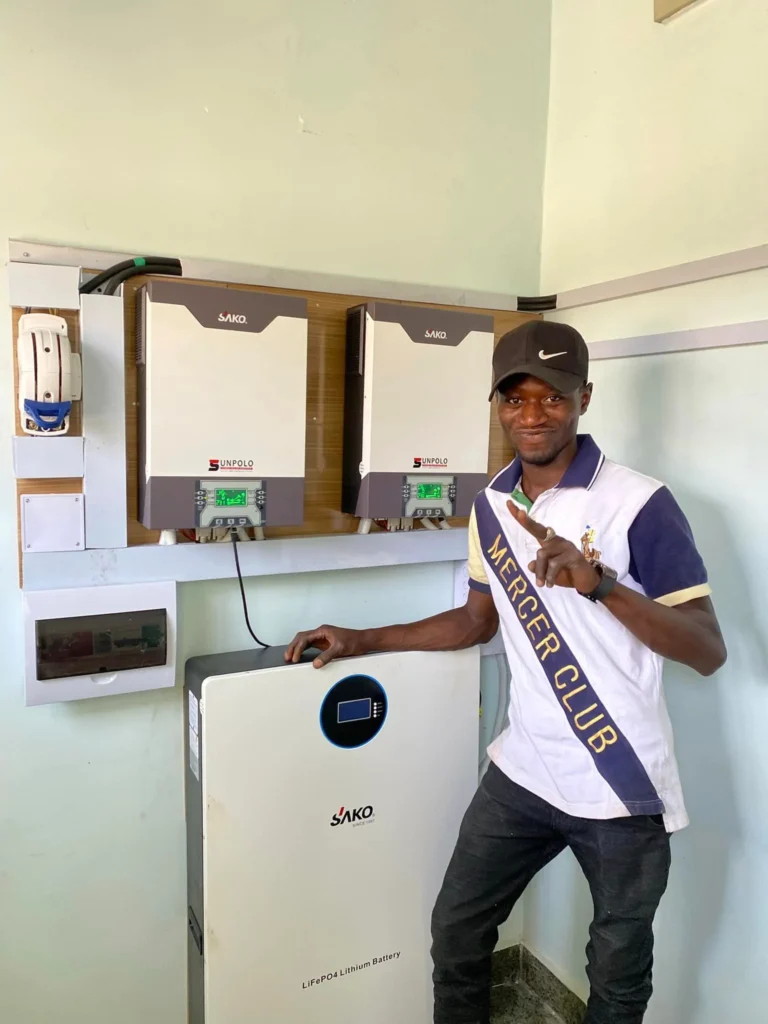
Thus, a 15kWh battery system effectively provides about 12.4 kWh of energy to connected loads. Based on the core formula, a 4 kW load would result in a runtime of approximately 3.1 hours, whereas a light 0.5 kW load would last for about 24.8 hours. This clarifies how much energy can actually be used from a 15kWh battery—roughly 12.4 kWh under typical LFP operating limits. All subsequent runtime estimates in this article use this 12.42 kWh usable baseline.
Defining Your Load Profile: The Decisive Variable
The single most important factor in determining battery runtime is the load power (kW) being drawn. In other words, this refers to how many kilowatts of appliances and devices run off the battery at once. A higher load drains the battery faster. We can categorize typical load profiles as follows to illustrate this effect:
- Essential Backup Load (~0.5–1 kW): This covers basic home backup for appliances like a refrigerator (100–200 W), several LED lights (10–50 W each), a Wi-Fi router (20–50 W), and phone chargers (20–50 W). Altogether, these might total 0.5–0.8 kW. At this light load, a 12.42 kWh usable capacity would last approximately 15–25 hours. For example, dividing 12.42 kWh by a 0.8 kW load yields about 15.5 hours of runtime.
- Average Home Load (~1.5–2.5 kW): This profile adds more devices, such as a TV (150–300 W), computers (100–400 W), and intermittent-use appliances like a microwave or coffee maker (1–1.5 kW). The total average load is around 1.5–2.0 kW. At a steady 2.0 kW draw, the runtime is approximately 6.2 hours, calculated by dividing 12.42 kWh by 2.0 kW.
- High-Demand Load (~3–5 kW): This includes high-power appliances like an air conditioner or electric heater (1.5–3.5 kW), a water heater or cooking appliances (2–3 kW), or power tools (1–3 kW). Loads this high will drain 12.42 kWh in just a few hours. For instance, a continuous 4.0 kW load yields approximately 3.1 hours of runtime.
Each Application Scenario (Home Backup, Off-grid Living, Small Business) typically falls into one of these load tiers. The profile defines the expected Load Power, which determines the battery runtime via the formula above. In practice, you would tally up your own appliances’ wattages to estimate an average kW draw, then divide 12.42 kWh by that number to find the runtime. Lowering your load or staging heavy loads to run one at a time can dramatically extend battery life.
Runtime by Scenario: Practical Comparison Table
The table below shows estimated runtimes for a 12.42 kWh usable capacity (based on a 15kWh battery system) across different common application scenarios. Each row calculates Runtime = 12.42 kWh / Typical Average Load (kW). All example appliances and loads reflect real-world use cases.
| Application Scenario | Typical Avg. Load (kW) | Example Appliances / Operations | Est. Runtime with 12.42 kWh Usable Capacity |
|---|---|---|---|
| Home Backup (minimal loads) (Essential only) | 0.7 | Refrigerator, LED lights, Wi-Fi router, phone chargers | ≈17.7 hours |
| Home Backup (full day) (All critical appliances) | 2.0 | Plus TV, computers, microwave, medium HVAC | ≈6.2 hours |
| Off-grid Living (Typical daily use) | 3.0 | Lights, fridge, cooking, some AC/heat, tools | ≈4.1 hours |
| Off-grid Peak Demand (High appliances use) | 4.0 | Heating/cooling, washing, dishwasher, heavy tools | ≈3.1 hours |
| Small Commercial (Office/store loads) | 2.5 | Lighting, computers, printers, small machines | ≈5.0 hours |
These estimates illustrate how a 15kWh Battery System performs in different settings. For instance, a home using only minimal loads might run for nearly a day, while an off-grid cabin with heavy midday usage might only manage a few hours. Always calculate your specific load profile for precise planning.
Strategic Factors: Maximizing Performance vs. Lifespan
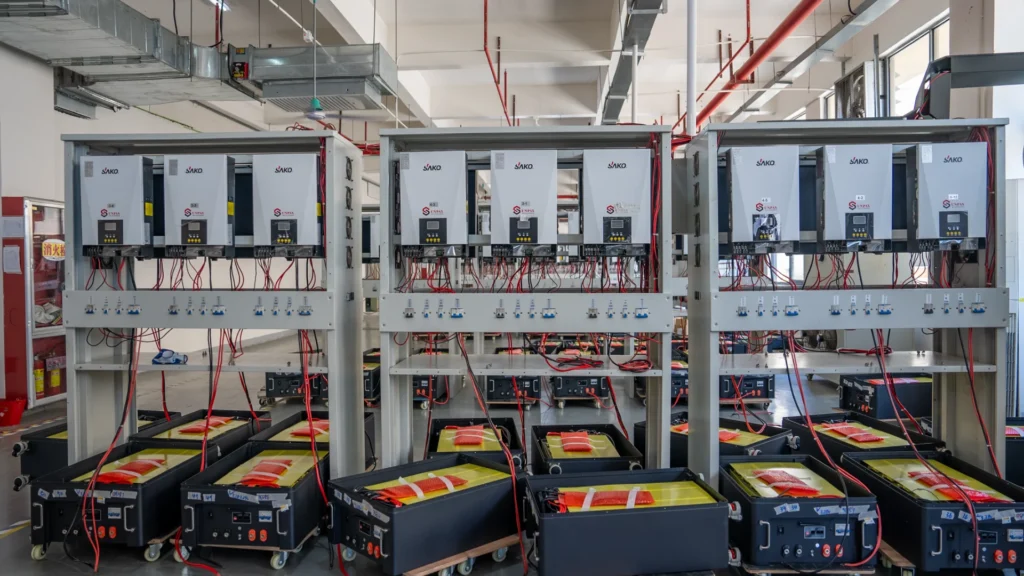
When specifying a 15kWh Battery System, consider battery chemistry and operational settings as key System Efficiency Factors. LiFePO4 (LFP) chemistry is standard for stationary storage because it allows deeper discharge and higher cycle life. For example, LFP supports around 90–100% DoD, whereas typical NMC (nickel-based) batteries are limited to about 80–90% DoD for longevity. In practice we use ~90% DoD for LFP to balance runtime and lifespan. Inverter efficiency (the AC conversion) also reduces usable power; modern inverters are ~90–95% efficient.
The trade-off between performance and lifespan is important. You could run the battery at 100% DoD (using all 15 kWh) for maximum runtime in an emergency, but this accelerates degradation. Staying at 90% DoD (12.42 kWh usable) may give slightly less runtime (90% of full energy) while preserving battery health for years. In summary, LFP chemistry and a moderate DoD maximize overall value: you get high usable capacity and thousands of cycles. As one benchmark, an LFP battery discharged to 90% DoD might still have over 6,000 cycles, whereas NMC at deep discharge degrades faster. Choose the 15kWh system configuration (LFP vs NMC, inverter type) that matches whether you prioritize immediate runtime or long-term durability.
Conclusion: Key Takeaways and Decision Checklist
The clear takeaway is that a 15kWh battery’s runtime depends entirely on your load. There is no single answer without context: at light loads it can power a home for a day or more, but at heavy loads it may only last a few hours. Decision-makers should therefore audit their power needs carefully.
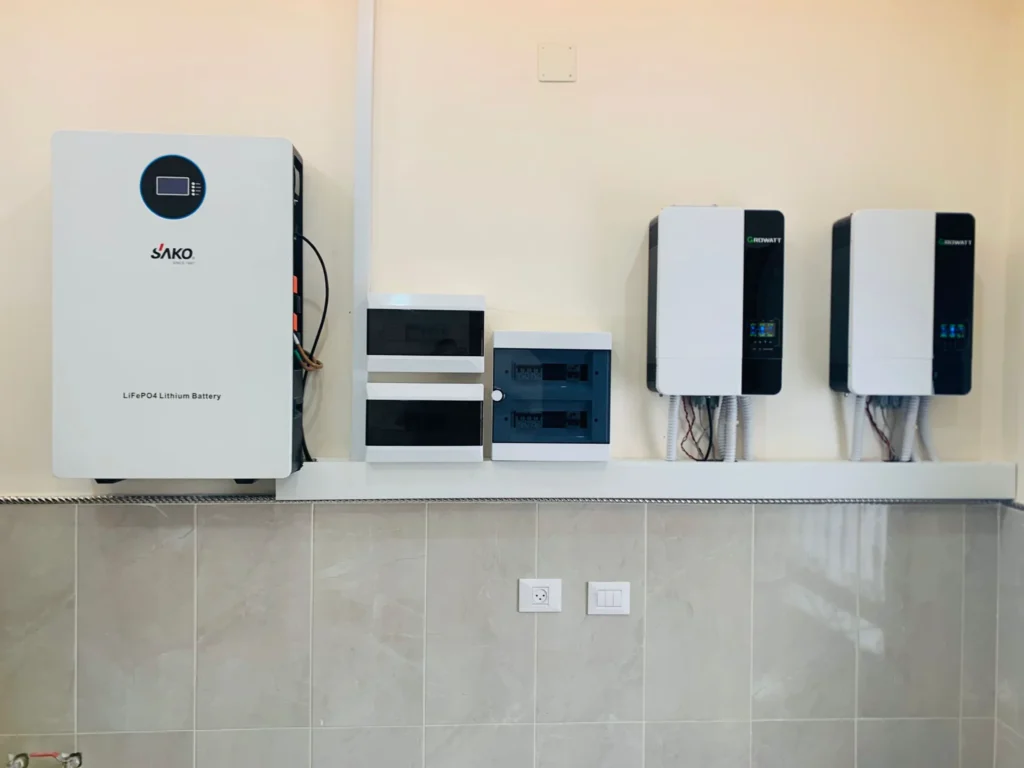
- List your appliances and devices: Note the wattage of each (e.g. fridge ~150W, TV ~100W, AC ~2000W).
- Estimate your typical load (kW): Add up which devices run at the same time to find an average load in kW.
- Compute runtime: Divide 12.42 kWh (usable) by your average load. This gives hours of run time under those conditions.
- Match runtime to requirements: Ensure the resulting hours meets your backup/off-grid goals. If not, consider reducing loads or a larger battery.
- Consider usage patterns: Can heavy loads be staged sequentially? Lowering continuous load extends battery life (e.g. avoid running AC and oven together).
By following these steps, a homeowner or installer can decide if a 15kWh battery is the right size and what runtime to expect. Armed with the formula Runtime = 12.42 kWh ÷ Load (kW) and the above table, you have a definitive, data-driven framework to determine how long a 15kWh Battery System will last for any application.