The Middle East, Africa, and Southeast Asia (MEA/SEA) fundamentally diverge from Western developed markets in residential energy storage needs, with the central distinction rooted in the user–grid relationship. In MEA/SEA regions, national grids are often unreliable or absent, so households seek off-grid autonomy and continuous power assurance. In contrast, European and American grids are highly stable, and homeowners adopt storage primarily for grid-interactive optimization, such as tariff arbitrage, renewable self-consumption, and participation in grid services.
This is a foundational disparity: MEA/SEA systems must ensure survival without grid support, whereas Western systems aim to optimize efficiency and returns. For example, African businesses face over 50 hours of outages per month—equivalent to losing 25 workdays annually—while U.S. users experience only about 5.6 hours of outages each year. This order-of-magnitude difference drives radically different design philosophies.
To illustrate this contrast clearly, the table below summarizes the core dimensions. The left column (“MEA/SEA – Autonomy-Driven”) highlights how weak grids force users toward self-sufficiency; the right column (“EU/US – Optimization-Driven”) shows how reliable grids enable economic strategies.
| Dimension | MEA/SEA Market (Autonomy-Driven) | EU/US Market (Optimization-Driven) |
|---|---|---|
| Core Driver | Off-grid autonomy (unreliable grids drive self-sufficiency and survival needs) | Grid-interactive optimization (reliable grids enable cost savings and environmental benefits) |
| Primary Design Philosophy | Energy self-sufficiency (maximize independent generation and storage; battery as the primary power source) | Economic arbitrage (shift energy using price signals; battery as a cost-saving asset) |
| Core Intelligent Functions | Tiered survival strategy (shed non-critical loads, protect essential circuits) | Predictive resource dispatch (forecast-based charging/discharging to maximize incentives and returns) |
| Core Value Proposition | Certainty and resilience (assured supply during outages and harsh conditions) | ROI and sustainability (quantifiable financial returns and carbon reduction under a stable grid) |
| Fundamental Product Definition | “Resilience Infrastructure” / micro-utility (rugged, modular, utility-grade systems) | “Smart Home Appliance” / grid asset (integrated consumer device supporting grid operations) |
The following sections provide detailed analysis for each item in the table.
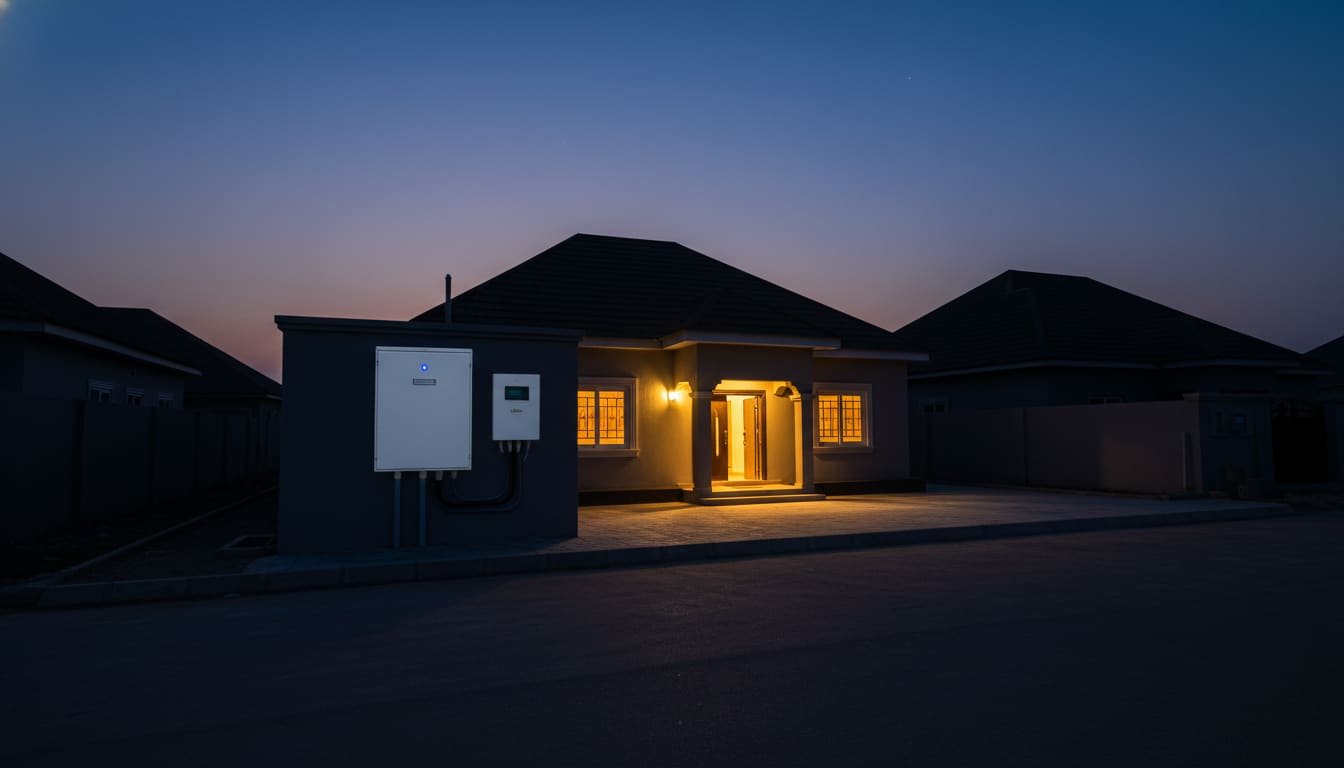
Core Driver: Autonomy vs. Optimization
In MEA/SEA regions, persistent grid outages and load shedding make energy security the top priority. Homes and small businesses frequently face blackouts, so batteries provide value by preventing operational disruption and enabling off-grid continuity. Thus, the “core driver” is autonomy—users invest to survive during outages.
In Europe and the United States, the grid is highly reliable, and outages are uncommon. The corresponding “core driver” is optimization: owners already have stable electricity and use storage to optimize bill savings, integrate renewables, or join demand-response programs. Simply put, MEA/SEA users ask, “How do I ensure the power never goes out?”, whereas Western users ask, “How do I make the grid cheaper and greener?”
Empirical evidence confirms the divide. In Sub-Saharan Africa, last year 78% of firms reported outages, and 41% cited electricity as their top business constraint—the highest globally. Outages can reduce sales by up to 30%. In contrast, Western economies invest heavily in grid resilience, and consumer outages are rare. These systemic differences lead to residential energy storage systems (HESS) with completely divergent value propositions.
Design Philosophy: Self-Sufficiency vs. Economic Arbitrage
Given different drivers, product design diverges. MEA/SEA systems prioritize self-sufficiency: batteries and auxiliary generation (solar/diesel) must power all loads indefinitely when needed. Designs are utility-grade, often oversized, and must handle island operation. These systems prioritize robustness and endurance under failures such as sudden grid loss, extreme temperatures, and dusty environments.
EU/US designs treat storage as part of the broader grid environment. The focus is economic arbitrage and efficiency: sizing and control aim for optimal energy shifting (e.g., storing midday solar for evening peaks) to generate savings or revenue (via TOU tariffs or VPPs). Smart features emphasize price and production forecasting rather than blackout durability.
In short: MEA/SEA design asks “What if the grid never comes back?”, requiring generator integration, tiered control, and load protection. EU/US design asks “How much can I save or earn?”, requiring advanced tariff-linked algorithms and cloud coordination. This aligns with the table’s logic: self-sufficiency (battery as primary power source) vs. economic arbitrage (opportunity-driven grid interaction).
Core Intelligent Features: Survival Hierarchy vs. Predictive Dispatch
The system “brain” reveals its philosophy. In autonomy-driven markets, controllers run tiered survival modes. They monitor grid status and battery SOC; during outages, they island instantly, enforce critical-load priorities, and ensure continuous power to essential devices. For example, they disconnect non-critical loads to preserve battery life. This critical load hierarchy ensures reliability—keeping refrigerators and lights powered even when SOC is low.
In optimization-driven markets, controllers run predictive dispatch modes: forecasting loads and PV generation, applying price signals (or TOU schedules), and scheduling charge/discharge cycles to maximize savings or revenue. For instance, they charge during off-peak rates and discharge at peak prices. The intelligence aims for long-term ROI rather than survival.
Modern smart meters and IoT allow EU/US systems to coordinate grid services (frequency regulation, VPPs) with fine-grained dispatch (15–30 minutes). MEA/SEA controllers are typically outage-event-driven: once the grid fails, they switch to backup mode until the grid stabilizes. Thus, their core functions are survival hierarchy vs. economic prediction, as summarized in the table.
Core Value Proposition: Certainty & Resilience vs. ROI & Sustainability
The value proposition aligns with the driver and design. In MEA/SEA, marketing stresses power certainty and resilience. Customers effectively pay for “electricity insurance”: value is measured by avoided losses (product spoilage, lost revenue, compromised medical safety). A small business losing $50 per outage day will readily invest in guaranteed uptime. Durability (heat, dust, voltage stability) is also key. ROI in years is secondary; companies may not achieve payback through bill savings alone but still justify the system to avoid larger losses.
In contrast, EU/US customers care about financial ROI and sustainability. They expect storage—usually paired with PV—to pay for itself through bill savings, feed-in tariffs, or utility payments. Typical pitches highlight a “7–10 year payback,” depending on incentives. Environmental benefits (reduced fossil use) and green-program participation are important. MEA/SEA buyers seek risk mitigation; Western buyers seek returns and environmental value.
Product Definition: Micro-Utility vs. Smart Appliance
These philosophical differences produce distinct product types. An MEA/SEA HESS is a Micro-Utility or piece of Resilience Infrastructure—modular, rugged, integrated with heavy-duty inverters, generators, and surge protection. Installations may use NEMA/IEC-rated enclosures and heat-tolerant electronics. Systems must run autonomously even without cloud connections.
The EU/US counterpart is a Smart Home Appliance—sleek, user-friendly, garage-installed, Wi-Fi-connected, and marketed like a consumer electronic. It typically resembles a polished battery pack rather than industrial hardware. Western units are often UL/NRTL-listed “grid-tied battery systems” or EV-charger-plus-battery hybrids. Analogy: MEA/SEA = mini substation; EU/US = smart-grid accessory.
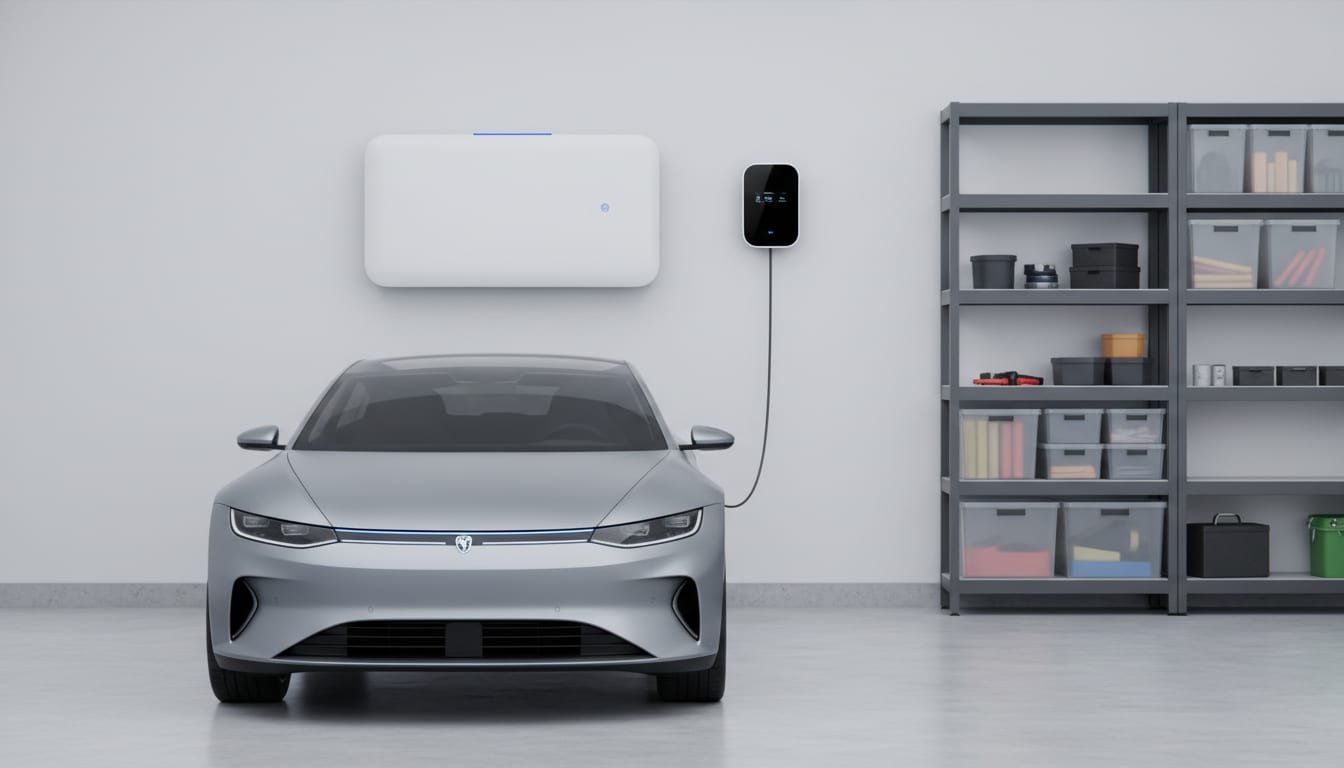
This completes the main comparative-analysis framework. The distinctions reflect non-incremental differences driven by deeply divergent user needs and system constraints.
Comparative TCO Analysis (“ROI vs. Stop-Loss”)
To quantify these differences, we compare a simplified Total Cost of Ownership model. Western markets use ROI-centric logic (arbitrage + VPP credits), while MEA/SEA uses a “stop-loss” logic (avoided outage damages).
Assumptions (shared):
10 kWh residential battery system, installed cost $10,000, lifetime 10 years (straight-line).
Western (EU/US) Scenario
Reliable grid.
TOU arbitrage: off-peak $0.10/kWh; peak $0.25/kWh → spread $0.15/kWh.
Assume 5 kWh shifted daily → $0.75/day → $275/year.
VPP participation → $200/year.
After 90% RTE and minor losses → arbitrage yield ≈ $250/year.
Total Annual Benefit: $475.
Annualized cost = $1,000.
Net: –$525/year, >10-year payback unless subsidized.
This matches typical European 7–10 year paybacks with incentives.
MEA/SEA Scenario
Unreliable grid.
Assume 30 outage-days/year (2.5 days/month).
Without battery:
- Lost sales: $50/day
- Spoiled goods: $10/day
- Diesel: 10 L/day × $1.20 = $12
- Maintenance: $5
Total = $77/day → $2,310/year loss.
With battery:
Diesel use drops 90%, fuel ≈ $36/year.
Avoided loss ≈ $2,274/year.
Annualized battery cost = $1,000.
Net benefit = $1,274/year.
Over 10 years: avoids ≈ $22,740 loss vs. $10,000 cost → extremely favorable.
This is effectively “stop-loss insurance” rather than ROI.
These figures show the fundamental contrast:
Western systems yield marginal gains with long paybacks;
MEA/SEA systems prevent large losses and pay for themselves quickly (<5 years).
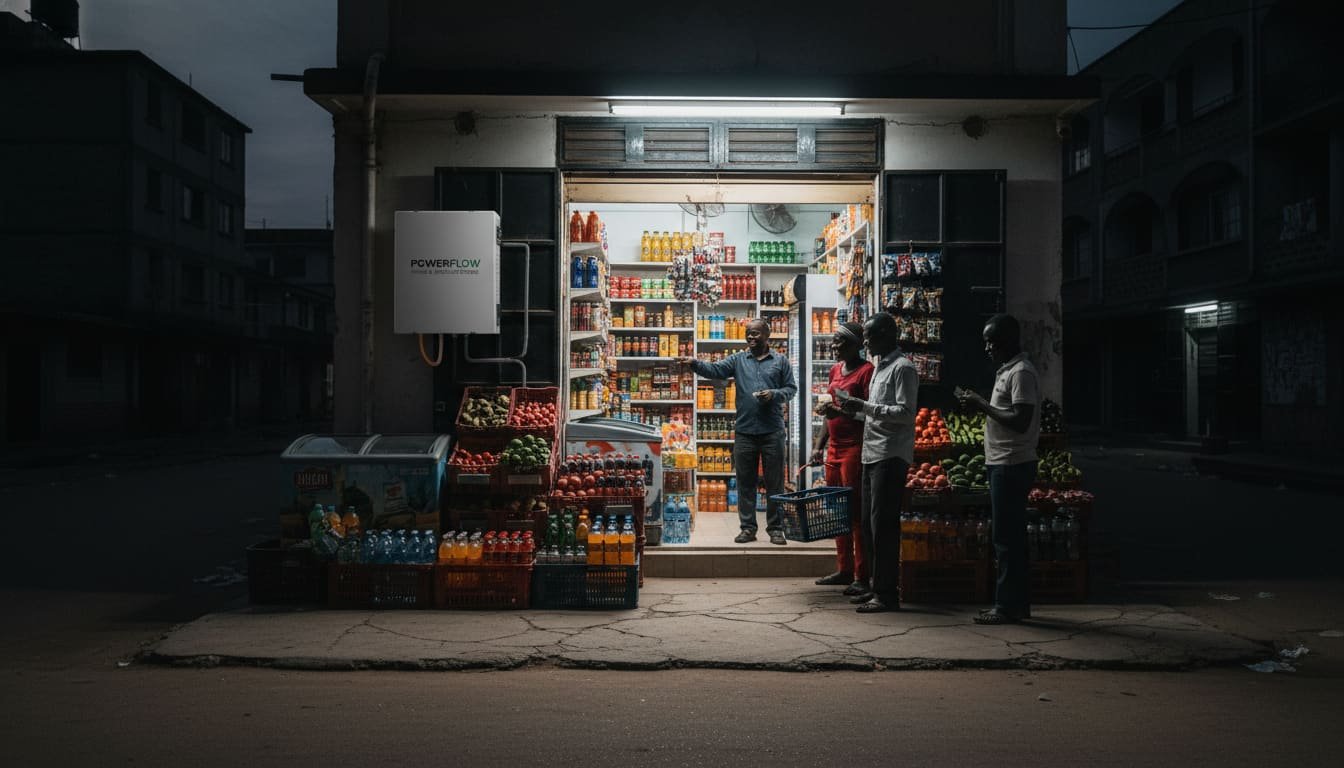
Sensitivity Analysis
- Diesel Price:
If diesel increases to $1.50/L, outage-day fuel cost increases, raising MEA benefits by ~11%. - Outage Frequency:
15 days/year → benefit halves; still positive, ~9-year payback.
60 days/year → benefit doubles; <3-year payback. - Tariff Spread (Western):
If spread narrows from $0.15 to $0.05/kWh, arbitrage drops from $275 to ~$91/year.
Total benefit ≈ $291 → net loss –$709/year → >14-year payback. - Battery Cost:
If costs fall 30% to $7,000:
Western payback improves to ~7.4 years;
MEA net benefit rises to ~$1,574/year.
Overall:
MEA/SEA HESS = loss-avoidance infrastructure
EU/US HESS = marginal ROI appliance
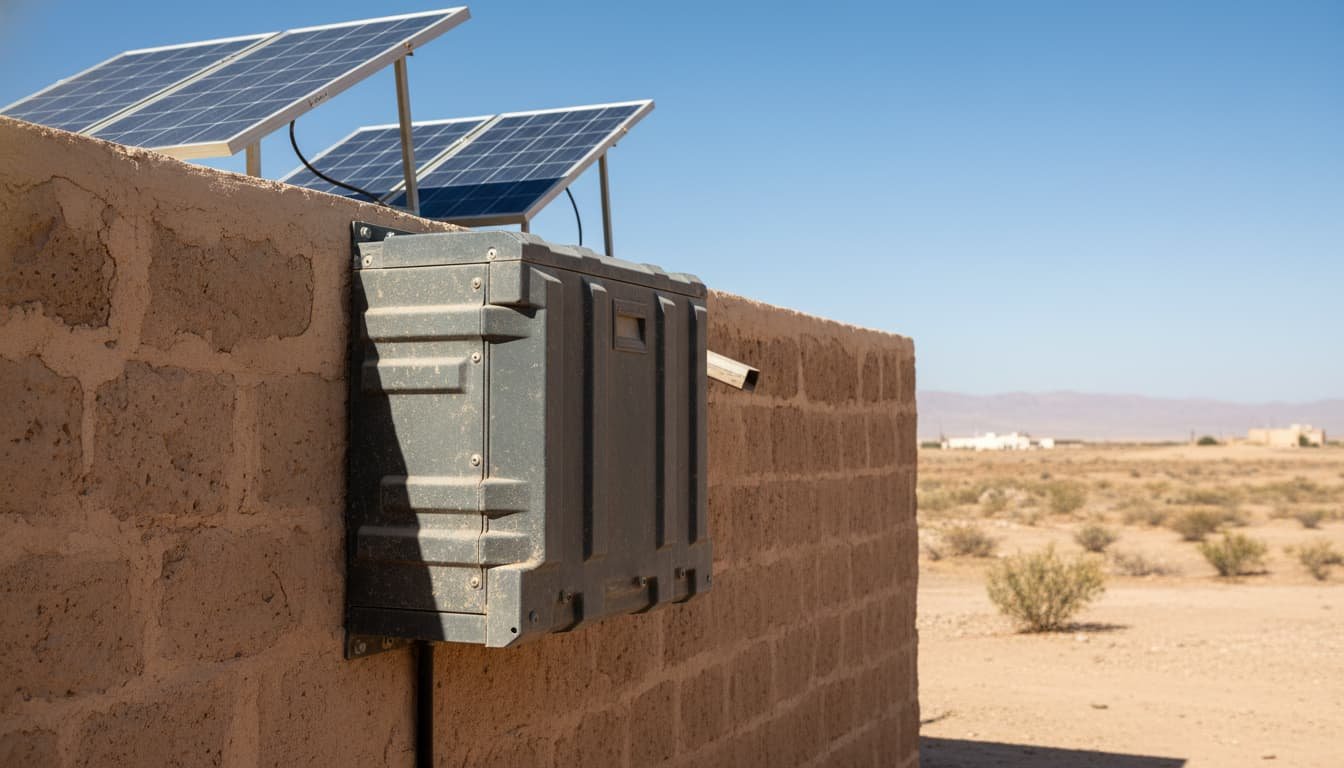
Environmental and Trust Considerations
Designing for MEA/SEA requires strict environmental and safety specifications. Many homes face outdoor installation in dusty, hot climates (40–50 °C). Systems must avoid derating, requiring IP65+ enclosures (IP66/IP67 for harsh sites), thermal management (heat sinks, fans, phase-change materials), and protection against surges, humidity, and overloads. Western systems typically assume indoor/garage installation (IP20–IP54).
Battery chemistry is critical. LFP is favored for thermal stability and long cycle life in hot climates. Standards such as IEC 62619 are essential, with mandatory third-party verification. In practice, battery modules undergo UL/NFPA/IEC safety testing. For example, UL 1973 (stationary battery safety) and UL 9540A (thermal-runaway/fire testing) “affirm system and component safety and improve market acceptance.” UL 1973 evaluates electrical, thermal, mechanical, and chemical safety. Meeting or exceeding these tests—often via TÜV SÜD or UL listings—serves as a major trust signal in MEA/SEA markets where safety concerns are prominent.