Part 1: Middle East Analysis
The Middle East features high solar potential and a dichotomy of grid stability. Wealthy Gulf states (GCC) have robust interconnected grids with no load-shedding in recent years and abundant sunshine with photovoltaic yields greater than 1,700 kWh/kWp-year. In contrast, Levant countries like Lebanon, Syria, and Jordan suffer chronic outages; for instance, Lebanon has experienced approximately 22 hours of blackouts per day. Housing ranges from large villas and apartments in the Gulf to small shops and modest homes in the Levant. These factors shape storage needs: GCC homeowners seek seamless backup and bill savings, while Levant businesses prioritize resilience and uptime.
- Regional Context: GCC utilities have effectively eliminated scheduled cuts by linking generation. Solar capacity is booming, with projections showing PV will grow approximately 10 times by 2035 in the MENA region. However, household electricity is heavily subsidized, with oil and gas accounting for over 90% of generation, so the return on investment for storage depends on ambitions for self-sufficiency or energy independence. In contrast, the conflict-affected Levant region relies on diesel and intermittent grids, where renewables often bypass weakened grid infrastructure in places like Lebanon and Syria. Cost sensitivity is higher in the Levant, though some businesses will spend on reliability.
Scenario 1.1: GCC Villa (High-End Home)
High-income Gulf villas often have rooftop PV and normal grid service. Their goals are aesthetic integration, near-100% backup for appliances like air conditioning and heating, and maximizing solar self-consumption. In this context, All-in-One (AIO) integrated systems are very appealing. AIO units, such as wall-mounted battery and inverter combinations, offer plug-and-play installation. Wiring and setup are streamlined since the inverter, batteries, BMS, and controls are pre-integrated. Installers simply mount one enclosure and connect it, minimizing labor and compatibility issues compared to configuring separate components. AIO systems also have a sleek, unified look that fits modern villa interiors or exteriors, meeting the aesthetic priority. They often offer built-in monitoring and controls for seamless operation. On the downside, AIO capacities are fixed. Expanding storage beyond the unit’s specification requires adding a whole second system, as few models allow hot-swapping modules. However, Gulf villas are often sized for only a few hours of backup, so one or two AIO units typically suffice.
By contrast, Modular/Split systems separate the inverter and battery modules. Scalability is the key advantage: the owner can start small and add more later by simply adding battery modules or an upgraded inverter. However, this flexibility comes at a cost, as the installation is more complex with wiring each battery bank to the inverter and controls, and aesthetic integration is more challenging. For a Gulf villa, this complexity and the lower initial finish quality may be undesirable. The total cost of ownership is also a factor. AIO systems typically have higher upfront hardware costs but lower installation and maintenance expenses, which suits customers who can afford it. Modular systems can appear cheaper initially, especially if starting small, but adding modules later can drive up costs. Given the stable grid and high income of a GCC villa owner, the AIO form is generally preferred for its ease, reliability, and appearance, assuming capacity needs are met. AIO systems also minimize failure points and come with unified warranties, which boosts reliability.
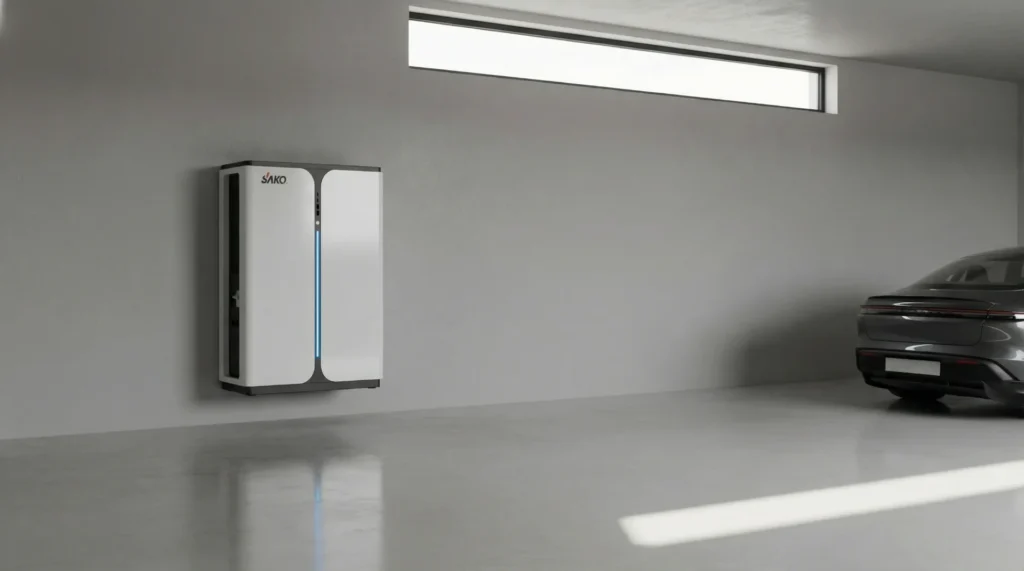
- Ease of Installation: All-in-One systems offer a plug-and-play experience with minimal wiring. Modular systems require custom wiring and configuration, demanding more installer skill.
- Scalability: All-in-One systems have a fixed capacity, requiring additional units to expand. Modular systems are flexible, allowing users to add battery modules or upgrade the inverter as needed.
- Total Cost of Ownership: All-in-One systems typically have a higher initial cost but lower labor and maintenance expenses. Modular systems may start cheaper but can become costlier with future expansion and increased complexity.
Recommendation: In a luxury GCC home, emphasize high-end integrated AIO systems, such as the Tesla Powerwall or equivalents, that deliver backup power and a sleek design. Marketing should highlight the ease of installation and aesthetics, while the sales team covers the caveat of scalability. Installation teams will benefit from simpler AIO installs. Investment teams may focus on premium AIO offerings in the Gulf market, with potential for expansion into bundled multi-unit installations if demand warrants.
Scenario 1.2: Levant Small Business (Commercial)
Small businesses in the Levant, such as shops and offices, face intermittent grids. For example, Lebanon and Syria have had utility outages for more than 20 hours per day. The priority is reliable continuous power for equipment like refrigeration and computers, and some solar offset to cut diesel use or fuel costs. Budgets are more constrained than in the GCC, so cost-per-kWh matters. Maintenance access may be limited due to unstable supply chains or skilled workforce constraints.
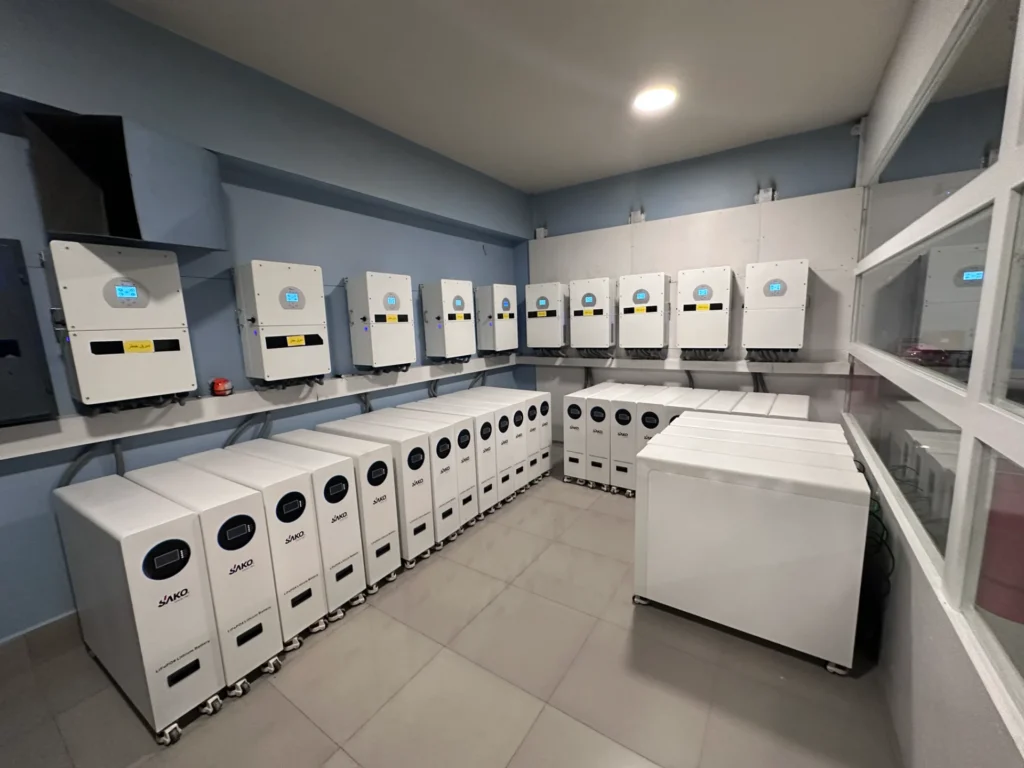
In this case, Split/Modular systems often have the edge. Businesses typically require larger capacity to run larger loads and the ability to expand or adapt as the business grows. For instance, a shop might start with a small PV and battery system for lights, then add more capacity as revenue allows. A modular design with separate inverters and battery blocks allows exactly this: adding battery modules or parallel inverters without replacing the core system. If a component fails, individual modules can be swapped, which is valuable where service visits are difficult.
By contrast, an all-in-one backup unit could be deployed, but its fixed size may become inadequate. Additionally, integrated commercial-grade AIO systems can be bulky and may require indoor, climate-controlled installation, which is a challenge in older buildings. Maintenance-wise, while AIO offers single-vendor support, in fractured markets customers may prefer a “mix-and-match” approach that allows sourcing parts locally, even at the risk of compatibility issues.
For installation, modular systems do need qualified installers for wiring DC or AC systems, but local solar installers in these regions are increasingly capable. The initial labor cost is higher than simply wall-mounting an all-in-one unit, but is often acceptable for businesses. For a business-run system’s TCO, modular setups can be started at lower capital and grown as needed, helping manage cash flow. An all-in-one system would entail a larger lump-sum payment for a fixed kit.
- Ease of installation: All-in-One systems are simpler if a qualifying unit exists, but are likely limited for the needed capacity. Modular systems require higher labor and engineering effort.
- Scalability: Modular wins, as a shop can incrementally increase storage or power with parallel batteries or inverters. All-in-one units cannot easily scale beyond their specifications.
- Total cost of ownership: For smaller budgets, starting with a small modular system may lower the entry cost, though many vendors bundle kit sizes. All-in-One may be cost-prohibitive upfront, and future expansion requires buying entire new units.
Recommendation: For Levant commercial users, modular/split systems are generally more suitable, offering flexibility and incremental investment. Messaging should emphasize resilience and expandability under budget constraints. Installation teams should prepare for custom wiring and integration with potential existing generator or PV equipment. Investors might partner with local solar companies or pursue lease or Pay-As-You-Go models to lower the entry cost in this price-sensitive market.
Part 2: Africa Analysis
Africa’s power landscape is dominated by widespread grid instability, such as South Africa’s rolling blackouts and Nigeria’s frequent collapses, along with logistic and capital constraints. Many urban homes see planned outages or unpredictable blackouts. Rural areas have even less coverage, as approximately 75% of rural Africans lack grid access, pushing the adoption of solar home systems via pay-as-you-go models. Pharmaceutical, logistics, and health enterprises have turned to mini-grids, often using solar and storage, to ensure uptime. Key challenges include limited installer capacity outside cities, affordability thresholds, and the emergence of financing options like microloans or PAYG to lower entry costs.
Scenario 2.1: Urban Load-Shedding Household (South Africa/Nigeria)
In cities like Johannesburg or Lagos, middle-class families endure scheduled power cuts. The user wants backup through outages and bill savings. They may or may not have existing rooftop PV, which is often supplementary. Financing is a concern, but not as extreme as for the rural poor. Distributed generation like solar plus storage is rising; for example, rooftop solar surged in South Africa with home solar incentives, and in Nigeria, solar home kit sales are growing rapidly.
For installation, AIO home batteries could be attractive due to their ease of use. A busy homeowner benefits from “plug-and-play” units with minimal electrician time. An AIO can be wall-mounted and connected to the house panel or solar output quickly. This suits areas where skilled installers are limited or expensive. However, the fixed capacity of AIO systems, often 5 to 15 kWh per unit, may only partially cover an outage. Many homeowners would need to buy multiple units if needed, raising the cost.
Modular systems, such as separate inverter and battery modules, allow tailoring: start with a small setup of 1 to 2 kWh and expand as funds allow. This pay-as-you-go expansion aligns with payment models in Africa. Maintenance-wise, local technicians may find it easier to replace individual batteries if they are separate, rather than troubleshoot a combined system. However, modular systems require good wiring and system integration; unreliable installers sometimes miswire, which can cause problems.
Costs are a critical factor. All-in-one wall units tend to be premium-priced with higher upfront costs, which can deter budget-conscious buyers in Africa. Modular kits can be assembled from lower-cost components, though at the risk of a lower warranty or increased labor cost. Given heavy use and multiple outage cycles, longevity and maintenance costs matter: AIO warranties simplify servicing, whereas mixed-vendor modular setups might complicate repairs.
- Ease of installation: AIO units win for non-technical consumers, as installation is straightforward. Modular requires professional integration.
- Scalability: Modular wins, as households can incrementally add storage or inverter capacity over time. AIO requires buying new units for more capacity.
- Total cost of ownership: This is likely lower with AIO if sizing for the needed storage due to less wiring and better integration. However, if the budget only allows for a small system, modular can start cheaper and grow. Over the long term, AIO may save on maintenance headaches.
Recommendation: In load-shedding urban homes, both forms have roles. For “do-it-yourself” pay-as-you-go models or instant installs, AIO systems are advantageous due to their simplicity. For owner-operated homes planning growth or having existing solar, modular kits provide flexibility. Marketing should balance these, offering financing to offset AIO’s higher upfront cost. Installers should train on common split configurations to capture savings solutions. Investors and analysts should watch emerging African battery startups, which are often modular by design, and consider supporting local assembly or manufacturing to reduce costs.
Scenario 2.2: Off-Grid Rural Clinic/School (East Africa)
A remote health clinic or school in East Africa has no reliable grid power, so solar-plus-battery is the primary source. These facilities need high reliability and uptime for vaccines and phones, but also must keep costs low. Often funded by NGOs or governments, these systems are larger than home-scale, typically 10 to 20 kW of PV and tens of kWh of storage. The challenge is delivering a turnkey, resilient energy solution in a harsh environment with heat, dust, and humidity, and with minimal local tech support.
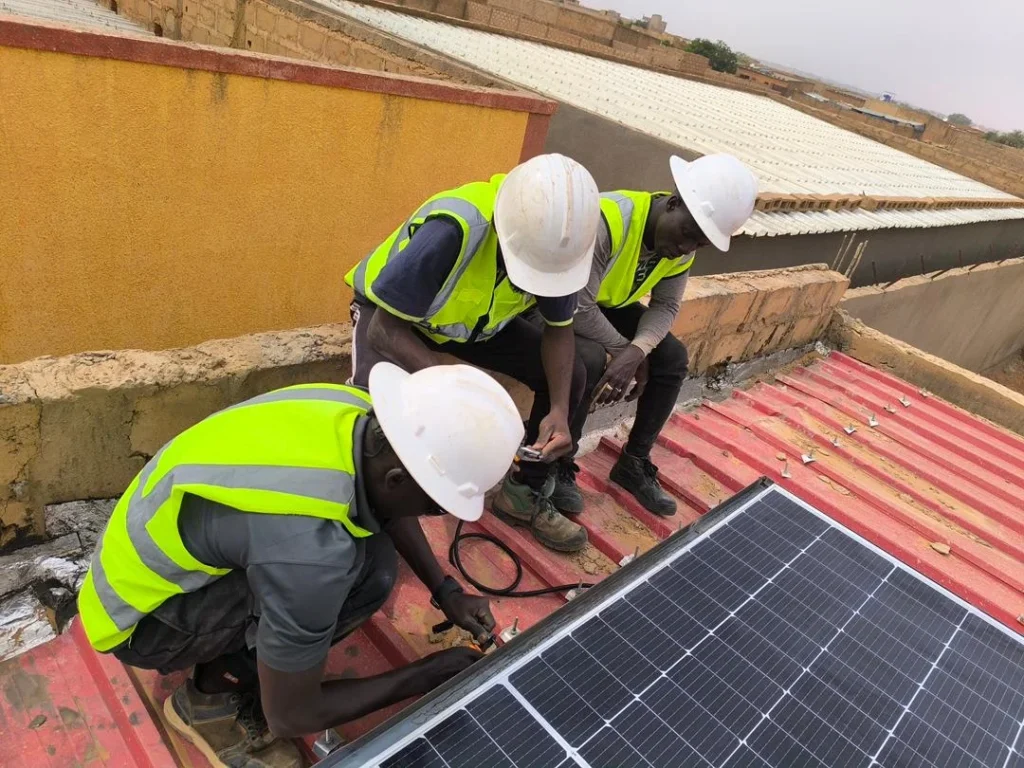
Modular systems are typically used here. For example, Nigeria’s rural clinics have been equipped with 10 to 20 kW solar arrays and Lithium batteries plus inverters. These are essentially micro-grids built from separate PV panels, battery banks, and grid-tie/backup inverters. The modular approach allows sizing exactly to the load (lights, fridge, small lab equipment) and provides redundancy with multiple panels or modules. Importantly, proven projects show that solar plus storage is “reliable, low-cost, and scalable,” unlike diesel generators. Maintenance paths are woven in with spare parts and training, and critical points like the inverter and battery can be swapped independently.
All-in-one units at this scale are rare. One niche example is the “Solar Suitcase,” a small integrated kit for lights and USB charging, but for kilowatt-scale needs, these clinics use separate systems. If an all-in-one container, or pre-assembled microgrid, were sought, shipping logistics could be problematic. Instead, components are often delivered separately. Installers, often NGOs or service groups, have the expertise to install modular systems.
- Ease of installation: Modular design needs skilled crews but is carried out in phases, such as installing the PV array first, then the batteries. A packaged all-in-one megasystem could be simpler in theory but is unwieldy in remote sites. Real-world programs favor modular kits and local capacity-building.
- Scalability: Modular wins, as the clinic can start with minimal battery backup and add modules as funds allow or loads increase, for example, when adding a vaccine fridge.
- Total cost of ownership: Modular systems with proven brands like BYD or Victron are cost-effective, and spare parts can be stocked locally. All-in-one solutions could have a higher maintenance risk if shipped from abroad and may face single-point failures.
Recommendation: For off-grid clinics and schools, invest in modular microgrid solutions with strong service support. Emphasize turnkey packages that include PV, a separate inverter, a battery, and backup, which are modular by nature. Market entry for companies should focus on partnerships with aid agencies and local governments. Technical teams must train field technicians to service split components. Investors might fund lease-to-own or utility-model financing like Energy-as-a-Service to cover high upfront costs. The World Health Organization notes that 60% of clinics lack reliable power, representing a huge untapped market for storage-backed renewables.
Part 3: Southeast Asia Analysis
Southeast Asia has a growing consumer class, rising solar adoption, and varied grid conditions. Many suburban consumers own PV, especially in Malaysia, Thailand, and Vietnam. The climate is tropical, with year-round heat, high humidity, and frequent storms like typhoons. Grid quality varies: urban areas such as Kuala Lumpur and Bangkok are mostly stable, while islands and rural areas like the Indonesian archipelago and Philippine provinces often face outages or have no grid at all. These factors create distinct needs for storage: bill reduction and resilience against weather.
Scenario 3.1: Suburban Solar Home (Malaysia/Thailand)
A middle-class homeowner with rooftop PV aims to reduce bills and increase solar self-consumption. Grid power is reliable with rare outages, so backup is not the main motive. Instead, the battery is for time-shifting for peak shaving and resilience against brief fluctuations. PV output is partly sold back, as net-metering or buyback programs exist, but households want to store cheap midday solar for use in the evenings.
In this scenario, either AIO or modular can work.
If the homeowner is adding storage to an existing PV system, for example, if they have a Fronius or SolarEdge inverter, a split / AC-coupled battery is often the easiest solution. This approach uses the existing inverter and simply adds a battery module (or a stack of modules) with a battery inverter. Split systems are ideal for homes that already have a compatible solar inverter. The modular nature also allows for adding more batteries later if the family grows or energy use rises.
However, if the home is installing a new PV and storage package, an All-in-One hybrid inverter with a built-in battery could be attractive. Many hybrid inverters on the market, such as those from Sungrow or GoodWe, are all-in-one units that work with a specific brand of battery modules. These systems simplify installation with a single box on the wall and conceal the battery, offering an appearance that can fit modern décor. In both cases, a single-vendor package can offer warranties on both the inverter and battery together, reducing the risk of a “blame game” between manufacturers.
The tropical heat is a salient issue. Batteries are sensitive to high temperatures, and manufacturers stress the importance of thermal management. For example, some vendors deploy active cooling or specialized designs for climates reaching 40°C. Whether All-in-One or modular, systems in Southeast Asia should be installed in cool, shaded indoor spaces if possible. High humidity also means that electronics must be well-sealed.
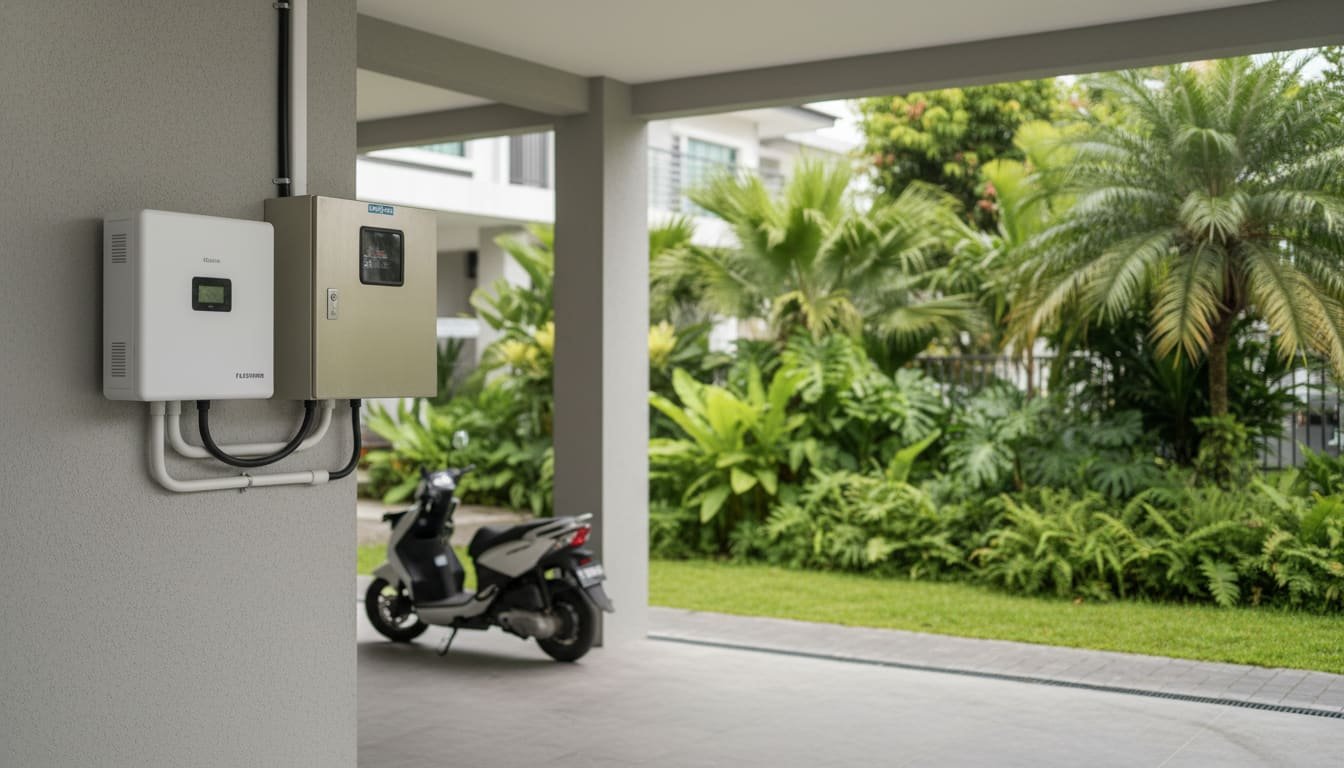
- Ease of installation: All-in-One hybrid inverters make installation simpler if starting fresh, as one unit handles both PV and battery charging. Split systems, which consist of battery modules and a separate inverter, require matching inverter and battery compatibility and extra wiring but are manageable by local electricians.
- Scalability: Modular/split systems allow for future battery expansion without changing the inverter and can leverage existing PV. All-in-One systems are more of a “fixed suite,” where expanding capacity typically requires adding entire new units.
- Total cost of ownership: Given a stable grid and lower outage risk, the return on investment is more about energy savings. The premium cost of an All-in-One system may be justified by its ease and reliability if the homeowner values convenience. However, bulk purchases of battery modules might achieve a lower cost-per-kilowatt-hour for large systems, favoring a modular approach for households with high consumption.
Recommendation: Offer both types on the Southeast Asian market. For new PV customers, promote all-in-one hybrid inverters for their tidiness and simplicity. For existing PV owners, emphasize modular storage that integrates with their inverter brand. Installation crews should note climate risks and ensure proper ventilation or cooling for either type. Governments, such as Malaysia’s, are already incentivizing battery adoption, so sales pitches should highlight savings from net-metering and tariffs. Investors might target finance programs like loans or subsidies to encourage uptake, given the high payback of four to six years for residential PV systems.
Scenario 3.2: Remote Island Resort/Dwelling (Indonesia/Philippines)
A small resort or village home on an Indonesian island or in a Philippine province is weakly grid-connected or off-grid. Its needs are for full independence and resilience. Fuel is costly, and outages from grid failures or storms are common. For example, Tropical Storm “Trami” in 2023 cut power to large parts of the Philippines. Stakeholders want to minimize diesel use, guarantee lights at night, and survive weather shocks. Investment budgets are higher for commercial ventures, but logistics are complex, involving transport to remote sites and shipping heavy gear.
For such microgrids, Modular systems dominate. A typical solution is a microgrid consisting of multiple PV panels feeding a central battery bank with inverters, possibly backed by a diesel generator. This allows for exact sizing to match the resort’s loads (lodging, a kitchen, pools) and provides easy redundancy. If more capacity is needed as more rooms are built, operators can add batteries or PV panels without overhauling the existing infrastructure. Maintenance teams can also localize faults; if one battery module fails, others can still power essential services.
All-in-One solutions on this scale are rare. A “containerized” all-in-one system, like a prefab tiny power plant, could be envisioned, but in practice, installers piece together systems on site. The modules must be rugged and rated for heat, humidity, and vibration during transport. Many providers now offer industrial Battery Energy Storage Systems (BESS) with NEMA/IP ratings suitable for tropical climates.
- Ease of installation: Modular construction is complex, involving arrays, wiring, and controllers, but is typically done by specialized system integrators. An AIO container might simplify on-site wiring but poses shipping challenges. In remote contexts, smaller modules are easier to offload and install incrementally.
- Scalability: Modular wins, as systems can be expanded to accommodate capacity growth, such as new bungalows. The resort can add batteries or PV incrementally to match cash flow or seasonal demand peaks.
- Total cost of ownership: Over time, modular microgrids often cost less per kWh delivered due to optimized sizing and longer equipment life. All-in-one units can be costly to replace if they fail, as similar gear would need to be delivered again. Resilience is paramount here: a properly designed modular microgrid with a battery can keep critical loads online even if one part fails.
Recommendation: Deploy split or modular microgrid products for island applications. Emphasize high-spec industrial batteries with proven performance in tropical climates; some vendors highlight features like “overheat protection.” Messaging should stress fuel savings, uninterrupted power, and eco-credentials, which appeal to tourists. Installers must be capable of full system integration and remote monitoring. From an investment perspective, islands and resorts are prime candidates for turnkey microgrid financing, such as build-own-operate models, given the high value of reliable power in remote locations.
Part 4: Cross-Regional Synthesis & Strategic Guidance
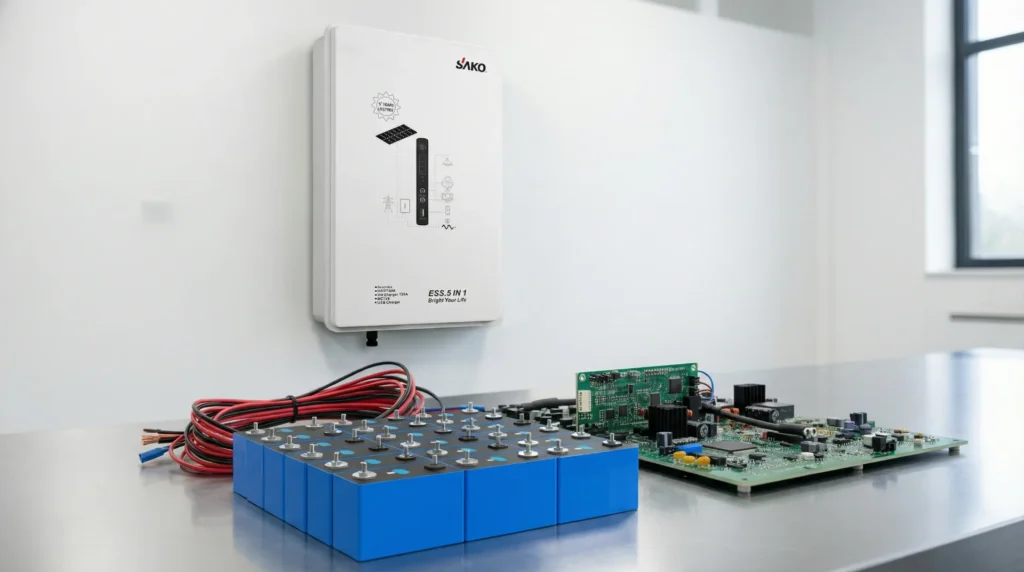
Across MEA and SEA, the core trade-off between All-in-One and Split/Modular systems is consistent: AIO equals simplicity and integration, while Modular provides flexibility and scalability. All-in-One solutions generally reduce installation time and complexity (plug-and-play), making them ideal for use cases where capacity needs are well-known and labor skills are scarce.
(e.g., GCC villas, urban homes). They also consolidate warranty and reliability with fewer points of failure. In contrast, Split/Modular systems excel where growth or customization is needed, such as in rural clinics or for commercial loads. They allow investment to match user needs over time, at the expense of more upfront engineering and potentially higher aggregate maintenance.
- Installation Strategy: In markets and scenarios with limited skilled labor or where aesthetics are prized (high-end homes, retail projects), favor AIO products for their turnkey appeal. In rural/off-grid or commercial deployments, train local crews on modular installs and design for ease of expansion.
- Scalability Approach: Emphasize modularity in communications and product design when users value flexibility. For example, market modular battery kits in Africa and remote Asia as “start with one unit, add more as needed.” Conversely, highlight that AIO suits those who want a complete solution now.
- Cost Considerations: From a Total Cost of Ownership (TCO) perspective, AIO may save on installation and maintenance costs, which can be quantitatively demonstrated to buyers. However, modular systems can claim lower entry costs and international standard components. Be clear on the long-run savings of integrated systems versus the versatility of modular ones when advising customers. In government or institutional markets, such as rural clinics or subsidized programs, modular often wins due to procurement flexibility.
- Environmental Context: All regions share a need for thermal management of batteries. Vendors should ensure either built-in cooling for AIO units (especially in MEA/SEA heat) or specify appropriate enclosures for separate modules. This is a universal baseline design requirement.
For each stakeholder:
- Product Managers: Develop both product lines. For high-end and mature markets (Gulf, urban SEA), offer polished AIO units with sleek, integrated inverters at a slight premium. For emerging and mission-critical segments (Africa off-grid, commercial), focus on robust modular platforms with multiple capacity options and open standards for integration. Incorporate features like remote monitoring to reassure these users.
- Marketing Teams: Tailor messaging to each scenario. In contexts emphasizing convenience and design, such as villas and suburban homes, spotlight AIO’s simplicity and appearance. In contexts emphasizing growth and reliability under harsh conditions—like rural clinics, remote resorts, or urban load-shedding—highlight modularity, redundancy, and resilience. Use regional data: for example, quote the cost of outages in Nigeria to stress the need for storage, or how solar can “free up oil” in MENA.
- Installation/Service Managers: Build training programs for both systems. Ensure technicians know both quick AIO installs and custom modular integration. In areas with logistical challenges, such as rural Africa or islands, stock common spare modules like inverters and battery packs on-site. Simplify maintenance by choosing modular designs that use common battery form factors (e.g., 48V LiFePO₄ blocks) and standard inverters. Prepare to offer remote diagnostics since on-site technicians may be scarce.
- Investment Analysts: Evaluate regional market maturities. In the Gulf and Southeast Asia, growth may come from premium AIO sales and value-added services like maintenance contracts. In Africa and off-grid Asia, growth likely comes via financing models (micro-loans, rental plans) and partnerships with NGOs or utilities for microgrids. Assess TCO models carefully: AIO often drives higher upfront revenue per sale but may limit market size; modular strategies can tap a wider market but require careful installation support. Consider directing funds to local assembly of modular kits to overcome high import logistics costs in Africa and Southeast Asia.
Key Takeaway: No single “best” form fits all use cases. Instead, align product architecture to the scenario’s profile: wealth and stability favor All-in-One, while instability and growth favor Split-Modular. Consistently, the priority is on ease of deployment vs. upgradeability. By structuring strategy around these insights and grounding them in each region’s realities—such as grid reliability, climate, and socioeconomics—teams can effectively match storage solutions to customer needs.