All-in-One ESS Solutions for MEA & SEA: A Business-Driven Case
In many Middle East, Africa, and Southeast Asia (MEA/SEA) countries, the promise of renewable energy is tempered by steep practical barriers. Nearly half of Africa’s population lacks reliable power (about 600 million people, 43% of the continent), and SEA’s electricity demand is growing faster than anywhere else. Yet these markets face a chronic shortage of trained installers and unstable logistics networks. For example, Nigeria – Africa’s most populous nation – suffers a shortage of skilled solar technicians and frequent installation errors. Even advanced Gulf states are bracing for skill gaps: one study projects the UAE will need over 25,000 new renewable-energy professionals by 2030, spanning engineering, technical and support roles.

At the same time, MEA/SEA supply chains are notoriously fragile. Long shipping distances from Asia, unpredictable customs delays, and infrastructure gaps make it normal for shipments to the region to suffer unexpected holdups. Climate-related disruptions exacerbate this fragility: a recent report notes that extreme weather and labor shortages have been driving up costs of reconstruction by causing logistical delays. In one anecdote, distributors in rural Sri Lanka must haul solar kits partway by three-wheeler and on foot due to impassable roads – a single system requires hours of travel and coordination. Finally, the unmet demand is urgent: microgrids and off-grid systems often must be deployed in days or weeks, not months. Practitioners note that off-the-shelf modular microgrids with solar and storage pre-integrated can be shipped and operational in days versus the months needed for bespoke systems.
In sum, MEA/SEA markets urgently need rapid, reliable electrification, but they are hampered by scant technical manpower and highly variable supply chains.
These ground truths set up the case for a radically integrated product: a single “all-in-one” energy storage system (ESS) that bundles battery, inverter and controls into a pre-assembled package. We will show that this form factor maps naturally onto the market’s constraints. Supply-chain certainty becomes the foundation: one SKU greatly de-risks inventory and logistics. This standardization accelerates rollout (projects go live in days), which in turn means faster returns and energy delivery. The cumulative effect is a dramatically simplified user experience – like selling electricity in a box – that expands demand. Finally, a factory-integrated ESS builds a proven track record (“bankability”) through unified warranties and reliability that satisfy lenders. In each step, a single-vendor, plug-and-play approach systematically solves the challenges of MEA/SEA energy projects.

The Foundation – Supply Chain Certainty
In MEA/SEA markets, distribution risk is high and supply unpredictability is the norm. Africa’s logistics are famously volatile – one trader quipped that “it’s normal to hear logistics issues in Africa… it’s abnormal if all go as planned”. Delays from ports, customs delays, trucking strikes and fragile infrastructure are constant. Recent crises have only underscored this: global disruptions have exposed many countries’ heavy reliance on imported PV equipment. Aon’s 2025 risk report likewise notes that climate volatility combined with skilled-labor shortages has driven up reconstruction costs across African markets.
Against this backdrop, a single-SKU ESS dramatically simplifies logistics. Instead of ordering and tracking separate inverters, batteries, cabinets and accessories, a distributor needs only one catalog number. That means fewer shipments, fewer suppliers and less risk of missing or incompatible parts. In practice, an integrated ESS might arrive pre-wired and enclosed, ready to plug in – eliminating the case where an installer waits weeks for a capacitor or cable. This “channel-friendly” packaging reduces the distributor’s hidden carrying costs and inventory risk. It also eases last-mile delivery: for example, in Sri Lanka one installer described hauling solar kits “halfway by three wheelers and thereafter [on foot]” when roads stopped. A compact, all-in-one unit would cut such burdens significantly by minimizing weight and handling steps.
Supply-chain certainty thus becomes the cornerstone of the business case. By collapsing multiple components into one product, the manufacturer absorbs much of the supply risk. The distributor benefits from a known lead time and inventory footprint. Procurement is de-risked (fewer purchase orders, simpler customs clearance). Even financing can benefit from this clarity: integrated systems present a single point of accountability to lenders (see below). In short, the all-in-one ESS aligns perfectly with the reality that in MEA/SEA “logistics issues… happen all the time”. Designing the product and its packaging for channel ease – from pallet-optimized dimensions to ruggedized containers – should be a top R&D priority. This fundamental streamlining of the supply chain lays the groundwork for success in these markets.
The Accelerator – Speed and Standardization
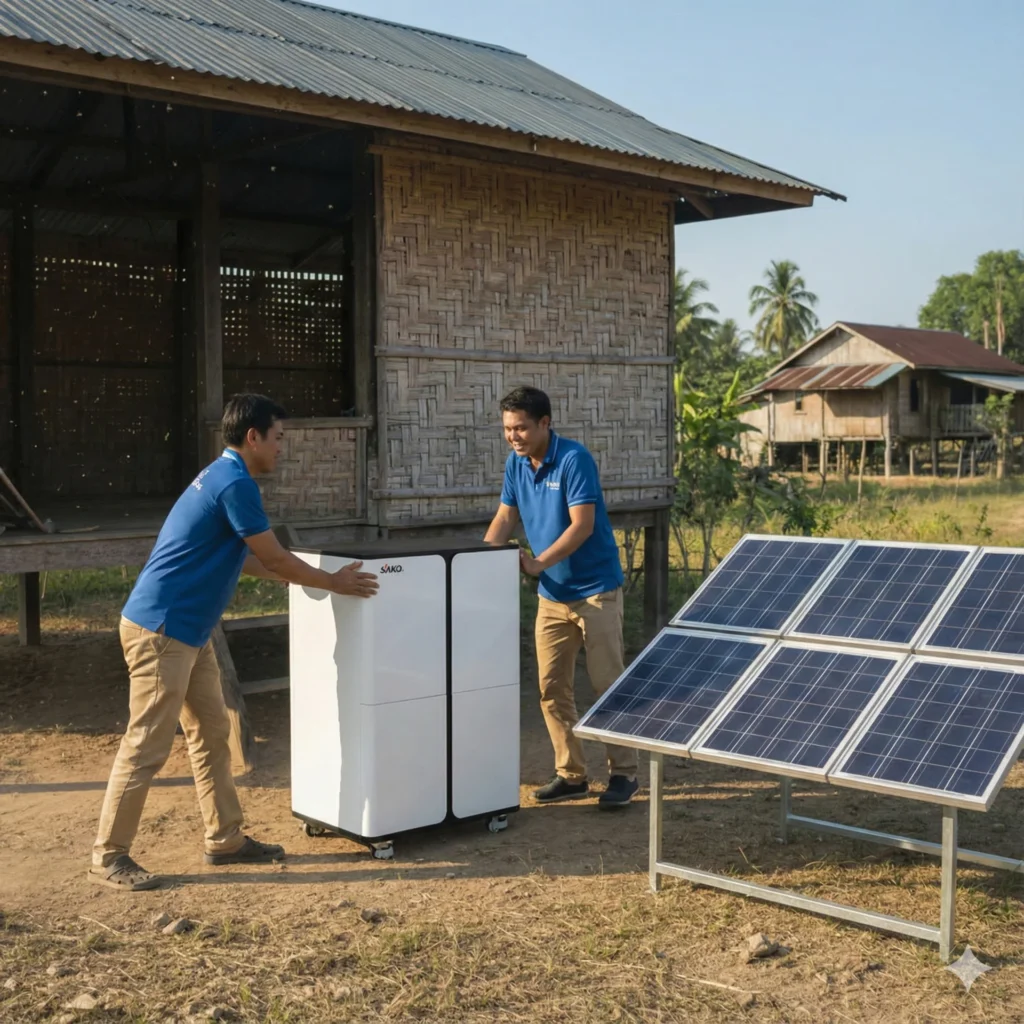
Once the supply chain is secure, project deployment can accelerate dramatically. A single‐SKU ESS not only arrives more reliably; it also installs and commissions far faster. Because the system is factory-integrated, field teams avoid custom wiring and configuration headaches. In practice, this can turn what used to be weeks or months of engineering into days of work. Standardized ESS “kits” allow installers to apply familiar playbooks rather than reinvent integration for each project.
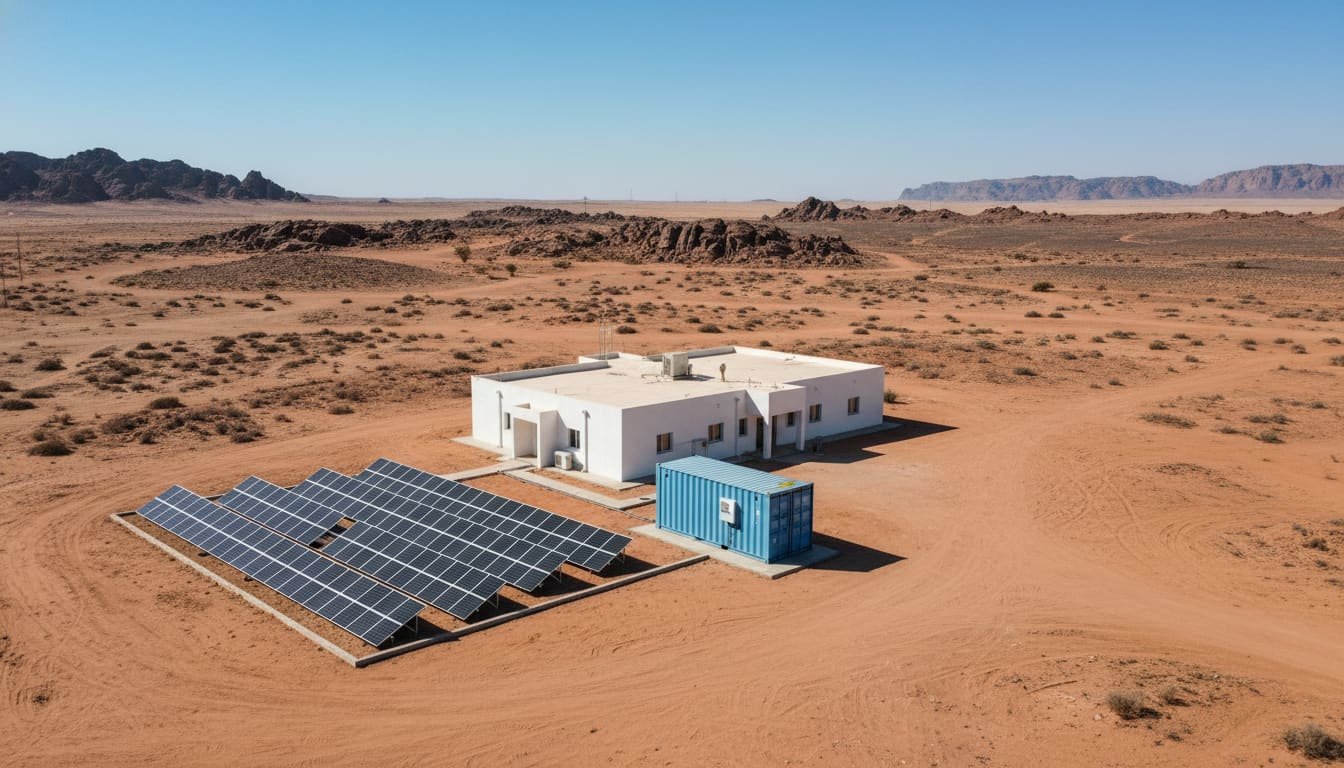
Real-world examples highlight these gains. EnTech Solutions reports that sub-20kW plug-and-play microgrids delivered as transportable enclosures “can be shipped to site mostly assembled, commissioned quickly and be operational in days – versus the months required by large-scale… systems”. Similarly, industry write-ups describe “off-the-shelf” solar microgrid units that can “quickly meet a variety of power needs” thanks to standard configurations. In practical terms, consider an off-grid village project: instead of scheduling multiple shipments of parts and waiting on engineering revisions, a modular ESS container can arrive and start powering homes within the same week.
The economic impact is profound. Shorter timelines mean faster revenue generation for project developers and local partners. Every week saved on installation translates into additional billable months of energy sales or service contracts. For example, if an installer could have completed only one microgrid in a month under the old model, reducing that to one week could triple their project throughput. Quicker deployment also means faster energy access for communities that need it – certainly a compelling social benefit, but also a marketing point for sponsors and governments. In regions where delaying power means lost productivity and rain-fed livelihoods, turning “weeks into days” can drive local support and adoption of the technology.
Crucially, this accelerated rollout relies on standardization. Once the ESS is a one-size-fits-many product, developers can replicate successful designs across sites. Configurations tested in one project inform the next, and supply-chain certainty allows bulk purchasing and training. As ABB has noted of its plug-and-play microgrid containers, “modular, standardized and scalable” design enables cost-efficient, reliable power delivery in rural areas. In summary, an all-in-one ESS turns the slow, bespoke construction process of traditional off-grid systems into a rapid, repeatable assembly line – fueling faster cash flow and impact for market players.
The Enabler – Simplicity and Accessibility
The benefits of supply-chain reliability and rapid deployment converge in a radically simpler experience for both installers and end-users. In essence, the all-in-one ESS becomes a low-skill, high-value product: one whose risk of installation error is minimized, and whose user interface feels familiar, like a household appliance. Achieving this requires deliberate design choices (sometimes called Poka-Yoke, or mistake-proofing). For instance, connectors and ports can be keyed or color-coded so that a technician cannot easily reverse polarity or omit a ground. Software can auto-detect solar panels or batteries, minimizing manual configuration steps. In effect, the system is engineered to avoid “gotchas” that local staff might not know to check.
Product documentation and in-box instructions should reinforce this simplicity. For example, step-by-step guides with clear diagrams (even graphical cues rather than text) help remove language barriers. The design should default to safe settings; advanced controls can be hidden or locked out to prevent mis-adjustment. Notably, World Bank guidance on BESS in developing countries emphasizes tailoring warranties and operating limits to local realities. This implies designing the ESS to perform within those predefined limits automatically – e.
g. derating at high ambient temperatures or cutting load safely, without requiring user intervention.
From a marketing perspective, this ease transforms perception. An all-in-one ESS can be promoted not as an intimidating industrial system but as a home appliance for power. Just as refrigerators or air conditioners have a standard installation procedure, the ESS can be branded as “solar power for your home – no electrician needed.” Advertising and training materials might draw analogies to familiar devices, highlighting plug-and-play convenience and bright indicator lights rather than technical jargon. By framing performance in terms of daily life (lights, appliances, phone charging) and emphasizing reliability (“set it up and forget it”), the market learns to accept ESS as part of the normal household rollout.

This simplicity also empowers local installers. In regions with a shortage of specialized technicians, reducing the skill floor can be the difference between a project succeeding or failing. A pre-assembled ESS that “just works” means, for example, that village electricians or micro-entrepreneurs (perhaps even women micro-sellers) can handle installation, rather than waiting for scarce experts. Over time, a strong field reputation grows: if systems are easy to hook up and rarely fail due to setup error, word-of-mouth can drive further demand. In short, by eliminating complexity for the user, the all-in-one ESS dramatically expands the accessible market.
The Ultimate Value – Lifecycle Reliability & Bankability
All the above – one SKU, rapid install, simple operation – culminates in a final payoff: a highly reliable, financeable asset. A standardized, single-vendor ESS is inherently easier to guarantee and service. Because the entire system is engineered as an integrated whole, its long-term performance is more predictable. Maintenance procedures (e.g. swapping a battery module) and spare parts handling become uniform. Warranties are simplified: instead of juggling multiple contracts for panels, inverters, and controllers, the customer has a single warranty from one manufacturer covering “the system.”
This unity directly benefits investors and lenders. Financiers insist on mitigating technology risk in energy projects, and all-in-one ESS tackles this head-on. As one industry analysis notes, modern off-grid solar projects now emphasize extended warranties and reputable suppliers to satisfy lenders. In fact, standardized storage projects are becoming decidedly bankable. A recent financing milestone — a nearly $773 million loan for a solar-plus-storage plant — “confirm[ed] battery systems are now a core, bankable grid asset,” according to industry observers. The key enablers were a long-term power contract and credible technology guarantees, underscoring that reliable, predictable storage is treated on par with generation.
In parallel, easier supply chains and simplicity contribute indirectly to reliability. When components are all from one OEM, integrated at the factory, and deployed by trained teams, hidden incompatibilities are avoided. There are fewer unknowns in operations: engineers fully budget for a known package, rather than myriad third-party specs. This reduces downtime and upkeep costs over the system’s life. For example, project financers value shorter construction and commissioning periods as decisive risk mitigants; by extension, shorter and more predictable service times (e.g.
one vendor covering repairs) bolster that confidence.
Finally, an all-in-one ESS can become a trusted asset class for development. Development banks and NGOs often insist on robust warranty terms to protect budgets in emerging markets. As a World Bank study explains, in remote electrification contexts warranties must explicitly account for harsh climate conditions, remote locations with poor accessibility, and a limited skilled local workforce, or they become void. A well-designed integrated system itself addresses these: it can withstand local environmental stresses and minimize onsite handling errors, reducing the chance of warranty-busting misuse. In doing so, it assures both customers and funders that the ESS will deliver on its performance promise throughout its lifespan.
In summary, a unified ESS elevates the entire value chain. By enforcing standards and consolidating responsibilities, it creates a “bankable” project profile. Lenders see that equipment risk is largely held by one company, that timelines and outputs can be precisely modeled, and that maintenance costs are predictable. These factors make ESS projects eligible for the same kind of low-cost, long-duration financing that has driven renewable buildouts elsewhere. In other words, the all-in-one approach doesn’t just attract buyers – it attracts capital.
Strategic Recommendations & Conclusion
Product Development
Prioritize an integrated, single-SKU system tailored for MEA/SEA. This means engineering a compact ESS enclosure that houses all essential components and ships as one unit. Design the form factor for rugged, varied handling, for instance, containerized or stackable modules that fit local transportation modes. Internally, apply Poka-Yoke principles – for example, color-coded, keyed connectors and pre-wired internal bus systems – to prevent installation errors. Ensure the controller software is pre-configured for common use cases (e.g., automatic grid/gridless switching), minimizing the need for field setup. Finally, develop clear, graphical documentation and multilingual materials to make the product operable by installers with basic training. From an R&D standpoint, the highest priority is to collapse the ESS supply chain: deliver a “plug and play” appliance at scale rather than loose parts.
Marketing & Distribution
Position the ESS as a household-style appliance, not a heavy industrial kit. Craft messaging that emphasizes ease – e.g., “solar power that works like your refrigerator.” Use local analogies and field demonstrations to demystify the product. Provide channel partners with turnkey marketing materials: posters, videos, and training that explain the benefits in simple terms (cost savings, reliability, low maintenance). Offer financing or bundled payment plans that align with how consumers purchase appliances. Expedite distributor onboarding by offering product bundles that include all necessary accessories and even pre-paid shipping, reducing the channel’s stock and risk. For example, offer an “everything in one box” kit, even down to the mounting hardware and basic tools.
Financing & Partnerships
Leverage standardization to build trust with investors. Develop one umbrella warranty covering the entire ESS and publicize this in proposals. Work with development banks or export-credit agencies to secure guarantees or concessional loans for kit-packed installations, which appear lower-risk due to their standardized nature. Actively engage with clean-energy funds by highlighting project speed and reliability metrics. Potentially explore energy-as-a-service models (leasing the ESS as an appliance) to convert CAPEX into simpler consumer fees.
Cross-Cutting
Coordinate these efforts from the outset with the highest weight on “Supply Chain Certainty” and “Simplicity.” Practically, this means any product feature that complicates logistics (additional SKUs, exotic parts, need-for-manual-assembly) should be questioned unless it brings clear added value. Simultaneously, every aspect of design should tilt toward making the unit foolproof and user-friendly. For instance, test initial prototypes in representative field trials to catch any “gotchas” an installer or homeowner might encounter, then iterate the design to eliminate those gaps.
Conclusion
In MEA and SEA markets, energy providers and developers face unique constraints that traditional ESS form factors do not address. By contrast, a plug-and-play, all-in-one ESS specifically unlocks these markets by aligning with their business drivers. The logical cascade is clear: start with supply-chain certainty to enable speed, which in turn allows simplicity, culminating in a reliable asset that financiers can back. Strategically, product teams should double down on integrated-system design and channel-friendly packaging. Marketing teams should translate technical strengths into everyday language and financing terms. Together, these moves will make energy storage not only technically viable but commercially irresistible in some of the world’s most challenging yet opportunity-rich markets.