Executive Summary: For homeowners and SMEs in the Middle East, Africa, and Southeast Asia, lithium iron phosphate (LiFePO₄) batteries emerge as the “no-compromise” choice for home energy storage. With extreme heat, humidity, and unreliable grids common in these regions, LiFePO₄ delivers the safest, longest-lived, and most cost-effective energy reserve. Unlike nickel-based lithium (NMC), lead-acid, or emerging sodium-ion systems, LiFePO₄ combines high thermal tolerance, rock-solid safety, extremely long cycle life, and supply-security at a moderate upfront cost. In short, LiFePO₄ offers well-balanced performance in safety & reliability, cost-effectiveness, performance under stress, and sustainable supply – precisely what off-grid homeowners face daily. The remainder of this guide compares LiFePO₄, NMC, lead-acid, and sodium-ion technologies across these critical dimensions, showing LiFePO₄’s overall superiority.
1. Safety & Reliability
High-Heat, High-Reliability Environments: The target regions see punishing conditions: Middle Eastern summers often exceed 45 to 50 degrees Celsius with little humidity control, while tropical Southeast Asia and parts of Africa combine heat with monsoon-like humidity. Under such stresses, battery chemistry matters. LiFePO₄’s iron-phosphate cathode has an extremely stable olivine structure that holds oxygen atoms tightly, only breaking down above approximately 400 to 500 degrees Celsius. In practice, this means thermal runaway – the feared uncontrollable heating that leads to fires – is vastly harder to trigger in LiFePO₄ than in alternatives. Nickel-rich cells (NMC) begin decomposing and releasing oxygen at only around 150 to 200 degrees Celsius, essentially halving the safety threshold compared to LiFePO₄. Industrial tests show LiFePO₄ cells reach peak temperatures of approximately 239 degrees Celsius under abuse, versus approximately 460 degrees Celsius for high-nickel NMC. Because LiFePO₄ does not release oxygen when it finally breaks down, any fire has much less “fuel” feeding it, making such events less violent and more containable.
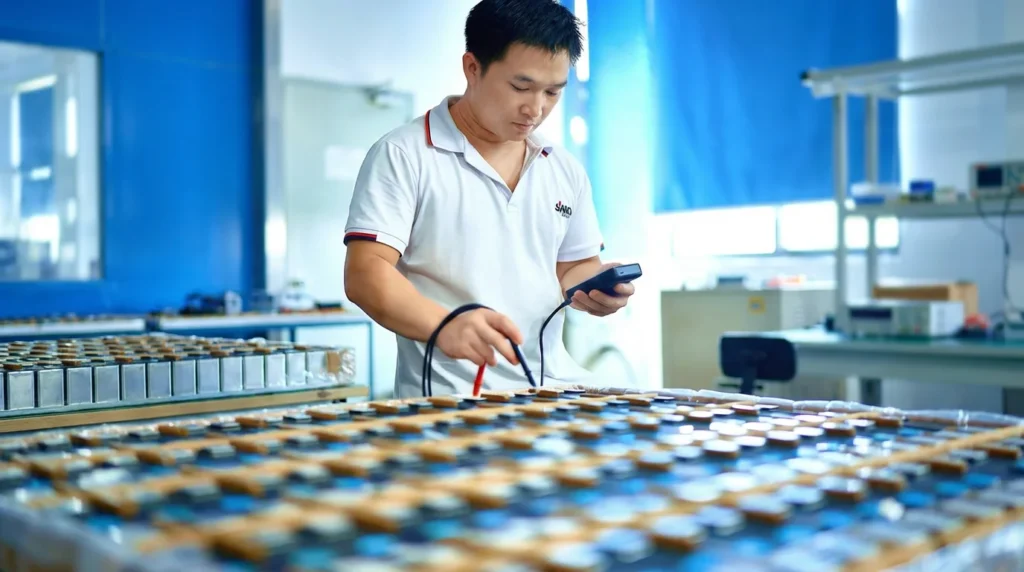
By contrast, NMC batteries – with their oxygen-rich cathodes – are more prone to ignition. They can achieve high energy density, but at the cost of lower thermal stability. In real terms, an NMC module under extreme abuse can flash to over 500 to 600 degrees Celsius, reaching conditions that easily overwhelm fire suppression. For homeowners in Gulf or desert climates, even a rare cell venting can spread to neighboring units.
Lead-acid (flooded or sealed VRLA) brings other risks: at high heat, acid can evaporate, plate corrosion accelerates, and gassing (hydrogen venting) is common, posing fire and explosion hazards. Flooded lead banks require regular watering and ventilated rooms – impractical for rooftop installations in scorching heat or dusty environments. Under deep cycles, lead-acid can also suffer thermal stratification, where the top of the electrolyte gets very hot, further reducing its life.
Sodium-ion batteries (a nascent technology) generally have a rock-salt cathode that is thermally stable. While sodium itself has a lower melting point than lithium, the layered oxide cathodes are engineered to resemble robust LiFePO₄. Early commercial sodium-ion cells report safe operation up to approximately 50 to 55 degrees Celsius. However, because the technology is newer, real-world safety data is still limited. As a rule, sodium-ion systems exploit Li-ion-era safety designs, like ceramic separators, making their baseline safety similar to LiFePO₄, though multi-cell punch-through scenarios have not been as extensively studied.
In all cases, certified home energy storage systems must meet strict standards, such as IEC 62619 for the safety of industrial lithium cells and UL 1973/UL 9540 for system-level fire safety. LiFePO₄ chemistry inherently eases these certifications. The high thermal decomposition point means that under IEC 62619 abuse tests (shorts, overcharge, thermal shock), LiFePO₄ modules are far less likely to reach runaway conditions. Similarly, UL 9540A/B fire-propagation tests at the system level favor the stable LiFePO₄, as failed modules heat neighbors far more slowly than NMC units. In a sense, LiFePO₄ provides a built-in “thermal fuse” – it heats up slowly and retains integrity much longer. For families and businesses in MEA/SEA, that translates to real-world safety: a LiFePO₄ pack operates reliably at 50 degrees Celsius ambient, with a wide operating window from –20 to +60 degrees Celsius, whereas other chemistries would need aggressive cooling or derating.
Analogy: Think of these batteries as engines. LiFePO₄ is like a heavy-duty diesel generator – it runs cooler, needs less policing, and simply won’t explode even under abuse. NMC is like a high-performance racing engine – powerful but requiring intensive cooling and maintenance. Lead-acid is like an old rotary engine – simple and cheap, but prone to overheating and leaking in harsh conditions. LiFePO₄ is the solid “workhorse” that won’t quit in desert heat or swampy humidity.
2. Lifetime Value & Economic Viability (LCOS)
In raw price per kilowatt-hour, LiFePO₄ today is intermediate. Recent reports show cell pack prices around $81 per kWh for LFP versus $128 per kWh for NMC. Stationary system prices are normally about 1.1 to 1.3 times the cell pack cost once inverters, BMS, and housing are added; we can assume approximately $100 per kWh for LiFePO₄ system capital expenditure and $150 per kWh for NMC.
Lead-acid overhead is lower (around $60 to $80 per kilowatt-hour), and some cutting-edge sodium-ion prototypes claim approximately $80 to $110 per kilowatt-hour. Crucially, price alone doesn’t tell the full story. Infrequent outages favor low CAPEX (lead-acid can seem appealing), but in MEA/SEA grids often falter daily or weekly, dramatically increasing required cycling. Under such duty, lifecycle cost matters most, and LiFePO₄ shines here.
We build a simple Levelized Cost of Storage (LCOS) model to compare chemistries, assuming one cycle per day, 365 days per year, a 15-year horizon, and a $0.15 per kilowatt-hour displaced electricity price. The key assumptions are shown below, taken from industry surveys and tests.
| Chemistry | CAPEX (system) | Round-trip Efficiency | Cycle Life (to 80% SoH) | Levelized Cost per kWh Delivered (est.) |
|---|---|---|---|---|
| LiFePO₄ (LFP) | $100/kWh | 95% | 5,000 | ~$0.021/kWh |
| NMC (LiNiMnCoO₂) | $150/kWh | 90% | 3,000 | ~$0.056/kWh |
| Lead–Acid (VRLA) | $70/kWh | 80% | 500 | ~$0.200/kWh |
| Sodium-Ion | $120/kWh | 90% | 2,000 | ~$0.067/kWh |
Simplified LCOS comparison, which assumes daily cycling at a $0.15/kWh grid price, ignoring inflation and O&M. Data is sourced from BNEF & industry reports.
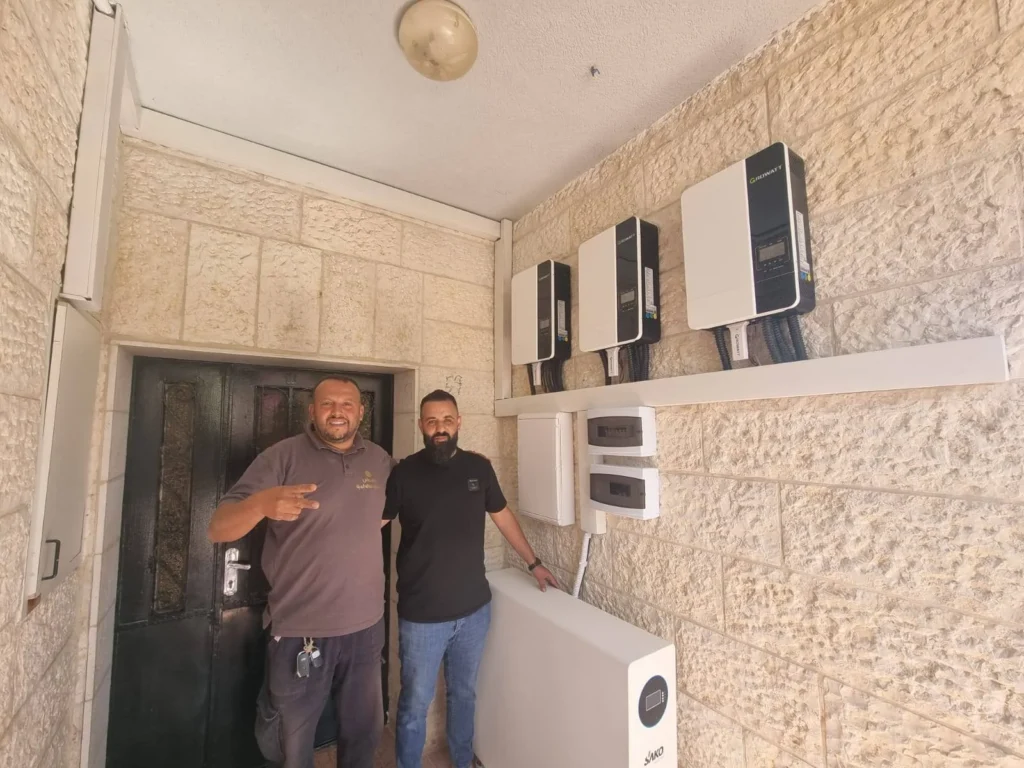
Interpretation: The model shows LiFePO₄ delivering by far the lowest cost per cycle over its lifetime. Even though LFP’s upfront cost is higher than lead-acid, it amortizes over 10 times more cycles, giving a per-kWh cost (approximately 2 cents) far below lead-acid (20 cents) and below NMC (approximately 5 to 6 cents). These figures match published analyses: independent studies often find LFP per-cycle cost between $0.02 to $0.04, roughly half that of NMC and much lower than lead-acid. In regions with unstable grids (South Asia, Africa), storage may cycle twice (or more) a day during blackouts. Every extra cycle simply doubles the value from LiFePO₄ (because it has the cycle life to spare) but destroys the economics of short-lived alternatives. In other words, LiFePO₄’s high endurance magnifies its advantage when storage is heavily used.
Sensitivity note: In very high-cycle scenarios, systems with lower initial cost but short life actually cost more in total. For example, doubling cycles due to twice-daily outages halves the effective lifetime of lead-acid, meaning you must buy two sets over 15 years, whereas LiFePO₄ still reaches its end-of-life far in the future. Thus, erratic grids and frequent solar use strongly favor the high-cycle LFP.
Economically, LFP also avoids “surprise” replacement costs. A typical LiFePO₄ installation can last 10 to 15 years with minimal degradation (3,000 to 15,000 cycles), meaning no mid-life swap-out. By contrast, even advanced lead-acid systems often need rebuilds every 4 to 6 years under heavy cycling, and NMC systems may degrade after approximately 8 to 10 years. Over decades, the LiFePO₄ owner saves on equipment, labor, and downtime. A European cost study showed LiFePO₄ systems had about 2.8 times lower stored-kWh cost than lead-acid.
Analogy: Imagine paying for a taxi ride versus owning a car. Lead-acid and lower-cycle batteries are like repeatedly hiring taxis: cheap per ride, but every day you lose money. LiFePO₄ is like buying a reliable electric car: you pay more up front, but over thousands of trips, each “mile” costs pennies, not dollars. For an extended mission of 15 years with daily cycling, LiFePO₄ is far cheaper per delivered kWh.
3. Performance & Resilience
Depth of Discharge (DoD): This is the fraction of stored energy that can be used. LiFePO₄ supports very deep discharge – often up to 100% of its capacity, with typical ratings around 80% to 90% for optimal life. In practice, LiFePO₄ can regularly sustain 80% DoD without quick failure. By contrast, lead-acid batteries practically should only be drawn to 50% DoD (or 80% in worst-case deep-cycle designs), otherwise their life plummets. NMC and other lithium cells are usually rated at approximately 80% to 90% as well, but aggressive cycling to 100% DoD accelerates capacity fade. In real terms, a LiFePO₄ battery effectively carries twice the usable “fuel” in its tank compared to a lead-acid of the same size.
Analogy: Think of a 100-liter fuel tank: LiFePO₄ lets you use nearly all 100 liters every day, whereas with lead-acid you must “keep 50 liters in reserve” forever to avoid damage. Thus LFP systems deliver much more energy per cycle, reducing the effective size and cost needed for the same service.
C-rate (Power Capability): C-rate indicates how fast a battery can charge or discharge relative to its capacity. Many LiFePO₄ cells safely allow a 1C or higher continuous charge/discharge rate, meaning 100% of capacity can be delivered in one hour, with brief pulses possible far above that. Some cells can tolerate bursts of 2C to 3C. This means LiFePO₄ can absorb solar peaks and supply heavy loads, such as air conditioners during outages, much better than lead-acid. Lead-acid, by contrast, is often limited to a C-rate of C divided by 5 to C divided by 3 to avoid overheating or sulfation. NMC cells are similar to LFP in nominal C-rate, but extreme discharges still shorten their life. Sodium-ion prototypes are also targeting a 1C continuous rate. In practical terms, LiFePO₄’s robust C-rate makes it versatile for both slow daily cycling and sudden emergency loads.
Cycle Life & Aging: Repeated cycling and time gradually degrade all batteries, but the rate varies. As noted earlier, LiFePO₄ typically delivers thousands of cycles before reaching approximately 80% of its original capacity—on the order of 3,000 to 6,000 full cycles at around 80% DoD. NMC cells are often rated for a few thousand cycles, approximately 2,000 to 4,000 at 80% DoD, before the same fade. Lead-acid might only provide a few hundred cycles under deep use. Even emerging sodium-ion technology is quoted at 2,000 to 3,000 cycles, with future improvements hinted. In concrete terms: under heavy daily use, a LiFePO₄ pack can last 10+ years, NMC perhaps 8 years, and lead-acid only around 3 to 5 years. Indeed, many off-grid lead-acid banks must be entirely replaced in approximately 2 to 4 years.
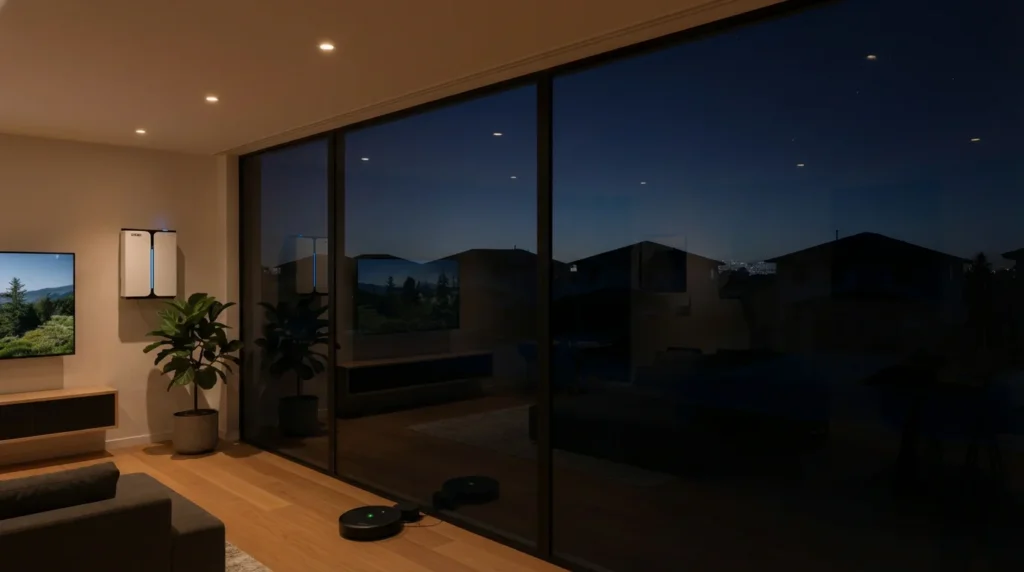
Heat accelerates all degradation, causing faster capacity loss in every battery. However, LiFePO₄ withstands heat more gracefully. Testimonials confirm LiFePO₄ maintains performance in hot climates: one report notes an LFP pack in Abu Dhabi, with a 48°C ambient temperature, still delivered approximately 118% of its rated capacity due to higher ionic mobility, while an adjacent lead-acid setup had dropped to 73%. This effect is temporary; prolonged heat will wear down any battery, but LFP’s chemistry leads to slower decay. In Southeast Asia’s 30–40°C environment, LFP systems can operate at near-optimal conditions for most of the day. Meanwhile, lead-acid suffers chronic “battery fatigue” from sulfuric acid boiling and grid corrosion, and NMC batteries in un-air-conditioned rooms degrade noticeably faster.
Grid-Outage Resilience: Frequent, unpredictable outages are common across Africa and parts of Asia. A battery with a high Depth of Discharge and long cycle life can capture each day’s solar yield and provide power through the night. LiFePO₄’s high DoD and long life directly translate to resilience, as you can discharge it deeply every day without fear of instant failure. If grids fail twice or more per day, LFP still delivers thousands of cycles, whereas other chemistries would wear out quickly. The C-rate also plays a role—during short, intense outages, LFP can supply high power surges, for example to start appliances, without voltage collapse.
Analogy: Using an LFP battery under heavy cycling is like owning a truck with an enormous fuel tank and a durable engine—it can run long and hard every day. A lead-acid system under the same stress is more like a small lawnmower: it might limp through the first ride, but it won’t survive the marathon.
4. Supply Chain & Sustainability
Raw-material Geopolitics: LiFePO₄’s cathode is made of iron and phosphate, both of which are extremely abundant and widely distributed globally. Iron is the planet’s most common metal, and phosphate rock is sourced on nearly every continent. This diversity means LFP supply chains are relatively stable and ethical. By contrast, NMC batteries rely on cobalt and nickel. Cobalt, in particular, raises red flags: over 60% of the world’s cobalt is mined in the Democratic Republic of Congo under difficult labor conditions, and over 67% of cobalt refining capacity is concentrated in China. Life-cycle studies note that cobalt-intensive batteries incur heavy environmental and social burdens, including child labor in DRC mines and toxic waste. Nickel demand for high-energy NMC also grows with EV and energy storage markets, driving price and supply uncertainty.
LiFePO₄ avoids this entire problem. With no cobalt, very little manganese, and only abundant iron and phosphate, its geopolitical risk is low. Similarly, sodium-ion batteries, if they scale, use only sodium and manganese or iron—none of the critical conflict minerals. In terms of ethical sourcing, LiFePO₄ and sodium-ion are the clear winners.
Recycling & Environmental Impact: Lead-acid systems use recycled lead in nearly 90% of cases in some markets, but spent lead batteries require careful disposal due to toxic lead and acid. Large-scale lead-acid disposal, especially through informal recycling, can cause lead poisoning and soil pollution. Lithium-ion NMC cells also need recycling, but their cobalt and nickel content makes them high-value to recycle despite their toxicity, as cobalt recovery is lucrative.
LiFePO₄ cells are simpler, containing no precious metals but mostly iron and aluminum. This can be a disadvantage for the recycling economy due to less financial incentive, but the lack of cobalt means that any missed recycling has a lesser environmental toll. Furthermore, as a purely iron-based cathode, used LFP materials could theoretically be repurposed or landfilled more benignly, since iron oxide is relatively harmless.
Grid-Scale Material Demand: As colossal investment in renewables continues, battery demand will soar. The International Energy Agency (IEA) has noted growing concerns about reliance on lithium and other critical materials. In this context, LiFePO₄’s use of earth-abundant materials is strategically favorable. Phosphate is even being proposed as a green fertilizer, and its mining is a well-understood process. The case for sodium-ion batteries is similar: sodium is extremely cheap and ubiquitous, coupled with abundant graphite anodes and iron or manganese cathodes.
In the specific markets of the Middle East, Africa, and Southeast Asia, this translates to supply security. Regional manufacturers in China and India are ramping up LFP production, as iron and phosphate supplies are plentiful in these areas, ensuring high availability. Analyses like the IEA’s 2025 Outlook confirm that by mid-decade, bulk battery production will emphasize LFP chemistry to ease material constraints. In sum, LiFePO₄ aligns with sustainability goals: cleaner to make and easier to ethically source than cobalt-rich batteries.
5. Regional Suitability Matrix
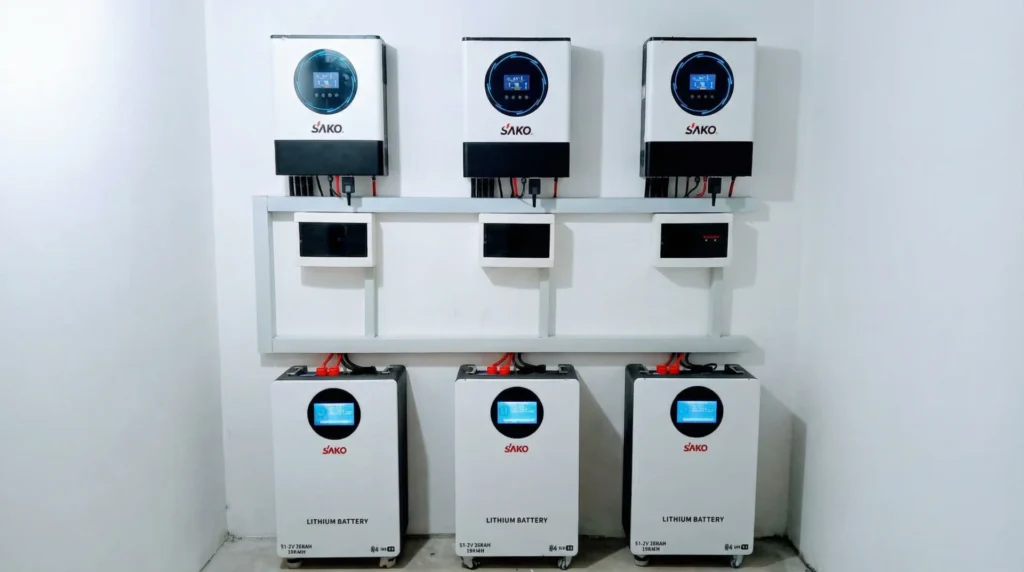
The table below summarizes how each battery type scores against key regional challenges on a scale of 1 (poor) to 5 (excellent). The ratings reflect the priorities for homeowners and SMEs in MEA/SEA, such as heat tolerance, outage resilience, and cost sensitivity. LiFePO₄ consistently scores highest overall, earning the top rating as the “balanced champion.”
| Criteria | LiFePO₄ | NMC (NiMnCo) | Lead–Acid | Sodium-Ion |
|---|---|---|---|---|
| High-Heat Tolerance | 5 ⭐ | 3 | 2 | 4 |
| Safety in harsh climates | 5 ⭐ | 3 | 2 | 4 |
| Frequent Outage Resilience | 5 ⭐ | 3 | 2 | 4 |
| Upfront Cost Sensitivity | 4 ⭐ | 3 | 5 | 3 |
| Long-Term ROI (LCOS) | 5 ⭐ | 3 | 1 | 3 |
| Sustainable Supply Chain | 5 ⭐ | 2 | 3 | 4 |
| Net Overall | 5 | 3 | 2 | 4 |
- High-Heat Tolerance: LFP’s rating of
5reflects its proven stability up to 60°C ambient temperatures, common during desert day-night swings, and its chemical resilience at over 270°C. Sodium-ion is also promising with a score of4, as it uses similar oxide cathodes. NMC is middling at3, and lead-acid performs poorly with a2due to electrolyte boiling and grid corrosion. - Safety: LFP is top-rated at
5for its strong thermal buffer and low risk of thermal runaway. Sodium-ion earns a4, being a newer technology but similarly free of cobalt. NMC is lower due to its ignition risk at around 150°C. Lead-acid scores a2because of hydrogen venting and acid hazards. - Outage Resilience: LFP’s superior Depth of Discharge (DoD) and long cycle life earn it a
5. Sodium-ion is close at4but is still a new technology. NMC, rated at3, has a limited lifespan for handling daily cycles. Lead-acid, with a score of2, quickly wears out if deeply cycled. - Upfront Cost: Lead-acid is the cheapest upfront, scoring a
5. LFP is slightly higher at4, while NMC and sodium-ion are moderate with a3. However, this single factor is outweighed by lifecycle costs. - ROI (LCOS): LFP scores a
5for delivering by far the lowest cost per kWh over its lifetime. NMC and sodium-ion are moderate at3due to shorter life and lower efficiency. Lead-acid is the worst performer with a score of1, as shown in the LCOS model. - Supply Chain: LFP, using iron and phosphate, gets a
5for its abundant resources and lack of critical metals. Sodium-ion also scores well at4. Lead-acid receives a3, as lead is toxic but widely recycled. NMC scores a2due to concerns over cobalt and nickel sourcing.
Conclusion: LiFePO₄ leads in nearly every category critical to these regions. Its only relative weaknesses are a slightly higher initial price than lead-acid and lower energy density than some NMC cells—tradeoffs that are less important for home energy storage, where weight and volume are not critical and safety and lifespan trump raw energy density. Collectively, the scores show LiFePO₄ as the “balanced champion,” second to none in balancing safety, longevity, performance, and sustainability.
References & Methodology
- Battery Prices and Costs: The analysis uses data from BloombergNEF’s 2025 Battery Price Survey, which reports an average LFP pack cost of approximately $81/kWh compared to about $128/kWh for NMC. These figures form the basis of our Capital Expenditure (CAPEX) assumptions, with an additional 20% included to account for system integration.
- Cycle Life Data: Lifecycle figures are sourced from industry analysis. This includes estimates of 4,000 to 6,000 cycles for LFP at 80% Depth of Discharge (DoD), 3,000 to 4,000 cycles for NMC, and 500 to 1,200 cycles for lead-acid. Additionally, real-world data indicates a cycle life range of 3,000 to 15,000 for LFP, compared to 300 to 500 for lead-acid batteries.
- LCOS Model: A simplified model was used to calculate the Levelized Cost of Storage (LCOS). The LCOS for a specific battery type is approximated by dividing the total Capital Expenditure (CAPEX) by the product of the battery’s round-trip efficiency and its total lifetime cycles. This calculation is normalized per kilowatt-hour of throughput. The model uses an electricity price of $0.15/kWh to anchor the value of the stored energy. While this approach omits factors like discounting and Operations and Maintenance (O&M) costs, it effectively captures the primary economic drivers. All key inputs, including CAPEX, efficiency, and cycle life, are based on the data sources mentioned.
- Thermal Safety: The assessment of thermal safety is based on well-documented reports on the chemical stability of LiFePO₄. Data from engineered safety studies, including calorimetry tests that compare maximum temperatures under stress, were used. The analysis also incorporates operational field reports that demonstrate LFP battery performance in climates with temperatures as high as 48°C.
- Supply Chain: The discussion on supply chain risks associated with cobalt and nickel is informed by a 2024 supply-chain assessment. The abundance of iron and phosphate is treated as common knowledge, which underpins the current research and development focus on iron-based cathodes. The analysis also acknowledges ethical concerns, such as mining conditions in the DRC, as documented in relevant literature.
In summary, this analysis synthesizes publicly available data, including battery price surveys, manufacturer specifications, and academic life-cycle studies, to quantify the performance and economic viability of different battery technologies under MEA/SEA conditions. All assumptions were chosen to be conservative yet realistic for high-temperature, high-utilization home energy storage applications.