The Cage of Volatility
Imagine a typical family home in a city on the developing-grid edge. It’s midday and the sun is blazing, yet suddenly the lights flicker and go out. The TV dies mid-scene, the refrigerator hums to a stop, and the children’s video call freezes. The generator roars to life. Father Ali scrambles for diesel in the corner tank, cursing another skyrocketing fuel bill. The house is hot, money is burning, and every watt of power feels expensive. Fatima, a mother of three, watches helplessly as her budget drains into that bill. This is the gut-wrenching reality for millions in the Middle East, Africa and Southeast Asia: power grid outages locking them into high-cost backup fuel. It’s an economic cage. No solar, no energy storage—just a volatile grid and an expensive generator.

For these households, electricity isn’t truly theirs—it’s a debt to the grid or pump supplier. Every outage forces them to fire up noisy, polluting generators. Diesel fuel, for example, can cost anywhere from approximately $1 to over $1.50 per liter in many countries. At a consumption rate of 0.3 liters per kWh, typical for a 5 to 10 kW generator, that’s about $0.30 per kWh of electricity from the diesel alone. Filling a 20-liter tank can run over $20, just for a day’s supply that provides minimal power. Interrupted schedules and soaring global fuel prices turn home energy into a financial roulette. What was once a simple utility bill becomes unpredictable expense spikes, undermining the family budget.
This dependence isn’t just inconvenient—it’s a forced economic dependency. Homes in unstable-grid regions spend hundreds or thousands of dollars annually on backup fuel. That money is gone, sent one-way to volatile markets. A single crisis, like surging oil prices or supply disruption, can double the power bill overnight or stall daily life as generator fuel runs low. Reports confirm that energy shortages in Africa and Asia have become chronic, with large-scale blackouts sweeping entire neighborhoods. It’s not a lifestyle choice; it’s a lock-in. Every sweltering hour without grid power reinforces that families are beholden to external energy suppliers. They have little control over cost or supply. In effect, they live in a cage of volatility, unable to insulate their household budget from wild market swings.
The Blueprint for Sovereignty
There is another way: energy independence via a home all-in-one Energy Storage System (ESS). This is not merely another gadget; it’s a sovereignty tool. The core principle is simple, first-principles economics: always use the cheapest available energy first, store excess “free” energy, and only tap expensive sources as a last resort. We call this the Priority-Driven Heuristic:
- Rule 1: Use solar power first to meet home loads, since solar energy is literally free once installed.
- Rule 2: If solar generation exceeds immediate load, channel the surplus into the battery by charging the ESS.
- Rule 3: When solar is insufficient (e.g., at night or on cloudy days), draw from the battery to meet loads, tapping the stored free energy.
- Rule 4: Only when both solar and battery are depleted do we turn to the grid or generator, incurring variable costs.
These straightforward rules ensure every ray of sun is captured and every saved joule stored before paying a cent to the utility or fuel pump. In practice, smart inverters and controllers implement exactly this flow: solar panels feed the home and battery first, and the costly grid or generator is relegated to emergency use only.
Consider the logic visually:
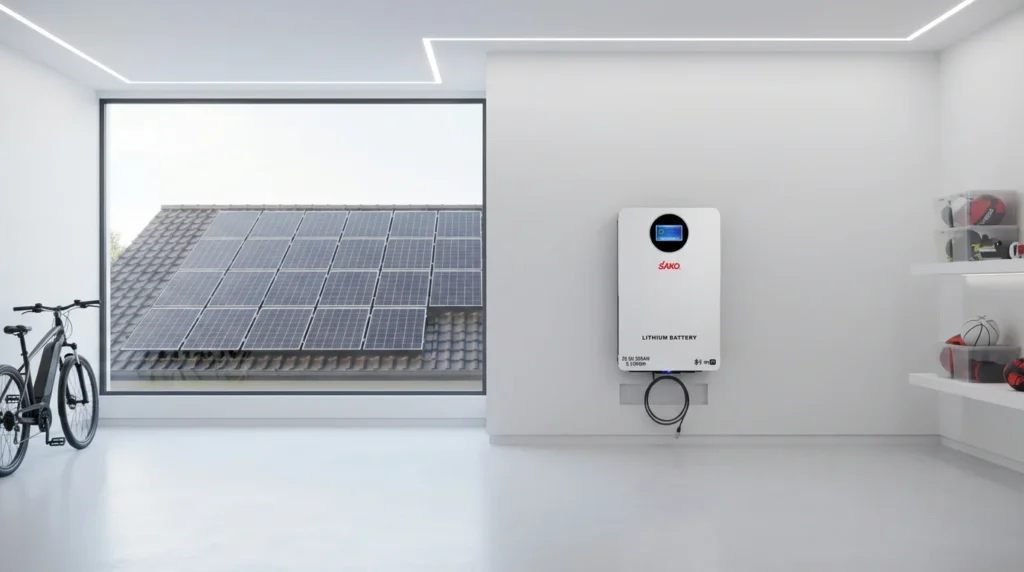
[Solar PV]
      |
      +--> [Load]             (1. Solar → Load)
      |
      +--> [Battery]          (2. Solar → Battery)
             |
             +--> [Load]      (3. Battery → Load)
[Grid/Generator]
      |
+--> [Load] (4. Grid/Gen → Load)- Solar → Load: Sunlight is free. Any solar energy that falls on your panels immediately drives your home appliances (“Load”).
- Solar → Battery: If solar output exceeds momentary needs, the excess goes into the battery, charging it.
- Battery → Load: At night or during dips, the battery discharges to power the load—again at zero marginal cost.
- Grid/Generator → Load: Only when both solar and stored energy are used up does the system switch to the grid or generator. This is the fallback with an attached cost.
This priority-driven “stack” is key. It flips the old model on its head. Instead of grid power (with subsidy fluctuations) as the default and solar as a fancy extra, we treat solar as the foundation. The home automatically uses every available watt of sunshine, builds up an energy buffer, and eliminates volatility. The result? Energy independence—defined here not by full off-grid status, but by control over cost. With an ESS, your utility bill becomes largely fixed through the amortized cost of panels and the battery, and unpredictable fuel swings no longer bite into the family economy.
| Life Without ESS | Life With ESS | |
|---|---|---|
| Energy Cost Basis | Primarily diesel and grid (variable cost) | Primarily zero-cost solar; minimal grid backup |
| Fuel/Bill Volatility | High—monthly bills jump with fuel prices | Low—most energy is free, so bills are steady |
| Budget Predictability | Poor—future costs are unknown | High—fixed setup cost, known operating costs |
| Renewable Usage | Minimal, as midday sun is wasted without a battery | Maximized—captures and stores all solar output |
| Outage Resilience | Low—the lights are out unless diesel is burning | High—the battery provides outage backup |
This comparison table makes the case: without an ESS, families endure unpredictable fuel and tariff bills and waste free solar energy; with an ESS, they lock in solar as their workhorse, smoothing out the economic ups and downs. In effect, an ESS becomes an economic buffer—as valuable as a savings account insulating household finances against energy price shocks.
How it Works: Priority-Driven Heuristic in Action
In practice, an all-in-one home ESS (solar panels, inverter, and battery) is often paired with a controller programmed with the above priorities. Here’s a step-by-step look at a typical day:
- Morning Sun (Rules 1 & 2): When sunlight hits the PV panels, the inverter immediately converts it to electricity. The home appliances (lights, fridge, gadgets) draw power directly from this solar generation first. If the sun is strong and the family load is small, the extra solar current is shunted straight into charging the battery. This process has no dollar cost, as it’s all powered by maintenance-free sunlight.
- Sunset/Culmination (Rule 3): As evening falls and solar output wanes, the system switches to the battery. Now, home loads draw from the energy stored during the day. This discharging still costs nothing per kWh, excluding the initial capital expenditure. The battery might power a TV, lights, or even charge an EV, all without firing up the generator.
- Deep Night or Cloudy Days (Rule 4): If the family’s demand exceeds the stored energy, or during an extended grid blackout, only then does the system fall back to grid or generator power.
By this time, the battery is likely low, so the controller opens the circuit to the diesel generator or grid. But here it’s rare—batteries might cover the deepest part of night and cloudy patches, leaving only brief windows for fallback energy.
The net effect: grid/generator energy is used last, and usually at a low fraction of daily consumption if the solar+battery is sized properly. That means the volatile fuel expense is minimized and becomes almost a constant floor cost (owning the infrastructure), rather than a swinging variable that devours the budget.

In short, the ESS shifts the household energy balance from “fighting wild swings” to “capturing free resource and smoothing peaks.” The math is simple: each kilowatt-hour from solar+storage displaces more-expensive diesel electricity, directly saving fuel dollars. Over time, that multiplies into thousands of dollars of saving, as we will quantify below.
The Quantitative Proof
It’s time to put numbers behind the narrative. Let’s build a transparent 10-year Total Cost of Ownership (TCO) model comparing the two cases: a household with an ESS versus without one. We will state clear assumptions and cite real-world data where possible.
Assumptions (example household):
- Daily Electricity Demand: Approximately 34 kWh/day, which is typical for a mid-size home with AC and 4 people, or approximately 12,500 kWh/year.
- Solar System Size: 7 kW of panels, yielding roughly 20 kWh/day on average in sunny regions, with up to approximately 25 kWh on peak days.
- Battery Bank: Sized to cover evening loads, with approximately 20 kWh of usable capacity.
- Diesel Generator Efficiency: Approximately 0.3 L of diesel per kWh, which is common for a residential genset at a moderate load.
- Diesel Fuel Price: Approximately $1.00 per litre. This is a conservative “mid-African” figure, as actual prices can range from $0.5 to $1.5/L depending on the country.
- Grid Electricity Tariff: $0.10 per kWh, a typical rate in many markets.
- Discount Rate: Ignored for simplicity; we present nominal 10-year sums.
These values, drawn from cited sources, yield a concrete scenario. We’ll compare annual and 10-year costs to highlight savings and sensitivity.
Calculating Energy Costs
- Without ESS: All 34 kWh of daily electricity demand must be supplied by the diesel generator, assuming the grid is unreliable. At an efficiency of 0.3 liters per kWh, this requires approximately 10.2 liters of diesel each day. At a price of $1.00 per liter, the daily fuel cost is approximately $10.20, which totals $3,723 per year. Over a 10-year period, this amounts to approximately $37,230 for fuel alone, ignoring maintenance and inflation.
- With ESS: The 7 kW solar array generates roughly 20 kWh per day, offsetting approximately 59% of the daily load. In practice, the system stores excess energy on sunny days and uses it during cloudy periods or at night. For this model, we will assume the solar and storage system covers 80% of the annual load, a reasonable target for a 7 kW solar array paired with 20 kWh of storage in a sunny climate. The diesel generator only needs to supply the remaining 20%, which is 6.8 kWh per day. This requires approximately 2.0 liters of diesel daily, costing about $2.00, which amounts to $730 per year for fuel. Over 10 years, the total diesel cost is $7,300.
Below is a breakdown of the 10-year costs for each scenario, including the capital investment for the ESS.
| Cost Category | Without ESS (10-Year) | With ESS (10-Year) |
|---|---|---|
| Electric System CapEx | $0 (assumes no PV/battery) | $15,000 (estimated) |
| Diesel Fuel | $37,230 | $7,300 (assumes 20% use) |
| Grid Electricity | $0 (assumes no reliable grid) | $0 (negligible for off-grid) |
| Maintenance & Others | $0 (ignored for this model) | $0 (ignored for this model) |
| 10-Year Total Cost | $37,230 | $22,300 |
Note: The “Without ESS” scenario assumes all power is generated via diesel. The estimated $15,000 capital expenditure (CapEx) for the ESS is based on approximate costs for 7 kW solar panels (around $6,000), a 20 kWh battery (around $8,000), and an inverter plus installation (around $1,000 each). Actual pricing will vary.
This example shows that the 10-year total energy cost is dramatically lower with an ESS: $22,300 versus $37,230. Even with the significant upfront investment, the family saves approximately $15,000 over a decade. While these figures are for illustration, they demonstrate a core principle: a solar and battery system shifts expenses from volatile, recurring fuel costs to a predictable, fixed investment.
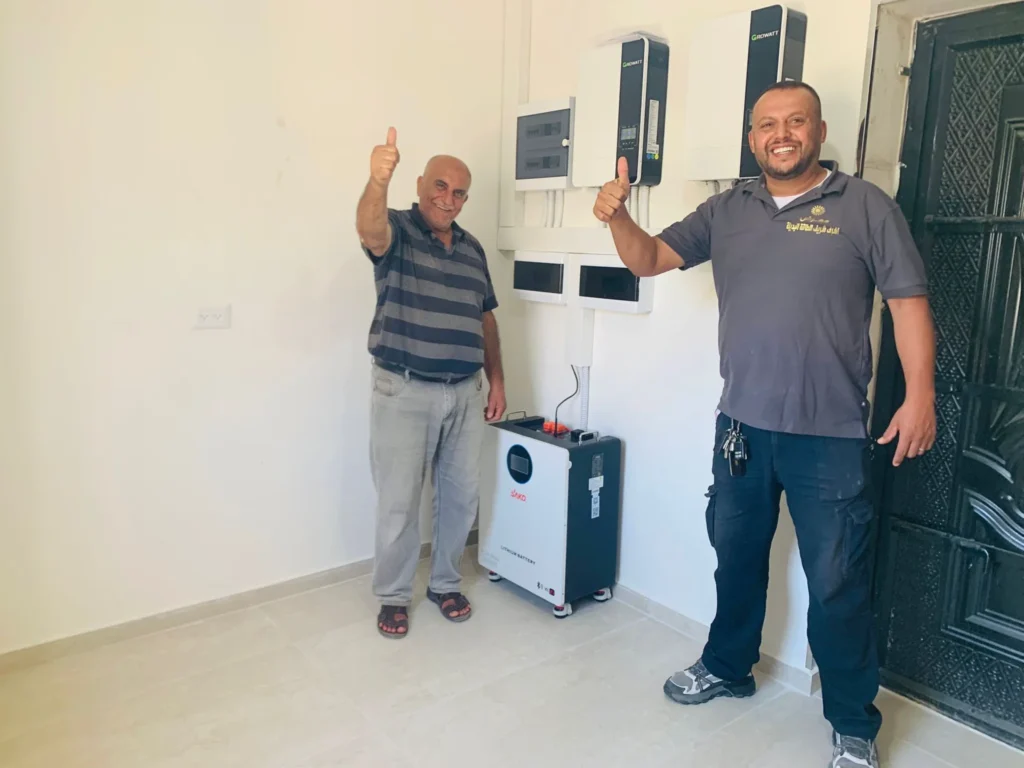
Sensitivity Analysis: Fuel Price Increase
Next, we can stress-test this model by considering a potential increase in fuel prices. Suppose the price of diesel rises by 25% to $1.25 per liter, a plausible scenario given recent volatility in global markets.
- Without ESS: The 10-year diesel cost jumps from $37,230 to $46,538.
- With ESS: The diesel portion climbs from $7,300 to approximately $9,125.
Crucially, the capital cost remains the same at $15,000. We can compute the return on the ESS investment by comparing the savings relative to the capital expenditure. Initially, at $1.00 per liter, the ESS saved $15,000 over 10 years, resulting in an ROI of approximately 100%. Under a 25% fuel surge, the savings increase to $22,413, boosting the ROI to approximately 149%. Even smaller fuel increases still boost the ROI, and larger spikes make the case even stronger. In short, every cent rise in fuel prices vastly amplifies the economic benefit of pre-paying via solar.
| Condition | 10-Year Cost w/o ESS | 10-Year Cost with ESS | ESS Investment | ESS Savings (10-Year) | Implied ROI |
|---|---|---|---|---|---|
| Base ($1.00/L) | $37,230 | $22,300 | $15,000 | $15,000 | 100% |
| +25% Diesel ($1.25/L) | $46,538 | $24,125 | $15,000 | $22,413 | 149% |
ROI is calculated as the total savings compared to the no-ESS scenario, divided by the capital expenditure.
This sensitivity table drives the point home: when fuel costs are volatile, the ESS is an investment protection, not an extra expense. It buffers the household from skyrocketing bills. Indeed, even in our example, a huge 25% fuel jump only raises the 10-year cost with an ESS from $22,300 to $24,100—a modest change—whereas it obliterates the cost of the “no ESS” scenario. Put bluntly, with an ESS, your dollar stores far more value in each ray of sunshine than it does in an uncertain liter of diesel.
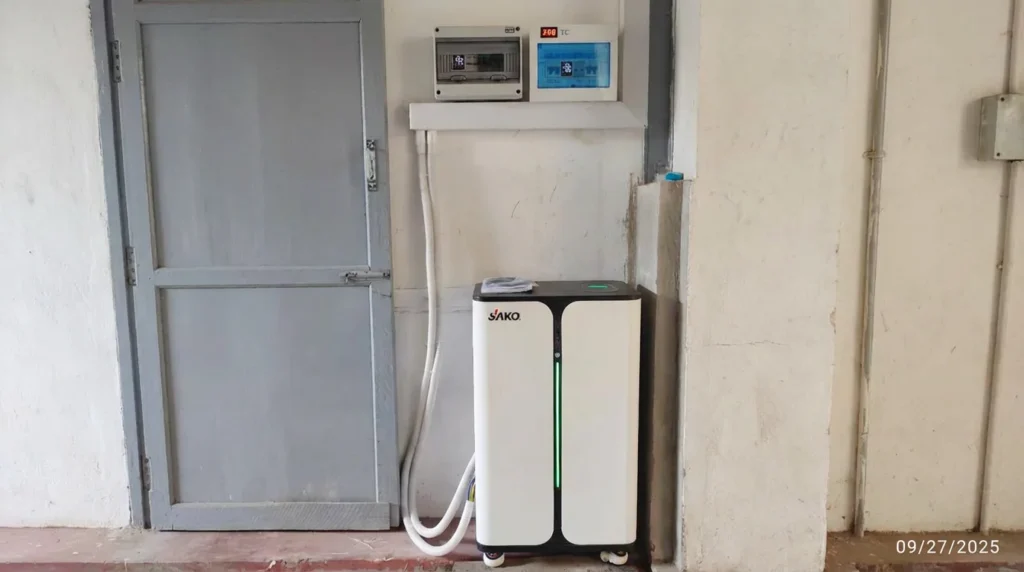
Trust & Quality: IEC 62619 Safety Standard
Of course, all this hinges on using a high-quality ESS. Battery safety cannot be an afterthought. In fact, industrial-strength battery systems today must meet stringent international standards. One key benchmark is IEC 62619, which outlines safety requirements for stationary lithium cells and batteries. This isn’t marketing jargon; IEC 62619 prescribes rigorous tests, from short-circuit and overcharge tolerance to thermal abuse and drop tests. In practice, reputable ESS products and their cells are certified against IEC 62619 to guarantee safe operation. When we discuss adopting an all-in-one ESS, we implicitly assume a solution built on IEC 62619-compliant cells and certified designs. In short, quality is non-negotiable: choose systems tested to IEC 62619 and other relevant standards to ensure that economic gains do not come at the expense of safety.
Next Step: Energy Independence Audit
The numbers above use representative figures and simplified models to illustrate the concept. Every household is unique. To see how this plays out in your case—accounting for actual roof area, local solar irradiance, load profile, and financing options—the next step is a personalized analysis. We recommend a Personalized Energy Independence Audit: an expert will model your specific loads, compare local grid and generator costs, and size a PV and ESS system for your home. This audit will show the exact dollars-and-cents advantage of installing a home ESS on your property.
Fortified with that data, you alone can break free of the volatility cage. The power of sovereign energy budgeting will be in your hands. A properly engineered home ESS is a strategic capital investment that buffers your family finances—and ultimately pays for itself—by locking out the volatility of diesel pumps and erratic grids.
Unlock economic independence: make sunlight your fuel, and give your household sovereignty over energy costs.