Executive Summary
The Thesis: Off-grid solar is not merely a stopgap solution for regions awaiting the arrival of a centralized grid; it is a technological leapfrog event comparable to mobile telephony bypassing landlines. From a first-principles perspective, off-grid systems represent a shift from Centralized, High-Inertia Supply to Decentralized, Modular Demand. For investors and implementers in Africa and Southeast Asia, this shift fundamentally alters the unit economics of energy delivery. It transforms the asset class from infrastructure (high CapEx, long ROI, political risk) to consumer financing (moderate CapEx, high velocity, credit risk).
This memorandum deconstructs the off-grid sector into its fundamental economic drivers. It analyzes the specific market barriers in Nigeria, Tanzania, and Cambodia, and synthesizing these findings into a tactical framework for market entry and capital allocation.
Part 1: The First Principles Paradigm
Why Off-Grid is a Distinct Economic Asset Class
To understand the investability of off-grid solar, we must strip away the “charity” narrative and analyze the physics and economics of the system compared to traditional on-grid infrastructure.
1.1 Deconstructing Energy Autonomy
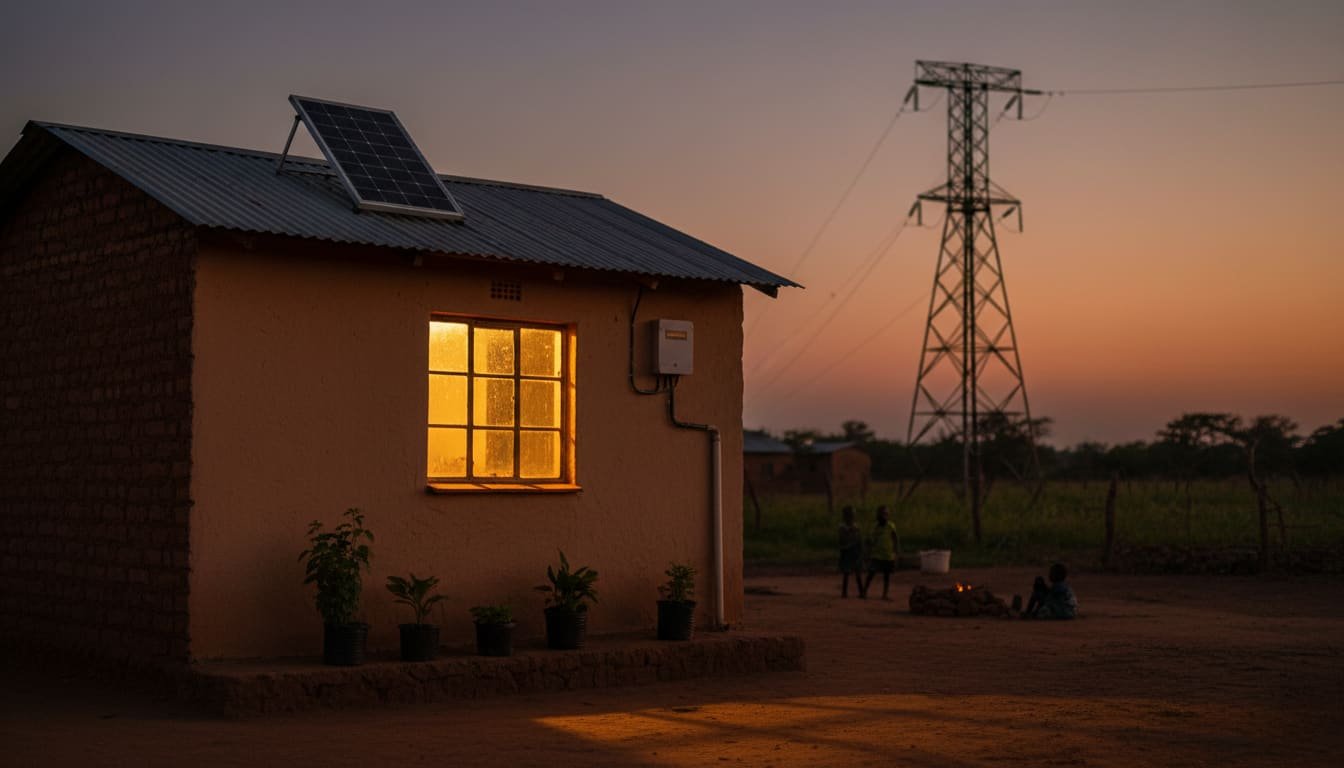
The Old Paradigm (On-Grid): Energy is a commodity delivered via a monopoly. The user is a passive recipient. If the grid fails (load shedding), the user has zero agency.
The New Paradigm (Off-Grid): Energy is a strictly controlled asset owned or leased by the user.
- Implication: This creates Energy Sovereignty. For a rural SME in Nigeria, an off-grid system is not just a light source; it is an operational hedge against state inefficiency. The value proposition is not just “electricity,” it is “reliability.”
- Investment Insight: Willingness-to-pay (WTP) in off-grid markets is often higher than subsidized grid rates because the user is paying for access reliability and autonomy, not just kWh.
1.2 Capital Efficiency vs. Economies of Scale
Centralized grids rely on massive economies of scale. They only work economically in high-density areas (cities).
- The “Stranded Asset” Risk: Extending high-voltage transmission lines to a village of 500 people in rural Tanzania creates a stranded asset. The cost per connection, which can range from one thousand five hundred to two thousand five hundred US dollars or more, can never be recouped by the consumption of low-income households.
- Modular Capital Allocation: Off-grid systems are capital efficient. A Solar Home System (SHS) costs between one hundred fifty and eight hundred US dollars. Capital is deployed only when a customer demands it. There are no “empty pipes.”
- The Metric: We move from Cost-per-MW (Generation focus) to Cost-per-Connection (Access focus). Off-grid solar wins on the latter in low-density regions.
1.3 The Marginal Cost Revolution
- On-Grid: The marginal cost of the next connection increases as you move further from the substation (more wire, more poles, higher transmission losses).
- Off-Grid: The marginal cost is effectively flat. It costs roughly the same to ship a solar kit to a peri-urban home as it does to a deep rural home (excluding minor last-mile transport variance).
- Strategic Note: This flat marginal cost curve allows businesses to scale horizontally across vast geographies without hitting the “infrastructure cliff” that limits utility companies.

1.4 System Resilience (Anti-Fragility)
Centralized grids are fragile; a single failure (transformer blow-out, sabotage, lack of fuel) cascades across the network. Off-grid networks are anti-fragile. A technical failure in one household has zero impact on the neighbor.
- Risk Profile: An investment in a centralized power plant concentrates risk (single asset). An investment in an off-grid provider distributes risk across thousands of independent assets.
Part 2: Thematic Barrier Analysis & Case Studies
Comparative Deep Dive: Nigeria, Tanzania, Cambodia
To operationalize first principles, we must navigate the friction of the real world. We analyze three distinct archetypes:
- Tanzania: The Mature “Pay-As-You-Go” (PAYG) Market.
- Nigeria: The High-Volume, High-Friction Market.
- Cambodia: The Microfinance-Led, Grid-Encroached Market.
Theme A: Value Chain & Last-Mile Distribution
1. The Challenge:
The “Last Mile” accounts for 30-50% of the total cost of an off-grid system. The barrier is not technology; it is logistics and trust.
2. Nigeria: The Retailer-Led Chaos
- Context: Massive population, low grid reliability, chaotic logistics.
- Value Chain: Heavily fragmented. Imports face congestion at Apapa port. Distribution relies on informal tiers of wholesalers and market unions.
- Winning Model: “Hub and Spoke” + Partnerships. Successful players (e.g., Lumos, Rensource) do not try to own the entire chain. They partner with entities that already have a presence: Mobile Network Operators (MNOs) or religious organizations.
- Barrier: Counterfeit goods destroy consumer trust. “China-grade” solar panels flooding the market depress pricing and ruin brand reputation for quality players (VeraSol certified).
3. Tanzania: The Agent Network Efficiency
- Context: Sparse population in rural areas, stable political environment.
- Value Chain: Vertical alignment. Companies like Zola Electric and d.light built proprietary dedicated agent networks.
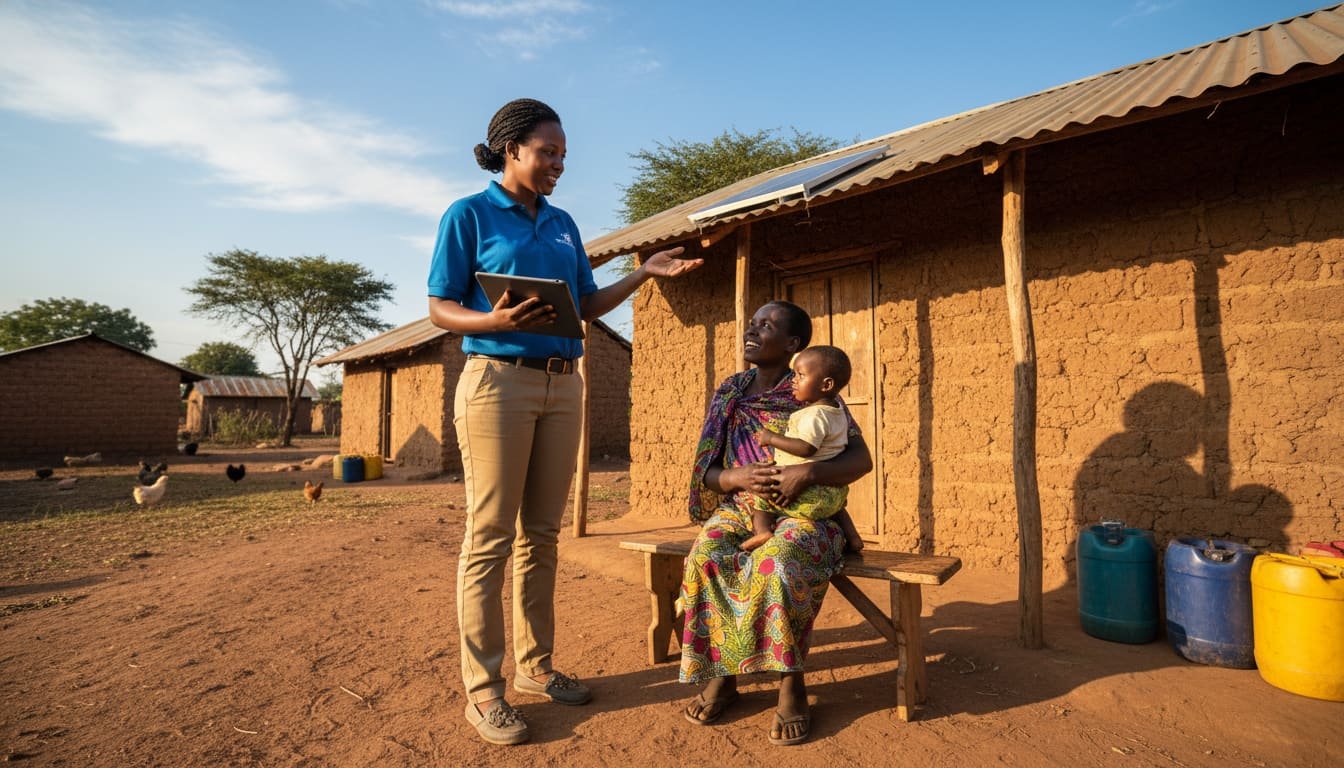
- Winning Model: Direct-to-Consumer (D2C) Agent Salesforce. Agents are recruited from local villages, trained, and paid on commission. This lowers Customer Acquisition Cost (CAC) because the agent is a trusted community member.
- Barrier: The cost of managing a workforce of 2,000+ freelance agents is high. Churn rates among agents can destabilize sales velocity.
4. Cambodia: The Hardware Commoditization
- Context: Proximity to manufacturing hubs (China/Vietnam), high grid extension rate.
- Value Chain: Hardware is cheap and easily available. The market is flooded with generic component-based solar (batteries + panels bought separately) rather than the branded “Kit” systems popular in Africa.
- Winning Model: Distributor/Installer Networks. Because consumers are more technical and load requirements are higher, sales are often driven by local technicians/installers rather than sales agents.
- Barrier: The “Grid Encroachment” risk. Cambodia has aggressively expanded its grid. Off-grid solar allows a “backup” market, but the primary electrification market is shrinking.
THEME B: CONSUMER FINANCING & AFFORDABILITY
1. The Challenge:
The hardware cost ($200+) exceeds the monthly disposable income of the target user ($50-$100). Financing is the product; solar is just the asset.
2. Tanzania: The Mobile Money Superhighway
- Financial Infrastructure: World-leading mobile money penetration (M-Pesa, Tigo Pesa).
- The Model: Pure PAYG. The solar hardware includes a GSM chip. The customer pays $0.50 daily via phone. If they stop paying, the device locks remotely (IoT enforcement).
- Risk Analysis: Credit risk is managed via data. Algorithms analyze mobile money history to score customers.
- Constraint: Market saturation. The “low hanging fruit” (creditworthy customers) have largely been reached.
3. Nigeria: The Cash & Hybrid Problem
- Financial Infrastructure: High bank account ownership in cities, but rural areas are cash-heavy or reliant on agency banking (POS agents like Moniepoint/OPay).
Mobile money adoption is growing but lags behind East Africa.
- The Model: Hybrid Collections. While digital payments are preferred, effective implementation often requires physical agents to collect cash and initiate the digital unlock, or partnerships with Payment Service Banks (PSBs).
- Risk Analysis: Currency Risk. This is the single biggest killer in Nigeria. Collecting receivables in depreciating Naira (NGN) while paying for inventory in USD destroys margins. Hedging is essential.
4. Cambodia: The Microfinance (MFI) Dominance
- Financial Infrastructure: A robust, sometimes overheated, Microfinance sector.
- The Model: MFI partnership. Instead of the solar company acting as the bank (PAYG), they sell the equipment to the consumer using a loan provided by a third-party MFI (like ACLEDA).
- Risk Analysis: Over-indebtedness. Rural Cambodians often hold multiple loans. If a crop fails, they default on the solar loan. However, the solar company gets paid upfront by the MFI, transferring the credit risk to the bank.
PART 3: STRATEGIC SYNTHESIS & MARKET ENTRY FRAMEWORK
Based on the First Principles and Case Studies, we present a decision-making framework for investors and implementers.
3.1 The “Grid-Distance” Strategy Matrix
When evaluating a market entry, position the target region on this matrix:
| Grid Reliability | Digital Finance Maturity | Recommended Strategy | Regional Archetype |
|---|---|---|---|
| Absent | High | Vertical PAYG: Own the customer, finance the asset, use remote IoT locking. | Tanzania, Kenya, Rwanda |
| Unstable (Weak Grid) | Low/Mixed | B2B / Energy-as-Service: Target SMEs or peri-urban clusters. Use hybrid collections. | Nigeria, DRC |
| Expanding Rapidly | High (Banking/MFI) | Retail Sales + MFI: Don’t hold the loan book. Sell hardware for cash/credit. Focus on high-load backup systems. | Cambodia, Vietnam |
3.2 The Risk Mitigation Playbook
Investors must demand these three mitigation strategies from portfolio companies:
- Currency Decoupling (Crucial for Nigeria/West Africa):
- Mechanism: Companies must utilize local currency financing facilities or structured trade finance. If revenue is in NGN, debt service cannot be in USD.
- Action: Utilize hedging instruments provided by specialized funds like TCX (The Currency Exchange Fund).
- The “Anchor Tenant” Approach (Crucial for Low Density):
- Mechanism: In deep rural areas (Part 1: Marginal Cost issue), consumer demand is volatile.
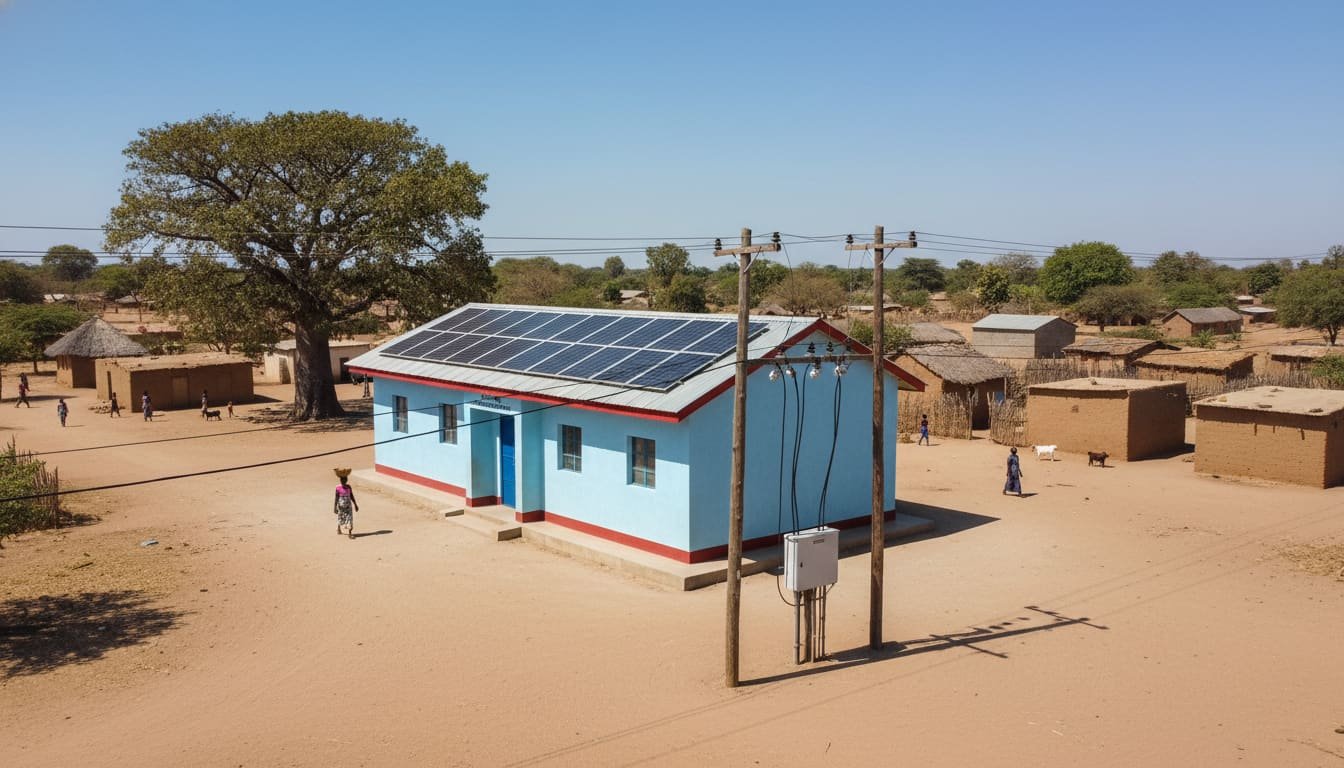
- Action: Build the deployment around an “Anchor Tenant” (e.g., a telecom tower, a rural clinic, or a milling machine). This guarantees a baseload revenue stream, with households treated as marginal add-ons.
- Tech-Enabled Supply Chain:
- Mechanism: Inventory is cash. Dead stock kills liquidity.
- Action: Implement data-driven demand forecasting.
- Action: Implement data-driven demand forecasting, using PAYG data not just for credit scoring, but to predict exactly when a customer will need a battery replacement or an appliance upgrade (upselling).
3.3 Policy Levers as Accelerators
Do not enter a market without assessing the Policy Toolbox:
- Fiscal Incentives: Does the country offer VAT and Import Duty exemptions for all solar components (including batteries)? In Nigeria, policy inconsistency here has historically trapped goods at the port.
- Quality Standards: Does the regulator enforce VeraSol/IEC standards? If not, the market will be a “race to the bottom” on price against low-quality generics, making sustainable business models impossible.
- RBF (Results-Based Financing): Is there a World Bank or donor-backed RBF program active? (e.g., The Nigeria Electrification Project). These subsidies can cover 30-50% of the hardware cost, de-risking the initial CapEx.
3.4 Final Investment Verdict & Archetypes
- The “Scaler”: Tanzania.
- Verdict: Investment Grade.
- Play: Consolidation. Backing established players to acquire smaller distributors. Focus on cross-selling (TVs, fridges, smartphones) to the existing customer base to increase Customer Lifetime Value (CLV).
- The “High Beta”: Nigeria.
- Verdict: Speculative / High Reward.
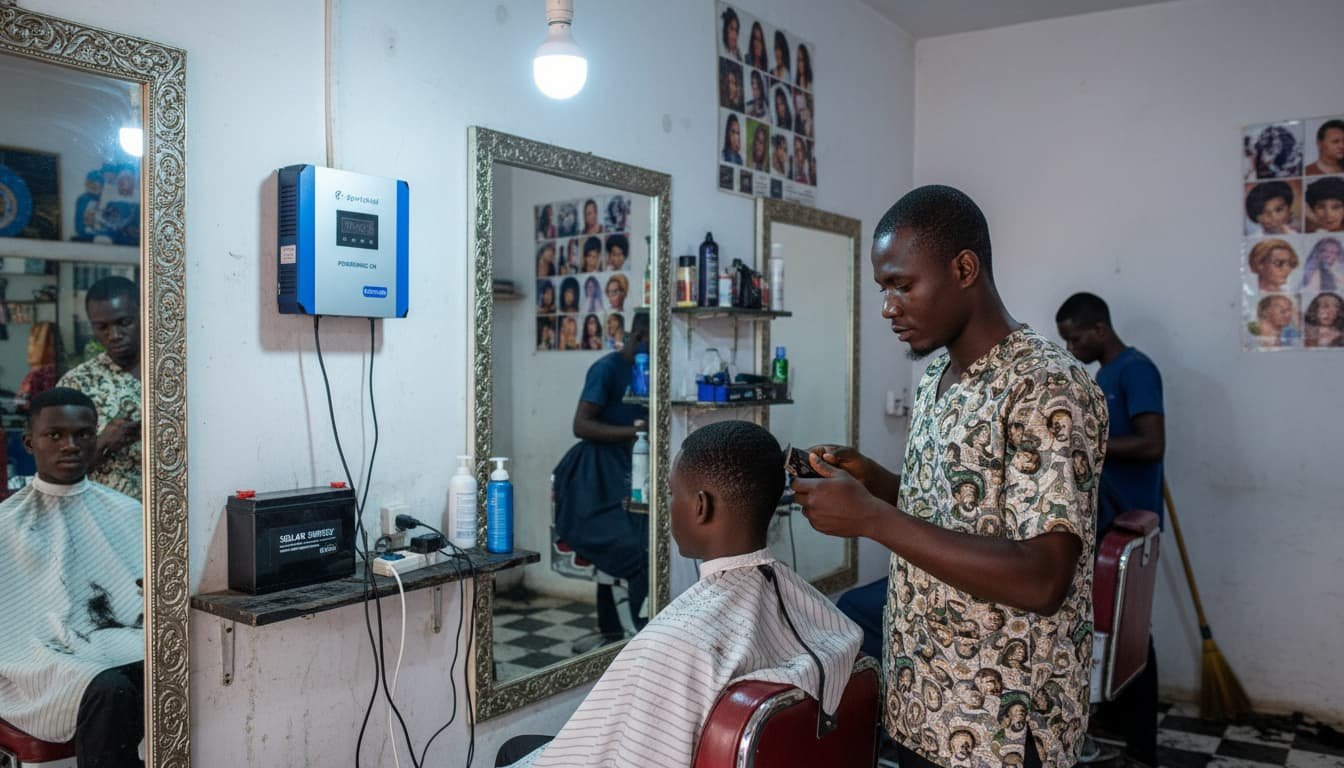
- Play: Productive Use of Energy (PUE). Move away from simple home lighting. Invest in systems that power barbershops, mills, and cold chains. These customers generate income, making them resilient to inflation.
- The “Pivot”: Cambodia.
- Verdict: Niche.
- Play: High-Efficiency Appliances. Solar is commoditized, but DC (Direct Current) fans, freezers, and pumps are not. The opportunity is in the appliance distribution, powering them with whatever grid/off-grid mix is available.
CONCLUSION
From a first-principles perspective, the Off-Grid Solar sector is shifting phases. It is moving from an Access Phase (providing the first light bulb) to a Capacity Phase (powering livelihoods and industry).
The most successful models going forward will not be utility-light companies delivering kilowatts. They will be Fintech companies using energy as the hook to build credit profiles (Tanzania), Logistics companies conquering the last mile (Nigeria), or Asset Financing companies empowering agriculture and SMEs (Cambodia).
Investors should allocate capital not to “solar companies,” but to distributed energy platforms that demonstrate mastery of the three pillars: Unit Economics (Hardware), Digital Distribution (Fintech), and Anti-Fragile Logistics.