Part 1: Technical Deep Dive for Professionals
Technology Comparison
| Parameter / Type | Lead-Acid (Flooded/VRLA) | Gel (VRLA) | LiFePO₄ (LFP) |
|---|---|---|---|
| Cycle Life | ~300–700 cycles (50% DoD) | 1,000+ cycles (often 50–60% DoD) | ~2,000–5,000 cycles (80–100% DoD) |
| Depth of Discharge (DoD) | ~50% recommended (full discharge shortens life) | ~50–60% recommended (exceeds leads to wear) | 80–90% typical (100% occasional) |
| C-Rate (Charge/Discharge Rate) | Low (~0.1–0.2C); high rates cause sulfation and heat | Moderate (0.2–0.5C); better than flooded | High (≥1C typical; some cells 2–3C) |
| Thermal Stability | Moderate: optimal at 20–25 °C; lifetimes plummet when >30 °C (sulfation, water loss) | Similar to flooded; sealed but sensitive to heat | High: stable up to ~60 °C; much higher runaway temp than other Li-ion types |
| Upfront Cost ($/kWh) | Low: $100–$150/kWh bare cell; $150–$200/kWh installed | Moderate: $150–$250/kWh | High: $400–$600/kWh (pack) |
| Maintenance | High: require watering, equalization, periodic cleaning | Low: sealed – no watering, occasional voltage equalization | Very Low: sealed cells with BMS; generally maintenance-free |
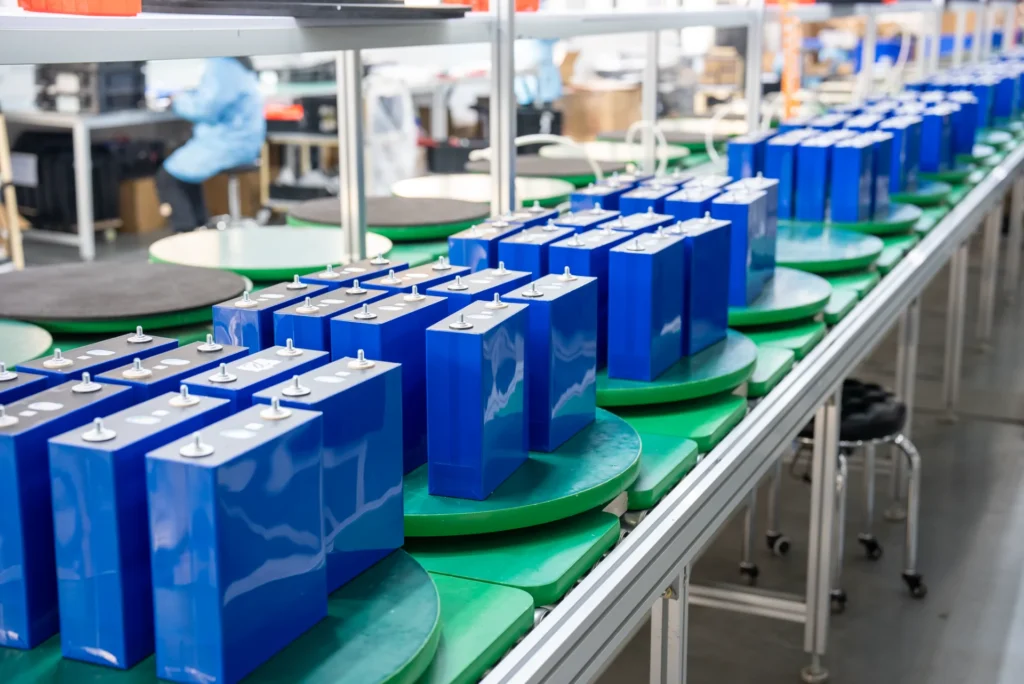
Notes: Lead-acid and Gel are mature, low-cost chemistries but have limited cycle life and are sensitive to deep discharge and high temperatures. LiFePO₄ (LFP) batteries have a much longer lifespan and deeper useful DoD, albeit at a higher initial cost. Thermal stability is best for LFP; for example, LFP’s thermal runaway threshold is significantly higher than other common chemistries, making it very safe under hot conditions.
Quantitative Decision Toolkit: LFP vs Lead-Acid TCO
To compare the total cost of ownership (TCO) over 10 years, consider a typical 10 kWh system. Assume an electricity tariff of $0.15/kWh and diesel at $1.20/L, which are representative for many regions in the Middle East and Africa.
Other assumptions include:
- Household Daily Use: 10 kWh/day (3,650 kWh/year).
- Lead-Acid Specs: 50% DoD, ~1,500 cycles (requiring replacement every ~3–4 years), and ~80% round-trip efficiency.
- LFP Specs: 90% DoD, ~3,000 cycles (10+ year lifetime), and ~90% round-trip efficiency.
- Installed Cost: Lead-Acid at $200/kWh and LFP at $500/kWh, including balance of system (BOS) components.
- Installation/Transport: Lead-acid batteries are substantially heavier, implying higher handling and transport costs.
- Diesel Genset Baseline: Consumes approximately 0.24 L/kWh at 50% load, which translates to a cost of about $0.29/kWh at a diesel price of $1.20/L.
Illustrative Calculation:
- Lead-Acid Path:
- A system providing 10 kWh of usable energy requires a 20 kWh nominal capacity due to the 50% DoD limit, costing $4,000 initially (calculated as 20 kWh multiplied by $200/kWh).
- With replacements needed every 3-4 years, the total 10-year battery cost for one initial unit and three replacements is approximately $16,000.
- The total delivered energy over the decade is approximately 29,200 kWh (calculated as 10 kWh per day, for 365 days over 10 years, at 80% efficiency).
- This results in a cost per delivered kWh of approximately $0.55.
- LFP Path:
- A system providing 10 kWh of usable energy can be achieved with a 10 kWh battery pack due to the 90% DoD, costing $5,000 initially.
- A single replacement might be needed near the end of the 10-year period, bringing the total cost to $10,000.
- The total delivered energy over the decade is approximately 32,850 kWh (calculated as 10 kWh per day, for 365 days over 10 years, at 90% efficiency).
- This results in a cost per delivered kWh of approximately $0.30.
Even if the initial LFP cost were 25% higher (at $6,250), the delivered energy cost would be around $0.34/kWh, which is still significantly lower than lead-acid’s $0.55/kWh. These estimates are consistent with published analyses showing that Li-ion solutions are substantially cheaper per kWh over their lifetime.
Furthermore, every kWh supplied by the battery can offset the need for expensive diesel generation. If diesel power costs $0.29/kWh, avoiding its use creates substantial savings. For instance, replacing 1,000 kWh of diesel generation saves approximately $290, which further improves the financial return of the battery system.
Sensitivity: Even if LFP pack cost is 25% higher, its long life advantage typically wins out. Conversely, if local tariffs rise or fuel costs spike, the relative merits of LFP grow. In practice, TCO models consistently show LiFePO₄ remains cheaper per cycle in deep-cycle applications.
Indoor Installation Safety Checklist (per IEC 62619)
Installations must follow strict safety rules. Key points are drawn from IEC 62619 and best-practice guides:
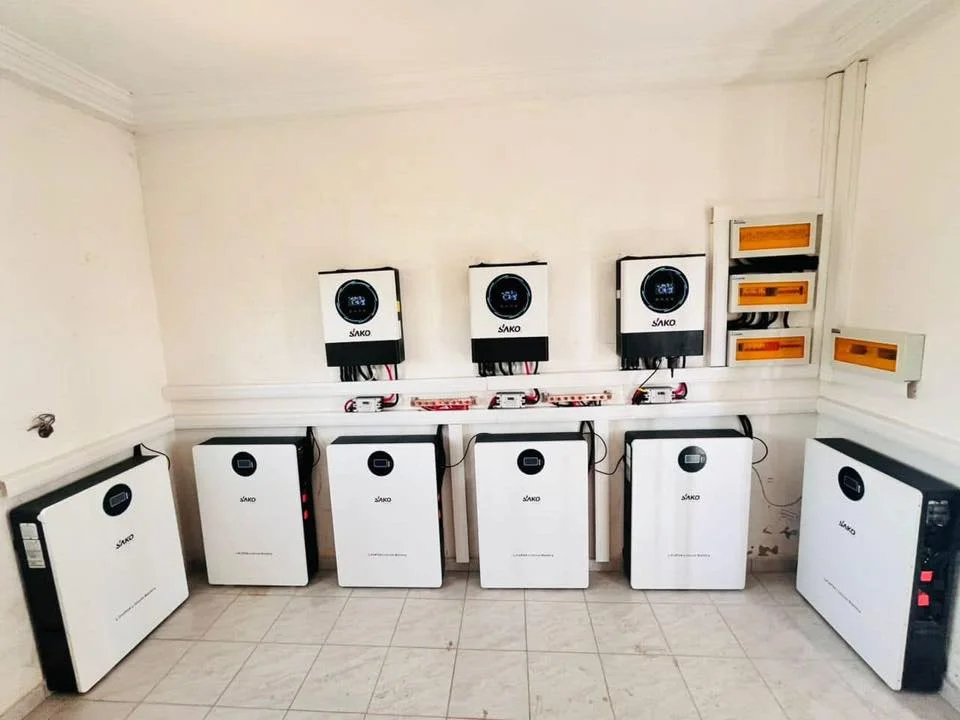
- Ventilation: Ensure adequate intake and exhaust airflow. Vent and exhaust panels or ducts should remove heat and any potential off-gassed hydrogen from lead-acid batteries or smoke from system failures. IEC risk criteria demand “no emissions of toxic or ignitable gases” during normal operation. Provide forced air cooling if the ambient temperature routinely exceeds approximately 30°C.
- Temperature Control: Keep the room within the manufacturer’s specified range, typically 15–30°C. Use thermostatically controlled air conditioning or fans if needed and prevent direct sunlight on units. Thermal management systems, including sensors and high-temperature shutdown, are mandated in LFP systems.
- Fire Separation: Mount batteries away from flammable materials and, where possible, in fire-rated enclosures. Maintain the required clearance, often 0.5–1 meter, around the battery bank for fire-fighting access. If indoors, follow local building codes for battery rooms, which may include requirements for intrusion detection and emergency exits.
- Gas Detection (Lead-Acid): In sealed rooms with flooded or vented lead-acid batteries, install hydrogen (H₂) detectors and an automatic shutoff system. Even VRLA batteries can vent hydrogen under fault conditions, and the risk of combustion mandates a sensor and alarm system.
- Battery Management Systems: All LiFePO₄ batteries require a robust Battery Management System (BMS). The BMS must monitor cell voltage, current, and temperature, and be capable of cutting off the system in case of over-voltage, under-voltage, or overheating.
- Isolation and Fusing: Each battery string should have DC fuses and an emergency disconnect. Inverters and the BMS should include circuit breakers to isolate faults. A clear shutdown procedure should be provided for firefighters.
- Structural and Floor Preparation: Use acid-resistant, all-weather trays under lead-acid battery racks. Elevate racks off the floor to prevent moisture ingress and bolt them down to withstand seismic activity or vibration.
- Signage and Barriers: Clearly label the battery area and post relevant safety signs, such as “Battery Room – No Smoking.” Restrict access to trained personnel only.
- Dust Protection: Use sealed enclosures or filters, especially in desert environments, as dust can clog cooling fins or fan intakes.
- Documentation: Keep Material Safety Data Sheets (MSDS) for the batteries on-site, along with all wiring diagrams. Log all maintenance and inspections, including torque checks and voltage readings.
Adherence to IEC 62619 or a local equivalent ensures these and other critical details are addressed. For instance, IEC tests include abuse scenarios like short-circuits and overcharges, and require designs that prevent a single-cell failure from propagating. In practice, always insist on batteries that are fully certified to IEC 62619 for lithium-ion or IEC 60896 for VRLA.
Regional Best Practices & Risk Mitigation
High Ambient Temperatures: In much of the Middle East and Africa, daytime temperatures often exceed 40°C. All battery chemistries age faster in heat, with a general rule of thumb being that battery life is halved for every 8–10°C increase above 25°C. For example, a lead-acid battery may lose 3–5% of its capacity per year at 35°C, and it degrades extremely fast at 45°C. LFP chemistry handles heat much better, remaining stable up to approximately 60°C, though it is still advisable to derate charging above 45°C.
Dust and Sand Ingress: Fine dust can insulate battery packs and create hotspots. Best practice is to house batteries in sealed enclosures (e.g., IP65 rated) or in dusty controller rooms equipped with filtered HVAC systems. Clean racks and ventilation grilles regularly, as even a minimal layer of dust on convection fins can reduce cooling efficiency by 20–30%.
Humidity: In coastal areas, salt-laden air can corrode battery terminals and rack hardware. Use anti-corrosive coatings and corrosion-resistant fasteners to mitigate this risk.
Case Study – Success in Kenya: A mini-grid in Nairobi serving 50 homes was upgraded from short-lived VRLA batteries to LFP technology. The 24V LFP module, with a rated life of 5,000 cycles (approximately 10 years), was “plug-and-play” with the existing equipment.
The results included zero maintenance, a lifespan of over 10 years, and the avoidance of toxic lead disposal. The Smart BMS ensured safe operation, demonstrating how LiFePO₄ systems can outperform lead-acid batteries in real-world tropical deployments.
Failure Mode – Off-Grid Mismatch: In a case from the outskirts of Kenya, a 5 kW inverter was paired with an undersized 5 kWh battery, which could only provide one hour of power at full load. This “hidden killer” led to constant over-discharge and premature battery failure. The lesson is to properly match inverter power, battery capacity, and load requirements to avoid repeated deep cycling beyond the battery’s specifications.
Common Failure Points: Across projects in the Middle East and Africa, failures often stem from:
- Under-specified equipment: This includes cheap batteries without a BMS or those with insufficient C-rate capacity.
- Temperature abuse: Batteries are often installed in locations without proper cooling, such as unventilated roofs or basements.
- Water ingress: Damage from storms or high humidity can cause electrical shorts.
- Neglected maintenance: For lead-acid batteries, this includes failing to perform watering or desulfation.
- Counterfeit gear: Using non-certified cells that are prone to overheating.
Vigilance and local testing are key to avoiding these issues.
In summary, designing for heat and dust is critical. This involves using active cooling or shade, choosing sealed or high-IP rated equipment, and providing a robust BMS with over-temperature cut-offs. It is also important to monitor ambient conditions and plan for worst-case scenarios, such as conducting post-market checks after major dust storms.
Part 2: Scenario-Driven User Guide for Homeowners
Battery Basics: DoD, C-Rate, and Voltage Explained
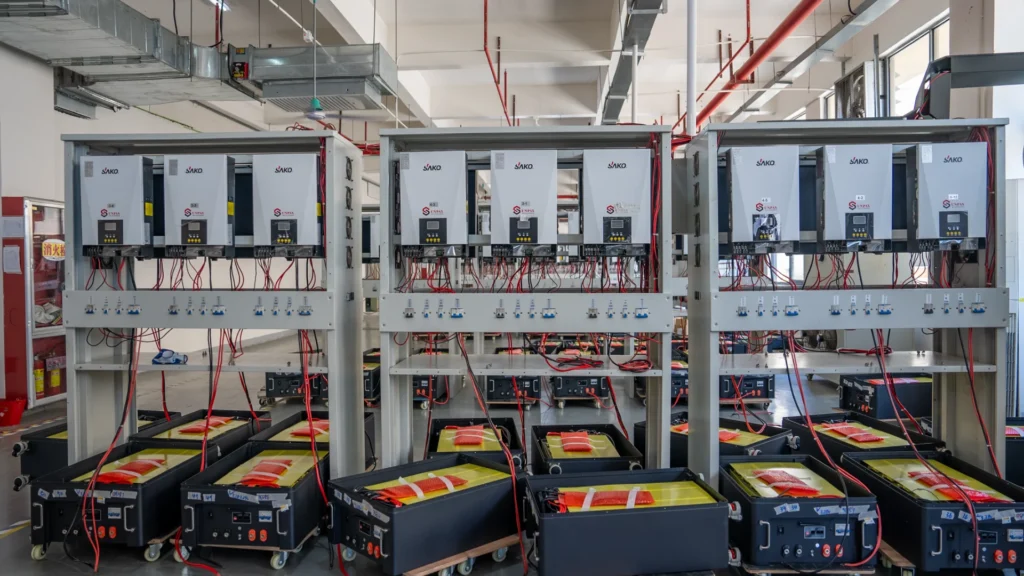
To understand how batteries work, it helps to use simple analogies for key terms:
- Depth of Discharge (DoD): Think of your battery as a water bottle. If you drink 50% of the water, the DoD is 50%, meaning half is used and half is saved. Drinking 100% is like completely emptying the bottle. While possible, doing this repeatedly stresses the system. A lower DoD generally leads to a longer battery life.
- C-Rate (Charge/Discharge Rate): This tells you how fast you can fill or empty the battery. A 1C rate means the battery can be fully charged or discharged in one hour. For example, drawing 10 kW from a 10 kWh battery pack is a 1C discharge rate. A 0.5C rate would take two hours. Higher C-rates create more stress and heat, much like filling a tank with a large, high-pressure hose can cause splashing and strain compared to a small, gentle hose.
- Voltage (Low Voltage vs. High Voltage Systems):
- Low Voltage (LV) systems, typically 48V, are like driving in a city—safer and easier to wire, but they require thicker, heavier cables to handle the higher electrical current for the same amount of power.
- High Voltage (HV) systems, such as a 400V string, are like driving on a highway—they deliver more power efficiently with lower current, allowing for lighter wiring and smaller energy losses. However, they pose a higher shock risk and require strict safety and isolation measures.
Step 1: Assess Your Energy Needs
- Inventory your loads: List all your appliances, such as the refrigerator, lights, TVs, air conditioning, and pumps. Note their wattage or their amps and voltage.
- Calculate daily consumption: Estimate your total kilowatt-hours (kWh) used per day. For example, a 150-watt refrigerator running for 24 hours uses 3.6 kWh. Sum the consumption of all appliances. Many homes use between 5–15 kWh per day.
- Determine backup needs: Decide how many hours of backup you require. Do you need full autonomy for a week, or just a few hours of power each night?
- Consider generator usage: If the grid fails often, think about how many hours you typically run a diesel generator. Every kWh you can source from the battery instead of the grid saves you from relying on expensive fuel.
- Plan for future growth: Account for any major appliances you plan to add soon, like an EV charger or a new air conditioner.
Write these numbers down. A modest household in the Middle East or Africa might need 8–10 kWh per day, which means at least a 10 kWh battery is required for usable capacity. Remember DoD: a 10 kWh LiFePO₄ battery provides about 8–9 kWh of usable energy if you limit the discharge to 80–90%. For a lead-acid battery, you might need an 18 kWh bank to safely deliver the same 9 kWh, due to its 50% DoD recommendation.
Step 2: Understand Budget & Trade-Offs
- Upfront vs. Lifetime Cost: Cheaper batteries like lead-acid have a much lower upfront cost but typically need to be replaced every 3–5 years. LFP batteries cost about three times more initially but can last for 10 or more years. Be sure to factor replacement costs and potential downtime into your decision.
- DoD Choice: A system that allows for a high DoD of 80–90%, like LFP, gives you more usable storage per kWh. Lead-acid is cheaper per unit, but you must purchase a larger capacity to avoid deep discharges.
- C-Rate Needs: If you plan to run heavy loads, such as 3 kW kitchen appliances, ensure the battery can support the required C-rate. LFP batteries handle high discharge rates.
(e.g., 0.5–1C) easily, while flooded batteries struggle above approximately 0.1–0.2C.
- Efficiency: LFP offers approximately 90% round-trip efficiency versus about 75–80% for lead-acid. Higher efficiency means more savings because less generation is needed.
- Maintenance and reliability: Lead-acid systems need periodic watering and equalization. Be sure to factor in service costs or the risk of damage from neglected maintenance. Gel and LFP batteries are essentially maintenance-free.
- Resale or recycling: High-end equipment like LFP batteries might have residual value, whereas lead-acid disposal is hazardous.
- Finance & incentives: Check for local subsidies or financing schemes. Some countries now subsidize lithium-ion batteries for solar to encourage the adoption of cleaner technology.
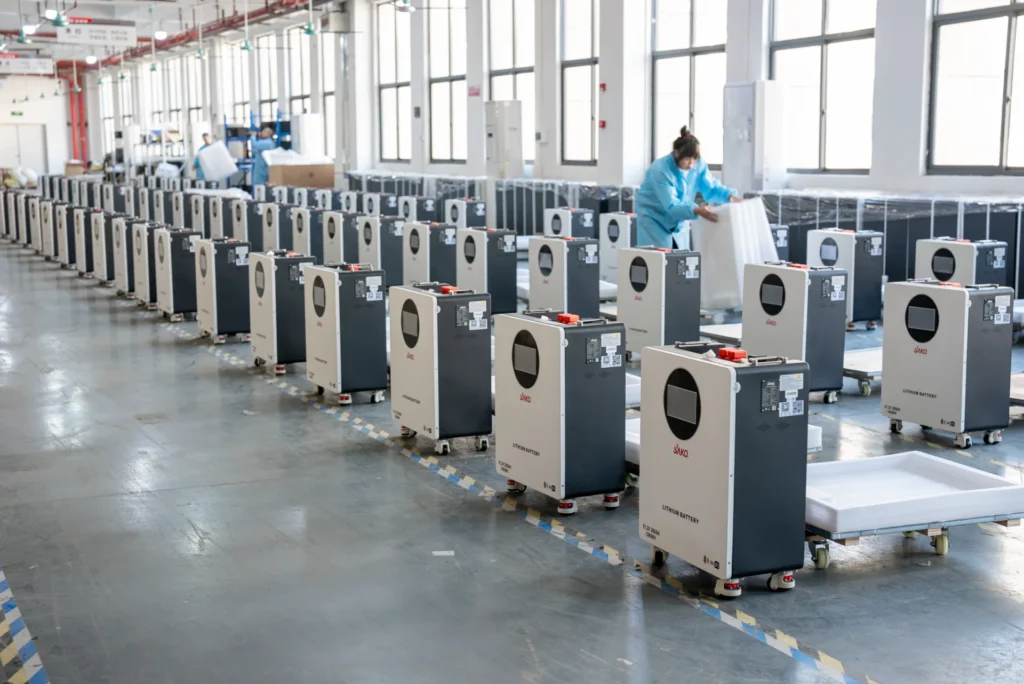
Visualize the trade-offs: a larger, inexpensive lead-acid bank versus a smaller LFP pack. Often, a smaller LFP system provides similar usable energy with much less space and maintenance, offsetting its higher per-kilowatt-hour cost.
Step 3: Key Questions for Your Installer
When talking to installers or suppliers, ensure they answer the following questions explicitly:
- Battery chemistry and specs: “What battery type (LFP, tubular lead-acid, gel) and model do you offer? What is its cycle-life and recommended DoD?” Ask for datasheets. Verify the cycle life and warranty. For example, 5,000 cycles or a 10-year warranty is common for LiFePO₄, while 500–800 cycles or a 1–2 year warranty is normal for lead-acid.
- Certifications: “Is the battery tested to IEC 62619 (for Li-ion) or IEC 60896/61427 (for stationary lead-acid)?” This ensures quality. Look for UN38.3, CE, and ISO9001 marks.
- Battery Management: “Does the system include a BMS? What protections does it have?” The Battery Management System (BMS) should prevent overcharging, over-discharging, and overheating.
- Thermal design: “How will the batteries be cooled or ventilated?” Given the high heat in the region, ask for enclosures with heat sinks, fans, or air conditioning.
- Maintenance plan: “What maintenance does this system require, and what is included in your service?” Good installers offer services like equalization for lead-acid batteries or firmware updates for LFP systems.
- Battery size rationale: “Why did you choose this capacity and voltage?” They should justify the sizing with a clear calculation, such as daily load multiplied by days of autonomy, plus a safety margin. Be wary if they simply match inverter specifications without performing a load calculation.
- Installation specifics: “How will the batteries be placed? What is the plan for inverter interconnection and the emergency shut-off?” Ensure the installation complies with safety standards, such as maintaining distance from flame sources, using the correct type of battery cabinet, and selecting appropriate cable gauges.
- References and track record: “Have you completed similar systems nearby? Can you provide references or a site visit?” A credible installer will have examples of their work and satisfied customers.
Write these questions down and compare the answers from several bids. Clarity and transparency are vital at this stage.
Step 4: Evaluating Supplier Credibility
To avoid bad outcomes, thoroughly vet your supplier:
- Local presence: Prefer companies with local offices or those who hire locally certified installers. They can provide long-term service and understand local conditions.
- Brand reputation: Research battery brands, especially for LiFePO₄ (e.g., Sino, Narada, BYD, Trina). Check if they have regional support or distributors. Beware of “no-name” packs from unknown manufacturers.
- Warranty terms: Read the fine print. A 10-year warranty is excellent, but ensure it covers a sufficient number of cycles (e.g., more than 3,000) and that the prorated cost is reasonable in case of a failure.
- Reviews and forums: Look at local online forums, such as solar or tech communities. See if others have reported issues with the specific model or supplier you are considering. A lack of online presence can be a red flag.
- Certifications and compliance: Legitimate systems will comply with local electrical codes, such as IEC 60364 in the MEA region. Confirm that a wiring certificate is provided.
- After-sales support: Check if the supplier offers scheduled maintenance visits, remote monitoring, or a hotline. A 24/7 helpline or a rapid response team for outages is invaluable.
- Financing and insurance: Some reputable firms offer financing options or allow linking to microloans, which is common in rural Africa. Also, check if your homeowner’s insurance covers solar and battery equipment, as this is often available as an add-on.
Finally, trust your judgment. A quote that is significantly lower than others likely compromises on quality. Conversely, a very high price should be justified by extra features, such as premium cells, an extended warranty, or full system integration. Balance cost with the level of security you need in a remote or hot environment.
Educational Flowchart: Summarizing Key Concepts
The following is a breakdown of key battery terminology using plain-English analogies:
- Depth of Discharge (DoD): Think of a battery like a water tank. A 50% DoD means you only use half the water, which extends the life of the system. A 100% DoD is like using all the water at once, which puts stress on the components.
- C-Rate (Charge/Discharge Rate): This describes the speed of charging or discharging. A 1C rate means the battery can be fully charged or discharged in one hour, while a 0.5C rate takes two hours. An analogy is filling a tank with a large pipe (fast, but risks overheating or spills) versus a small pipe (slow and gentle).
- System Voltage (LV vs. HV): This refers to low-voltage or high-voltage systems.
- Low Voltage (LV), e.g., 48V: These systems are safer due to a lower shock risk but require thicker, more expensive cables to handle the higher current needed for the same amount of power.
- High Voltage (HV), e.g., 400V: These systems can carry the same power with lower current, allowing for thinner cables. However, they pose a higher shock risk and require strict isolation measures.

This summary emphasizes the importance of maintaining a lower DoD to preserve battery health, choosing reasonable charge rates, and understanding that higher battery voltage allows for lighter wiring but requires stricter safety protocols.
Step-By-Step Selection Guide
- Assess Your Needs: Calculate your typical daily energy usage in kilowatt-hours (kWh) and your peak power demand in kilowatts (kW). Include any plans for future growth, such as adding electric cooking or air conditioning. Translate your daily kWh needs into the required battery capacity, remembering to account for the DoD. For example, a 10 kWh daily usage with an 80% DoD requires a 12.5 kWh battery. Decide on the number of backup hours you need, whether it’s 24-hour autonomy or just a few hours.
- Set Your Budget: Compare quotes based on the cost per usable kWh. Evaluate the long-term cost, as a slightly higher initial price for an LFP battery often pays off through fewer replacements and fuel savings. Decide whether your priority is the lowest upfront cost or the best lifetime value. Explore financing or subsidy options early in the process.
- Ask the Right Questions: Refer to the key questions for your installer mentioned previously. Ensure the technical solution matches your expectations. Do not proceed until you are comfortable with the battery type, warranty, and installation plan.
- Inspect Site Conditions: For battery rooms, avoid areas with windows to the outdoors or large openings to minimize dust. Ideally, place batteries in a cool, shaded spot like a basement or an inner room. Check if the installer will build any necessary enclosures or ventilation systems.
- Verify Installer and Brand: Ensure the provider has solid references and uses certified components. Check the installer’s reputation for punctual commissioning and reliable support. Do not rely on verbal claims; get datasheets and installer credentials in writing.
- Maintenance and Monitoring: Confirm how you will monitor the health of your system. Find out if there will be a mobile app or a display panel and if remote monitoring is included. Ask if maintenance checks, such as firmware updates or inverter calibration, are included or advised.
- Contract and Warranty: Read all paperwork carefully. Confirm what actions could void the warranty, such as improper installation by a third party. Clarify who is responsible for handling shipping or customs if imported equipment fails. Establish a clear agreement that links payment milestones to workmanship sign-offs.
Key Questions to Yourself and Installer: “What happens if a panel or battery fails in 5–10 years? Can I easily add more battery capacity later? Is there a local service network for this brand?” The answers will guide you toward a sensible choice.
In-Home Visual Guide to Key Concepts
Here is a simple overview to help a homeowner understand the core concepts:
- DoD: If you use only half of the battery’s capacity daily, it will last longer.
- C-Rate: Drawing power slowly heats the battery less. A 0.5C discharge rate is gentler than a 1C rate.
- LV vs. HV: A 48V system is safer and uses thick cables, whereas a 400V system is more efficient with thin wires but demands more caution.
This guide can help a homeowner remember to aim for a 50–80% DoD, charge and discharge at a moderate rate, and understand the practical differences between a 48V and a 400V system.
Remember: The best system is one tailored to your home’s needs and environment. Safe installation and realistic expectations about cost and maintenance will ensure your battery storage serves you reliably for years to come.
Always consult a local qualified engineer before making final decisions.