Executive Summary
The residential solar market in the Middle East, Africa, and Southeast Asia (SEA) is currently undergoing a paradigm shift. Historically, single-phase inverters have been the default for residential installations due to lower upfront costs and simpler retrofitting. However, this report argues that reliance on single-phase architecture is becoming a technical liability and a strategic error.
Driven by rapid urbanization, grid instability in developing zones, and an aggressive electrification of domestic amenities such as central HVAC and EVs, the “residential” profile in these target markets is evolving into a “prosumer commercial” load profile.
This report establishes the technical and commercial imperative for prioritizing three-phase residential inverters. It serves as a comprehensive guide for market entry, offering regulatory mapping, load analysis, and actionable sales enablement tools to position the three-phase inverter not as an upsell, but as a fundamental requirement for modern living.
Section 1: Regulatory Landscape & Grid Infrastructure
- Role: Market Access and Regulatory Affairs Analyst
- Focus: Compliance, Grid Stability, and Code Requirements
1.1 Introduction
The selection of an inverter is no longer solely a customer preference; it is increasingly a function of grid compliance and infrastructure survival. In the varied landscapes of the Middle East, Africa, and Southeast Asia, the regulatory push is undeniably moving toward three-phase systems for capacities exceeding 5kW.
1.2 Regulatory Mapping: The Cap on Single-Phase Injection
Across the target regions, utilities are introducing stricter limits on Phase Unbalance—the disparity in voltage and current between phases caused by heavy single-phase injection.
- The Middle East (UAE & Saudi Arabia):
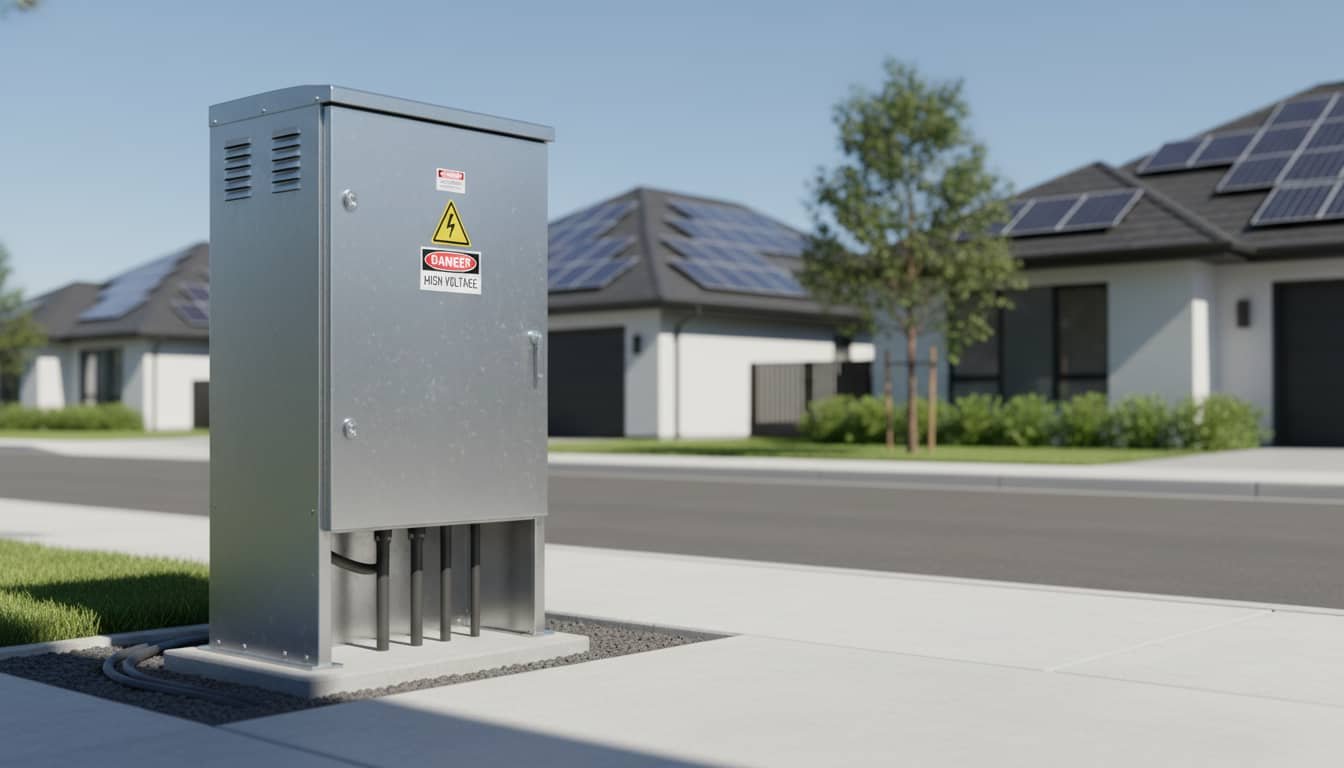
- UAE (Dubai – DEWA): The Distributed Renewable Resources Generation (DRRG) standards are stringent. Generally, residential PV systems exceeding 5kW-8kW are strongly steered toward three-phase connections to prevent neutral current overload in street-level transformers.
- KSA (SEC): With the rapid adoption of high-capacity air conditioning in residential sectors, the Saudi Electricity Company mandates three-phase connections for new residential builds exceeding certain load thresholds. Solar injections must match this topology.
- Southeast Asia (Thailand & Vietnam):
- Thailand (MEA/PEA): The Metropolitan Electricity Authority (Bangkok) and Provincial Electricity Authority have strict codes. Single-phase solar injection is typically capped at 5kW or 10kW depending on the specific transformer zone. Systems larger than this must be three-phase to receive an export permit.
- Vietnam: Following the aggressive solar boom, grid congestion is a major issue. EVN (Vietnam Electricity) increasingly favors three-phase inverters for rooftop solar to assist with local grid balancing, particularly in high-density urban areas like Ho Chi Minh City.
- Africa (South Africa & Nigeria):
- South Africa (NRS 097-2-1): This standard regulates the connection of embedded generation. It places strict limits on the maximum size of single-phase generation (often 4.6kVA) to prevent voltage rise issues on long, weak rural lines.
- Nigeria: While regulation is less formalized regarding feed-in due to a lack of net metering, the de facto standard for the affluent “Island” regions of Lagos is three-phase due to the prevalence of heavy loads and large diesel generators which operate natively on three-phase.
1.3 Grid Infrastructure Assessment: The Stability Factor
The physical state of the grid in these regions creates a technical necessity for three-phase systems.
- Scenario A: The Weak Rural Grid (Parts of Africa & Rural SEA)
- Issue: Long feeder lines result in high impedance. Injecting 5kW or more on a single phase causes significant Voltage Rise, often tripping the inverter via over-voltage protection and wasting energy.
- Solution: Three-phase inverters distribute the power injection across three wires. This reduces the current per wire by a factor of the square root of 3 (approximately 1.732), significantly lowering voltage rise and preventing nuisance tripping.
- Scenario B: The Congested Urban Grid (Mega-cities in SEA & ME)
- Issue: High penetration of single-phase air conditioners causes massive phase imbalance on the utility transformer.
This leads to neutral line overheating and voltage sags on the loaded phase.
- Solution: A three-phase inverter acts as a balancing agent. Even if the home loads are single-phase, a sophisticated three-phase hybrid inverter can balance the injection to stabilize the voltage at the point of common coupling (PCC).
1.4 Strategic Implications
For Market Entry Strategists, the data suggests a “Bypass Strategy.” Instead of fighting for the entry-level single-phase market (which is price-saturated), the product strategy should target the greater than 6kW segment where regulations require or heavily favor three-phase.
- High Barrier/High Value: UAE, Saudi Arabia, Thailand (Strict codes require 3-phase).
- Infrastructure Driven: Nigeria, South Africa (Grid reliability drives 3-phase).
Section 2: High-Power Loads & Future-Proofing
- Role: Technical Futurist and Product Marketing Manager
- Focus: Load Trending, EV Adoption, and Technical Physics
2.1 The Shift from “Lighting” to “Lifestyle”
The historical view of residential power in developing regions was low-demand: lighting, refrigeration, and entertainment. This is obsolete. The target demographic (emerging middle class and wealthy expatriates) is adopting a high-energy lifestyle that single-phase infrastructure cannot sustain.
2.2 Load Trend Analysis
- Electric Vehicles (EVs): This is the tipping point.
- Target: SEA (Thailand is becoming an EV hub) and UAE.
- The Math: A standard Level 2 home charger is 7kW. On a single-phase (230V) system, this draws approximately 32 Amps. Most older residential main breakers in SEA are rated 40A or 63A. Charging an EV consumes 50-80% of the home’s total available capacity, leaving no room for showers or cooking.
- Three-Phase Advantage: An 11kW or 22kW three-phase charger draws 16A or 32A spread across three lines, leaving ample headroom on each phase for other appliances.
- HVAC (The Middle East Factor):
- In the GCC, AC is not a luxury; it is life support. Large residential villas utilize Central AC or Ducted Split units.
- Single-phase motors greater than 3HP are inefficient and cause massive “inrush currents” (dimming lights) when starting. Three-phase motors are smoother, more efficient, and balance the grid.
- Heat Pumps & Pool Pumps (South Africa & Mediterranean Africa):
- The shift from gas or resistive heating to electric heat pumps for water heating requires sustained high-current draw, further stressing single-phase connections.

2.3 Regional Customer Profiles
- Profile 1: The “High-Tech Villa” (Dubai/Riyadh)
- Assets: 5-bedroom villa, Central AC (12 tons total), 2 EVs (Tesla/Lucid), heated swimming pool.
- Verdict: Single-phase is impossible. The total requested load exceeds 20kW. A three-phase 20-30kW inverter is the minimum requirement to manage PV production against this consumption.
- Profile 2: The “Compound Residence” (Lagos/Nairobi)
- Assets: Large gated home, multiple split ACs, borehole water pump (often 3-phase), dependence on diesel genset backup.
- Verdict: Three-phase is critical for integration with the backup generator. Single-phase inverters often struggle to synchronize with large three-phase generators, whereas a three-phase inverter balances the load, preventing the generator from stalling.
- Profile 3: The “Modern Townhouse” (Bangkok/Ho Chi Minh)
- Assets: Urban family, 1 EV (BYD/VinFast), induction cooktop, smart home automation.
- Verdict: Space is tight, but power density is high. While currently on single-phase, the addition of the EV charger forces an upgrade. Offering a compact three-phase inverter (8-10kW) future-proofs the home for the next 10 years.
2.4 Value Proposition: The “Investment” Narrative
We must reframe the conversation. A three-phase system is not an “electrical cost”; it is Property Value Insurance.
- Narrative: “Don’t install a system for the appliances you owned in 2015. Install a system for the EV you will buy in 2025.”
- Safety: Reduced risk of electrical fires caused by overheating neutral wires on overloaded single-phase systems.
Section 3: Quantitative Decision Scorecard
- Role: Solutions Architect and Data Analyst
- Focus: Objective Project Evaluation
3.1 Objective
This scorecard allows sales engineers to move from subjective arguments to objective, math-based recommendations. It calculates a “Three-Phase Recommendation Score” (TPRS).
3.2 The Scoring Model
Instructions: Rate the project on the following 5 parameters. Sum the points.
| Parameter | Condition | Points Assigned |
|---|---|---|
| 1. Total PV System Size | < 5 kWp | 0 |
| 5 kWp – 8 kWp | 10 | |
| > 8 kWp | 30 | |
| 2. High-Power Loads (Current or Planned) | No major loads | 0 |
| EV Charger (>7kW) | 25 | |
| Central AC / Heat Pump / Pool Pump | 20 | |
| Induction Cooking + Electric Shower | 10 | |
| 3. Main Grid Connection Breaker | < 40 Amps (Single Phase) | 5 |
| > 63 Amps (Single Phase) | 15 | |
| Already Three-Phase Connection | 30 (Makes install native) | |
| 4. Grid Stability & Topology | Stable Urban Grid | 0 |
| Rural / End-of-Line / Voltage Issues | 20 | |
| High Solar Penetration in Neighborhood | 15 | |
| 5. Future Expansion Plans (5 Years) | No plans | 0 |
| Plans for EV or Home Extension | 20 |

3.3 Interpretation Guide
- 0 – 35 Points: Single-Phase Optimal.
- Typical for small apartments or low-consumption homes. Three-phase is likely overkill and cost-prohibitive.
- 36 – 65 Points: Three-Phase Highly Recommended.
- The “Tipping Point.” The system might work on single-phase, but will likely suffer from tripping breakers or voltage limits. Three-phase offers better ROI.
- 66+ Points: Three-Phase Essential.
- Single-phase installation is negligent. It will result in equipment failure, code violations, or inability to run desired appliances.
3.4 Regional Application Examples
- Example A: The Riyadh Retrofit (Score: 80)
- Scenario: 12kWp PV planned. Home has central AC. Owner plans to buy an EV next year.
- Calculation: PV (>8kW) 30 + Loads (AC+EV) 25+20 + Expansion 5.
- Result: Essential.
- Example B: The Hanoi Shophouse (Score: 45)
- Scenario: 6kWp PV. Grid is congested (voltage high). Owner has standard appliances but connection is 40A.
- Calculation: PV (5-8kW) 10 + Grid (Congested) 15 + Expansion (EV planned) 20.
- Result: Highly Recommended. Using three-phase here solves the grid congestion issue.
- Example C: The Rural Nigerian Clinic (Score: 70)
- Scenario: 10kWp PV. Weak grid (voltage sags). Needs to run water pumps.
- Calculation: PV 30 + Loads (Pumps) 20 + Grid (Weak) 20.
- Result: Essential. Single phase would likely collapse the local voltage when the pump starts.
Section 4: Modular Comparative Analysis Matrix
Role: Sales Enablement and Content Strategist
Focus: Sales Conversion Tools
4.1 Usage Strategy
This matrix is designed to be “modular.” Sales teams should not overwhelm the client with the whole table. Select the 2-3 rows that address the client’s specific pain point (e.g., “I hate flickering lights” or “I want to maximize my export”).
4.2 The “Future-Ready” Comparison Matrix
| Key Performance Metric | Single-Phase System (The Standard) | Three-Phase System (The Upgrade) | Regional Impact Note |
|---|---|---|---|
| Power Delivery & Stability | Pulsating Power: Delivers power in waves that drop to zero 100 times/second. Can cause flickering in sensitive LED lights. | Continuous Flow: Three overlapping waves provide constant power. Eliminates flicker and extends the life of motor-driven appliances (ACs, fridges). | Critical in Africa/SEA where voltage fluctuation is already common. |
| Heavy Appliance Support | Bottlenecked: Limited capacity (usually ~60A max). Starting an AC can dim the whole house lights. | High-Bandwidth: Multiplies capacity by 3x. Starts heavy ACs, pumps, and machinery effortlessly without disrupting the rest of the home. | Vital in Middle East for heavy HVAC loads. |
| EV Charging Speed | Restricted: Capped at ~7kW. Charging a modern EV takes 8-12 hours and hogs the home’s total capacity. | Accelerated: Supports 11kW or 22kW charging. Fills an EV battery in 4-6 hours while leaving capacity for the house. | Key for Thailand/UAE where EV adoption is surging. |
| Grid Feed-in Compliance | Limited Export: Utilities restrict single-phase export (often <5kW) to protect transformers. You waste excess solar energy. | Maximum Export: Utilities prefer three-phase export. Allows larger system sizes (10kW+) and faster ROI via net-metering. | Mandatory in recent Dubai & Bangkok regulations. |
| Cable Efficiency & Safety | High Stress: Requires thick, expensive cables to carry high current. High risk of cable heating. | Cool Efficiency: Carries the same power with thinner wires and lower current. Safer operation with less heat loss. | Important in older properties (SEA) with questionable wiring. |

4.3 Sales “Talking Points” Scripts
- Talking to the “Tech Enthusiast”:
- “A single-phase inverter is like a one-lane highway. If you put a Tesla on it, traffic stops. A three-phase inverter is a three-lane superhighway. You can charge your car, run the AC, and power the pool simultaneously without a traffic jam.”
- Talking to the “Safety Conscious”:
- “In older neighborhoods, single-phase connections get hot when pushed to the limit. A three-phase system spreads the load evenly, keeping your wiring cooler and your appliances safer from voltage drops.”
- Talking to the “ROI Focused”:
- “The utility limits how much power you can sell back on a single-phase connection. By going three-phase, we bypass that cap, allowing you to install a larger system and erase your entire bill, not just half of it.”
Section 5: Competitive Landscape & Strategic Positioning
Role: Senior Competitive Intelligence and Strategy Consultant
Focus: Differentiation and Winning Strategy
5.1 Competitive Landscape Overview
In the ME, Africa, and SEA regions, the market is dominated by Tier 1 Chinese manufacturers (Huawei, Sungrow, Growatt, GoodWe) and legacy European brands (SMA, Fronius).
- The Competitor Flaw: Most competitors distinctly segment their products.
- Small/Cheap = Single Phase.
- Large/Commercial = Three Phase.
- The Gap: They rarely market three-phase solutions to the residential customer with <10kW needs. They treat three-phase as an “industrial” necessity rather than a “premium residential” upgrade.
- Price War: The single-phase market (3-6kW) is a “race to the bottom” on price. Margins are razor-thin.
- The Opportunity: The three-phase residential market (6-15kW) commands higher margins and faces less direct price competition because it involves a more complex sale (technical consultation required).
5.2 Target Segment Definition: The “Premium Prosumer”
We are not selling to the “low-cost housing” segment. We are targeting:
- The Intergenerational Family Home (SEA): Large multi-story homes housing 3 generations. High cumulative load.
- The Expat Villa (ME): High consumption, zero tolerance for power outage or discomfort.
- The Energy Independent (Africa): Wants to sever reliance on the grid/diesel. Needs robustness.
5.3 Strategic Positioning Statement
“The Backbone of the Modern Home.”
We must position the Three-Phase Inverter not as a “commercial product downsized for homes,” but as the only architecture capable of supporting the modern electric lifestyle.
5.4 Strategic Recommendations
- Product Bundling: Do not sell the inverter alone. Bundle the Three-Phase Inverter with an EV Charger as a “Future-Ready Energy Hub.” This justifies the upgrade immediately.
- Grid Code Education: Launch “Installer Masterclasses” focused on Grid Compliance. Teach installers that selling single-phase systems >5kW puts their customers at risk of utility penalties or technical failure. Make the installers our advocates.
- Visual differentiation: Marketing materials should visualize “Balance.” Show a graphic of a single-phase home tipping over (unbalanced) vs. a three-phase home standing firm.
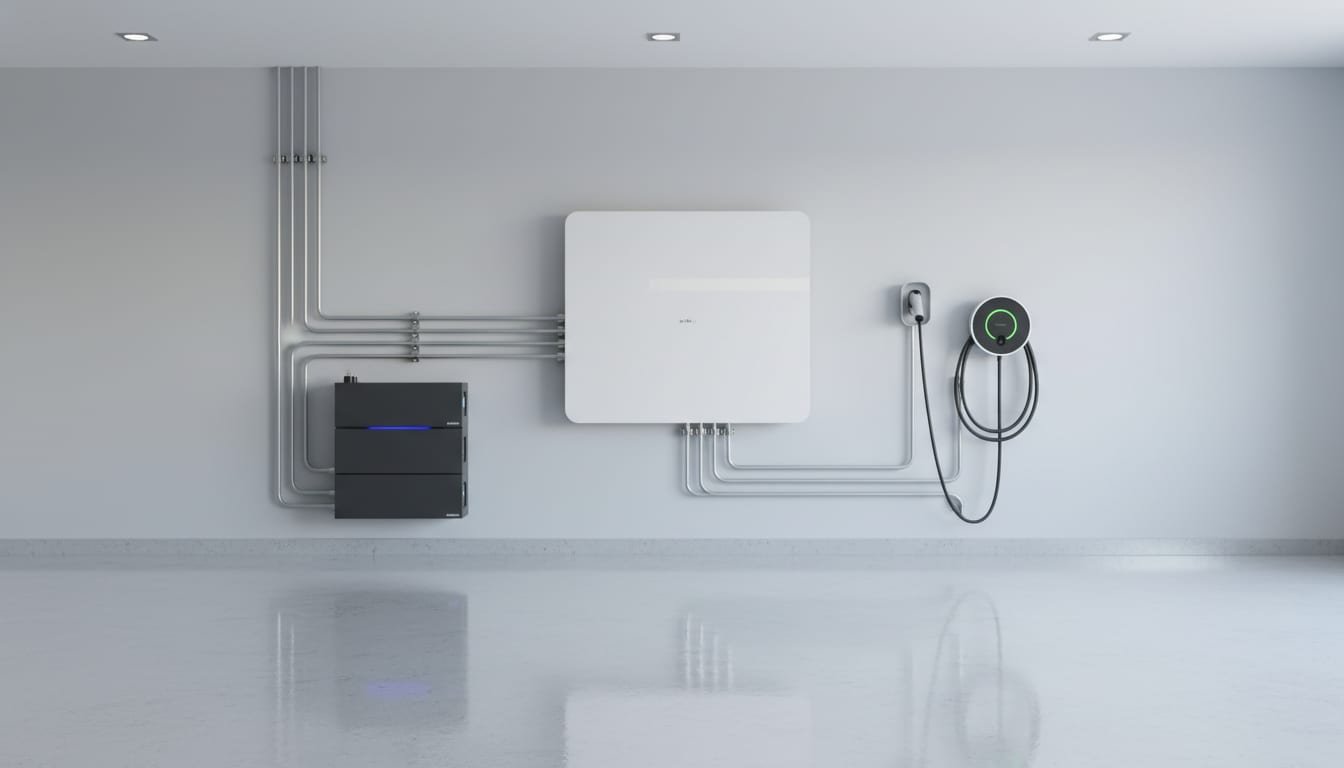
- Entry-Level Three-Phase: Introduce lower kW capacities (e.g., 5kW, 6kW, 8kW) in three-phase topology. Most competitors start three-phase at 10kW. A 6kW Three-Phase inverter is the perfect “Goldilocks” product for a Bangkok townhouse—small capacity, but high stability.
5.5 Conclusion
The era of the single-phase dominance in the target markets is ending, eroded by the physics of EV charging and the policy of grid regulators. By pivoting our strategy to champion three-phase systems as the standard for the premium segment, we exit the price war of low-end hardware and position ourselves as the infrastructure provider for the next decade of residential electrification.